

Do you run a factory in Bangladesh? You meet many people every day. Workers. Buyers. Government people. All of them are your stakeholders.
Knowing who are stakeholders helps you avoid fights. It builds trust. It keeps work smooth.
This guide shows you who matters in workforce management. And why they matter.
What Is Workforce Management in Bangladesh?
Workforce management means managing your workers well. You hire them. You plan their shifts. You track when they come to work. You follow labor laws.
Think of it like this. You need the right people at the right time. Doing the right work. Learn more about workforce management fundamentals.
A good workforce management system helps you do these things:
- Track when workers come without mistakes
- Plan work shifts based on orders
- Follow Bangladesh labor laws properly
- Pay workers on time every month
- Show reports to buyers with real data
Many Bangladesh factories use paper books. This makes audits hard. Modern HR operations in Bangladesh need digital tools. They make everything clear and easy to check.
What is workforce management really? It means treating workers well. And running your business right.
What Is Stakeholder Management in Bangladeshi Workforce Management?
Stakeholder management means finding everyone who affects your workers. Then you talk to them. You make them happy enough to help your business. In Bangladesh, this means workers, unions, buyers, and government. Each group wants different things. Workers want good pay. Buyers want good behavior. Government wants you to follow rules.
Your job? Keep everyone happy enough.
The stakeholder engagement process has three steps:
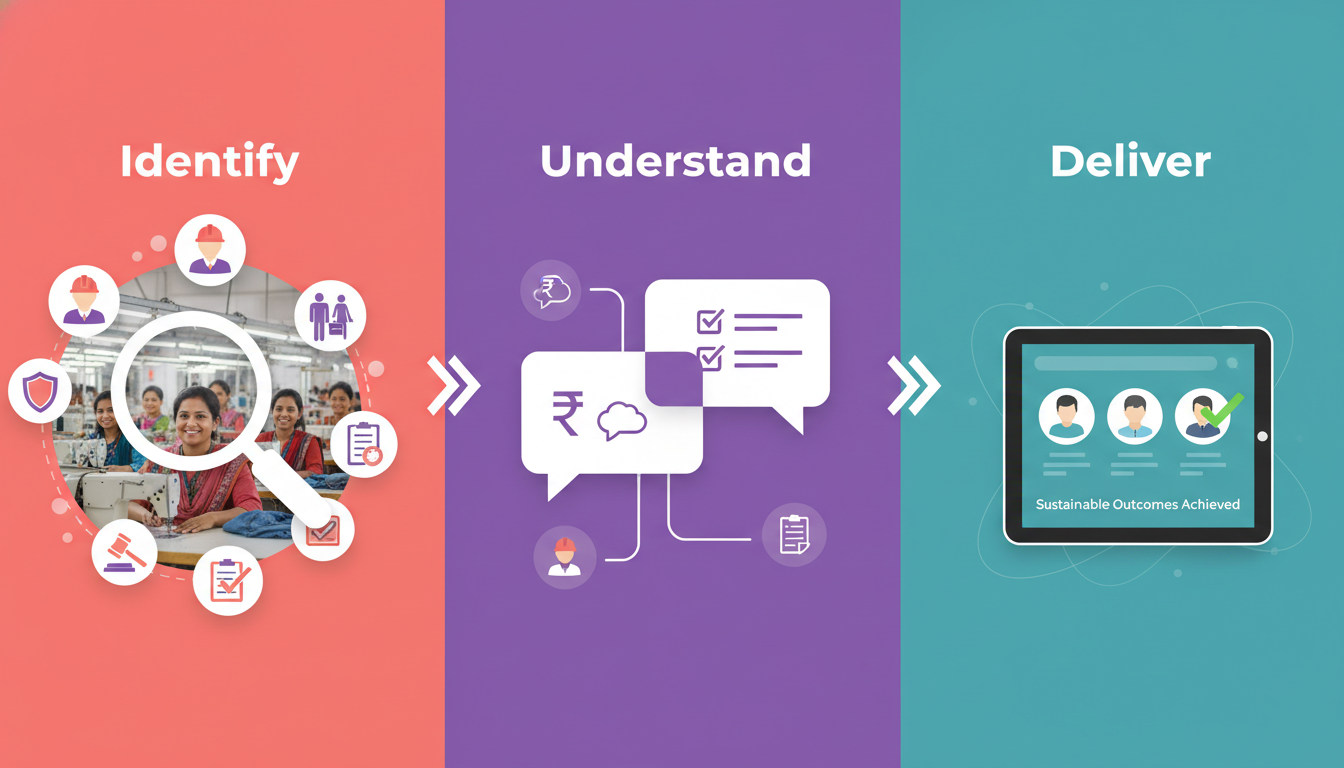
- First, find who matters.
- Second, learn what they want.
- Third, make systems that give it to them.
Good stakeholder management best practices mean meeting unions often. Showing buyers clear reports. Following labor laws before problems happen.
Why does this matter in Bangladesh? One angry stakeholder can close your factory. A buyer can stop orders. A union can stop work. Government can fine you.
What is stakeholder management? It keeps your business safe.
Why Stakeholders Matter in Workforce Management ?
Ignoring stakeholders costs you money. Working with them makes your business strong.
Here’s why stakeholders matter:
- Reduce workforce conflicts before strikes happen
- Build trust with workers so they work better
- Pass buyer checks without stress
- Avoid fines from government
- Keep your good name in all markets
Think about this. One compliance mistake loses a big buyer. That’s millions in lost money. But good stakeholder alignment in HR stops this.
When workers feel heard, they work better. When buyers see clear data, they give more orders. When government sees you follow rules, they leave you alone.
Stakeholder influence in workforce decisions is real. Unions can ask for better pay. Buyers can demand certain things. Communities can help or hurt your factory.
Smart businesses make stakeholders their friends. Not their enemies.
Types of Stakeholders in Workforce Management
Stakeholders come in two groups.
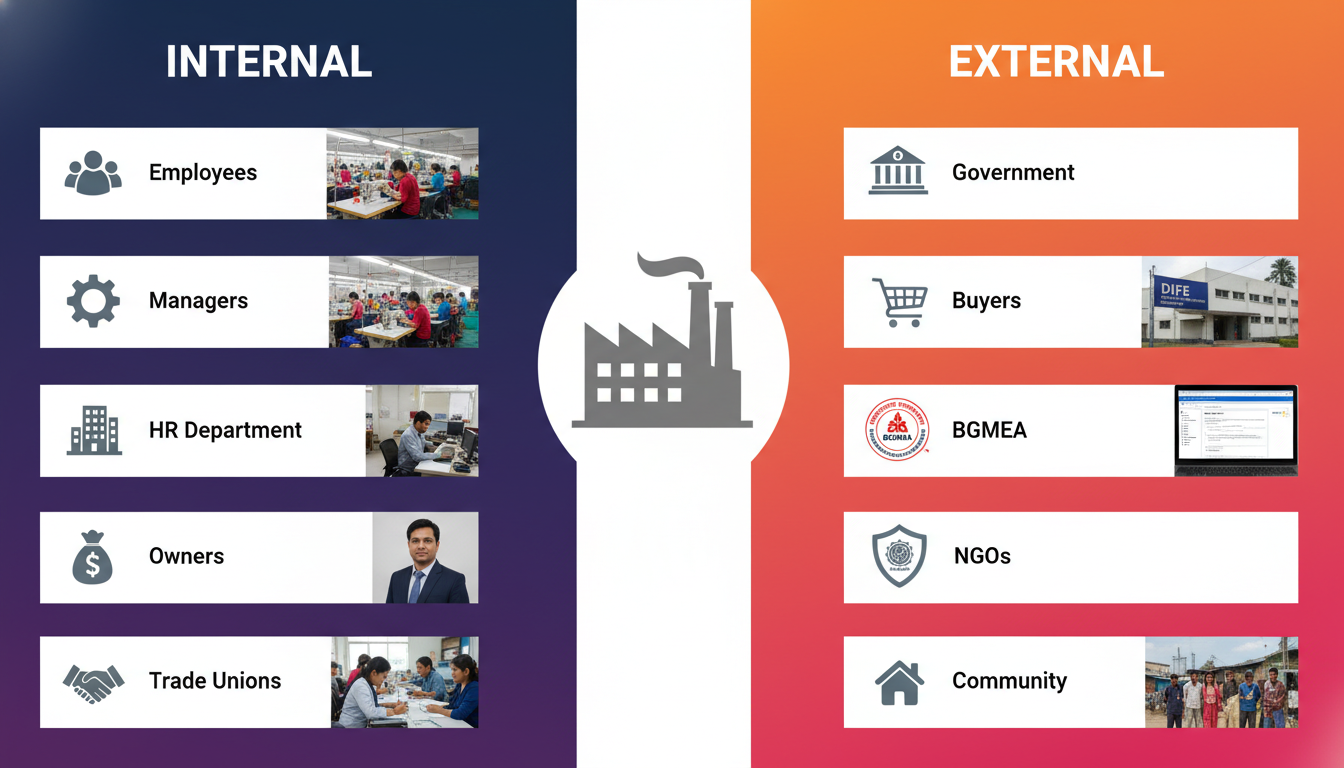
- Internal and external stakeholders in HR do different things.Internal stakeholders work in your business.
- External stakeholders work outside but still matter. Both are important.
Let’s look at each type.
Internal Stakeholders in Workforce Management
Internal stakeholders in workforce management are people in your company. They make choices every day. They use your rules. They see how things work.
Knowing employee relations stakeholders helps you make better systems. These people can help or hurt your HR work.
1.Employees & Workers
Your workers are your most important people. No workers means no production. No business. No money.
Employee stakeholders want good pay, safe work, and respect. When you give these, they stay. They work hard. They cause less trouble.
In Bangladesh, garment workers often face hard times. Building trust with workers means listening to them. Fix safety problems fast. Pay on time, always.
Happy workers make less problems. They are your base.
2.Managers & HR Departments
Your managers use workforce rules every day. Your HR team handles problems, hiring, and following laws. They’re HR decision making stakeholders who need good tools.
Without real-time workforce reporting, managers can’t see problems. They can’t plan shifts well. They can’t prove you follow rules during checks.
A strong HR governance model helps these people. It gives them data, power, and systems. This makes your whole workforce work better.
3.Owners & Shareholders
Business owners care about money and good name. They’re stakeholder accountability in HR leaders. They want workforce systems that save money and keep the business safe.
Bad workforce management loses money. Strikes stop work. Fines eat profits. Lost buyers destroy income. Owners need systems that protect business reputation and keep work smooth.
Your workforce management strategy must make owners happy and keep other stakeholders happy too. This balance is hard but needed.
4.Trade Unions
Trade unions in Bangladesh speak for workers as a group. They talk about wages, work conditions, and benefits. They’re powerful industrial relations stakeholders you must work with.
Good union relationships stop strikes. They make talks easier. They help you understand worker problems early.
Bangladesh labor law compliance means working with unions properly. Smart businesses treat unions as partners, not enemies.
External Stakeholders in Workforce Management
External stakeholders in workforce management work outside your company. But they change how you manage workers. Some can close you down. Others can boost your name.
Knowing labor market stakeholders helps you handle hard demands. These groups often want different things.
1.Government & Regulatory Bodies
The Bangladesh government makes strict labor rules. DIFE checks factories. Labor courts handle fights. Read about Bangladesh Labour Act 2006.
These HR compliance stakeholders can fine you or stop your work. Workforce management in Bangladesh must follow all labor laws. This means minimum wage, work hours, safety rules, and more.
Workforce compliance management means working ahead. File reports on time. Keep proper records. Fix problems before checks. Digital systems make this easier.
2.International Buyers
Big brands like H&M, Zara, and Walmart are major stakeholders. They want ethical supply chain workforce practices. They check you often. They can stop orders fast. See ethical sourcing standards.
Buyer compliance requirements often go beyond Bangladesh law. They want digital records, clear payroll, and worker care programs. Meeting these needs keeps your business safe.
Failing checks means losing contracts. Avoiding compliance penalties needs systems that make buyers happy. This saves your income.
3.Industry Associations
BGMEA and BKMEA speak for factory owners. They’re workforce governance structure leaders. They set best practices for the industry. Visit BGMEA official website.
Following industry HR standards keeps you in the game. These groups also help with government rules. They’re good friends to have in stakeholder engagement strategy.
4.NGOs & Human Rights Groups
Groups like Accord and Alliance watch worker safety. They look into complaints. They make reports. They’re human rights stakeholders with global power. Learn about Accord on Fire and Building Safety.
ESG workforce compliance matters to modern buyers. ESG means how you treat workers and the planet. Bad ratings hurt business reputation around the world.
Working with these groups early stops bad news. It shows you care about doing right.
5.Suppliers & Partners
Your material suppliers and contractors are part of your workforce ecosystem in Bangladesh. Their actions can affect your compliance.
If suppliers are late, your workers get less hours. If contractors break laws, your name suffers. A centralized workforce data platform helps keep everyone on track.
Stakeholder alignment in HR means making sure partners follow similar rules. This keeps your supply chain safe.
6.Local Communities & Media
People living near your factory care about jobs, safety, and clean air. Local media reports on labor problems. Both create community stakeholder influence.
Bad community relations make hiring hard. Bad media coverage scares buyers. Improving workplace transparency builds good relationships with both groups.
Smart HR stakeholder management in Bangladesh means talking to communities and media often.
Common Stakeholder Conflicts in Bangladeshi Workforce Management
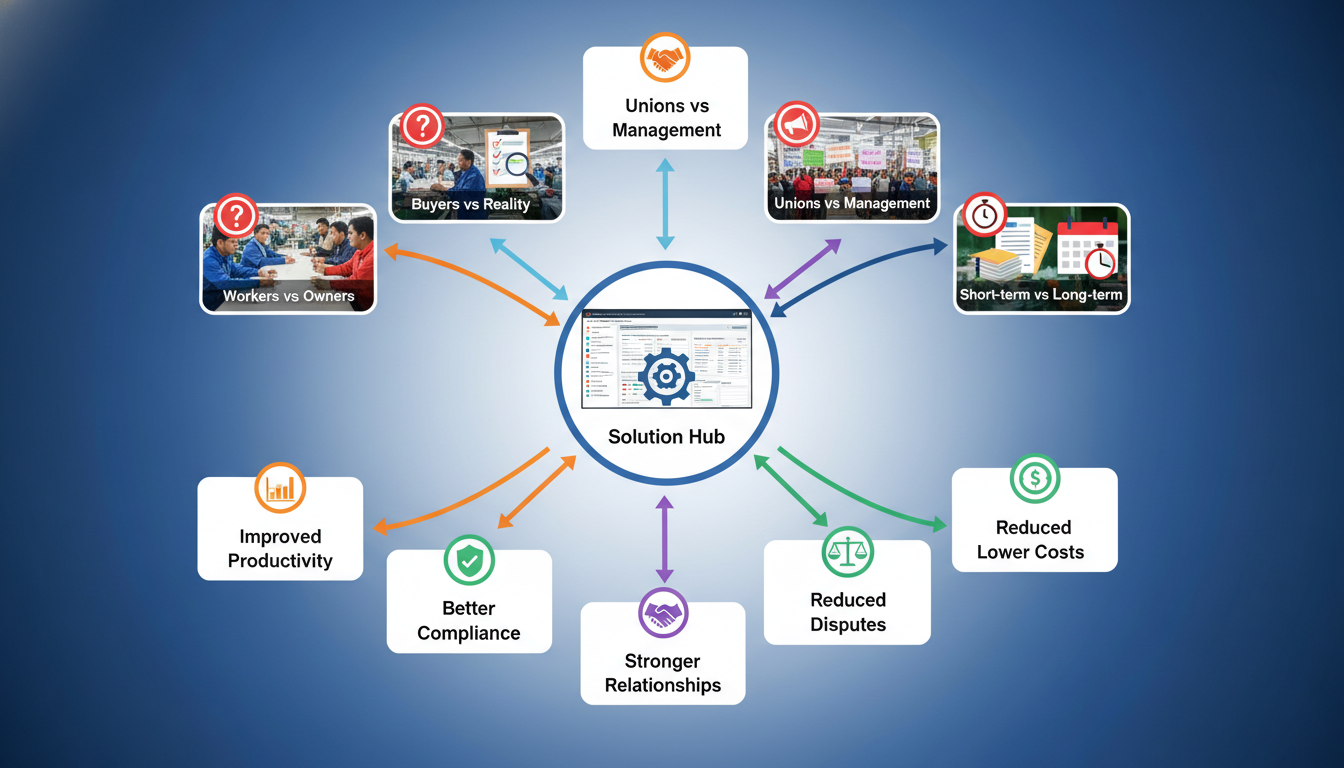
Even with good plans, stakeholder conflicts in Bangladesh factories happen often. Different groups want different things. Here are the most common fights:
- Workers vs. Owners: Workers want more pay. Owners want to save money. This makes tension during talks.
- Buyers vs. Reality: International buyers want first-world rules. Bangladesh factories work on thin profits. Meeting demands while making money is hard.
- Unions vs. Management: Unions push for better things. Management worries about making products. Finding middle ground needs skill.
- Rules vs. Reality: Government rules sometimes fight with production needs. Digital systems help, but gaps stay.
- Short-term vs. Long-term: Owners want fast profits. Good workforce practices need investment. Balancing both makes friction.
Reducing workforce conflicts means seeing these problems early. It means making systems that keep many stakeholders happy at once.
Workforce disputes hurt everyone. They stop work, break relationships, and cost money. Prevention is always cheaper.
Benefits of Stakeholder Alignment in Workforce Management
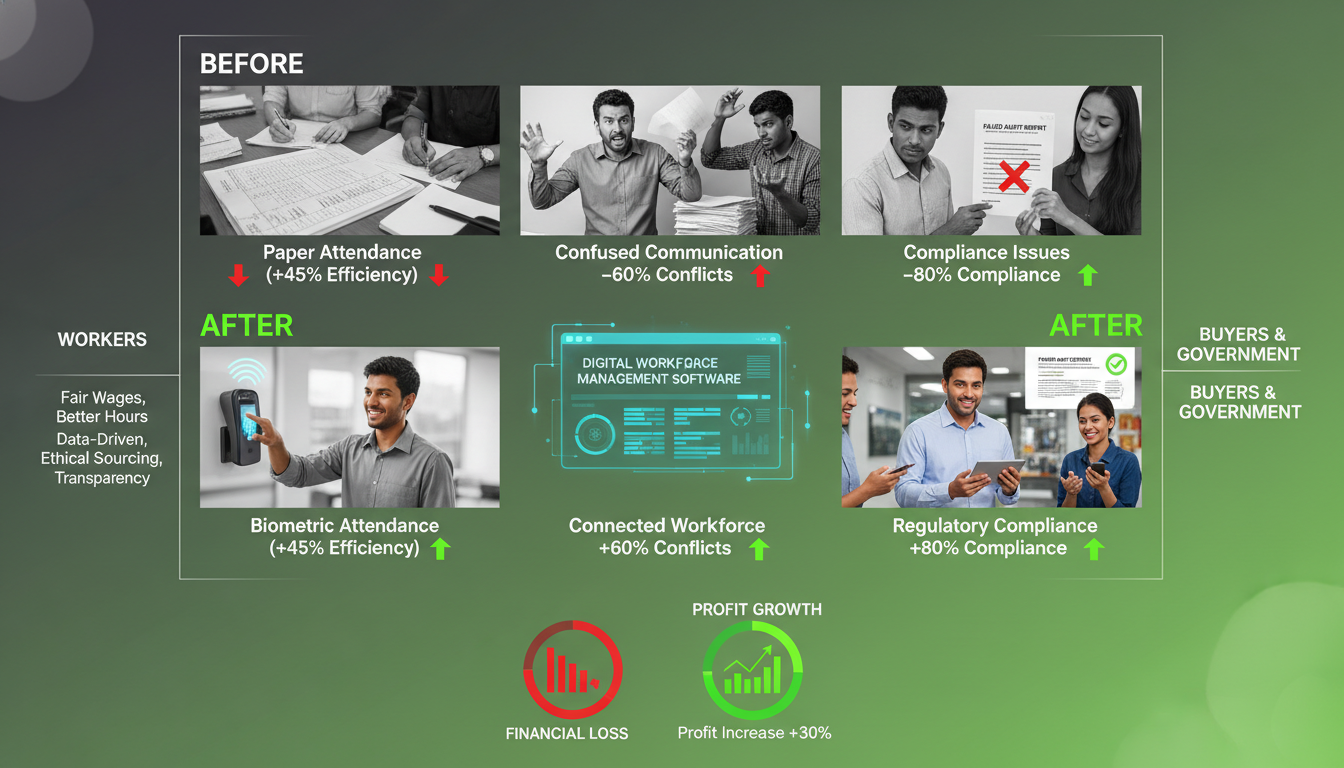
When stakeholders work together, your business grows. Stakeholder alignment in HR gives you many good things. Understand ESG and sustainability reporting.
- More work done: Happy workers do better. Clear systems reduce confusion. Everyone knows what to do.
- Better following of rules: Early engagement stops problems. Digital systems track everything. Checks become easy, not scary.
- Stronger buyer relationships: Clear data builds trust with international clients. More trust means more orders.
- Less trouble: Good union relations stop strikes. Worker happiness reduces turnover. Your work stays stable.
- Better name: Good practices bring better buyers. Communities support your factory. Media says good things.
- Lower costs: Avoiding penalties saves money. Good systems reduce waste. Happy workers need less watching.
Workforce transparency software makes alignment easier. Everyone sees the same data. Fights go down. Trust goes up. The emotional benefits matter too. Workers feel valued. Buyers feel sure. Owners sleep better. Communities feel proud.
How Digital Workforce Management Software Aligns Stakeholders in Bangladesh
Modern workforce management software for stakeholders solves old problems. It makes everything clear so everyone can trust it.
Here’s how digital systems help:
- Compliance monitoring dashboard: Track all labor law needs in one place. See what’s good and what needs fixing. Government checks become simple.
- Audit-ready attendance system: Biometric or digital attendance stops fights. Buyers can check worker hours from far away. No more paper book tricks.
- Real-time reporting: Managers, owners, and buyers see the same data right away. This builds trust and speeds up choices.
- Automated alerts: Get warnings before rule deadlines. Never miss a filing. Avoid last-minute stress.
- Worker portals: Workers check their attendance, leave, and pay online. This improves workplace transparency and reduces HR complaints.
Digital systems make many stakeholders happy at once. Workers get correct pay. Managers get good data. Buyers get proven compliance. Government gets proper reports.
High-intent workforce transparency software isn’t just tech. It’s a stakeholder engagement strategy that works all day, every day.
A Practical Guide to Stakeholder Management for Bangladeshi Businesses
Want to improve your stakeholder management? Follow this practical way. It’s based on stakeholder management best practices made for Bangladesh.
The goal: Make systems that keep workforce stakeholders happy while growing your business.
1.Prioritize Compliance and Safety
Bangladesh labor law compliance comes first. Always. No exceptions. Follow minimum wage rules. Respect work hour limits. Keep safety standards. Read workplace safety guidelines.
Workforce compliance management stops disasters. Get proper licenses. File reports on time. Do regular safety drills. Write everything down.
Digital systems make compliance easier. They track hours by themselves. They show problems early. They create audit trails.
2.Foster Open Dialogue with Workers & Unions
Building trust with workers needs regular talk. Don’t wait for problems. Hold monthly meetings. Make suggestion boxes. Act on feedback.
Use a stakeholder communication framework that includes workers. Explain business choices. Share production updates. Say you hear their concerns.
Union relationships get better when you engage early. Meet often. Talk fairly. Honor agreements fully.
3.Proactive Engagement with Buyers
Don’t wait for buyer checks to panic. Share compliance data often. Use ethical supply chain workforce practices to sell yourself.
Buyer stakeholder engagement means being clear. Give buyers portal access to your workforce data. Show them you have nothing to hide.
This builds trust. Buyers who trust you give more orders and better prices.
4.Address Local Community & Social Factors
Your factory affects the local area. Hire local people when you can. Support community projects. Handle environmental concerns seriously.
Workforce management in Bangladesh includes community stakeholders. They can become your biggest supporters or worst critics.
Good community relations improve hiring. They reduce local opposition. They create good media coverage.
5.Build a Skilled Workforce
Invest in workforce development. Train workers properly. Create growth opportunities. Develop supervisors from inside.
HR capacity building helps everyone. Skilled workers make better products. They need less watching. They stay longer.
This makes workers happy, improves quality, and makes buyers happy. It’s good for all stakeholders.
Tips to Improve Stakeholder Management in Bangladesh
Want quick improvements? Try these action tips for your HR stakeholder management process:
- Map your stakeholders: List everyone who affects your workforce. Rank them by power and importance. Focus on high-impact groups first.
- Create communication schedules: Don’t engage randomly. Set regular meeting times with unions, workers, and community groups.
- Implement digital systems: Paper registers create fights. Digital HR systems for Bangladesh businesses stop most conflicts by themselves.
- Document everything: Keep records of all stakeholder talks. This protects you during disputes and checks.
- Train your managers: Your supervisors manage stakeholders every day. Teach them proper engagement ways.
- Be proactive, not reactive: Think about stakeholder needs ahead. Address concerns before they become complaints. Prevention costs less than fixing.
- Measure satisfaction regularly: Survey workers every three months. Check in with buyers monthly. Watch union mood all the time.
- Celebrate wins together: When production hits targets, thank everyone. Share success with all stakeholders.
Your stakeholder engagement strategy should be systematic, not random. Being consistent builds trust over time.
Conclusion
Understanding who are stakeholders in workforce management changes how you run your business. It’s not just HR theory. It’s real survival in Bangladesh’s tough market.
Your stakeholders include workers, managers, owners, unions, buyers, government, NGOs, and communities. Each group has different needs. Your job is balancing these needs while keeping your business making money.
Digital workforce management systems make this balance possible. They create clarity. They ensure following rules. They build trust with all stakeholders at once.
Start today. Map your stakeholders. Find your biggest gaps. Put in systems that fix many needs at once.
Protecting your business reputation needs good stakeholder management. Avoiding compliance penalties demands early engagement. Building sustainable growth needs stakeholder alignment.
The factories that grow in Bangladesh don’t fight their stakeholders. They engage them. They use HR compliance automation tools to make everyone’s life easier.
Ready to change your workforce management? Start with your most important stakeholders. Listen to their needs. Build systems that work for everyone.
Your business, your workers, and your buyers will all benefit. That’s the power of proper stakeholder management.
FAQ
1. Who are stakeholders in workforce management?
Stakeholders are people who affect your workers. Inside your company: employees, managers, HR, owners, unions. Outside your company: government, buyers, NGOs, communities. All these groups matter for your business.
2. What is stakeholder management in HR?
Stakeholder management in HR means finding who matters. Then talking to them. Then making them happy. You balance what workers want, what buyers need, and what government requires. This keeps your business safe.
3. Why do stakeholders matter in workforce management?
Stakeholders matter because they control your success. Workers do the work. Buyers give orders. Unions can stop work. Government can fine you. Keep them happy and your factory runs smooth.
4. What are common stakeholder conflicts in Bangladesh factories?
Workers want more pay. Owners want to save money. Buyers want perfect compliance. Factories work on thin profits. These conflicts happen often. Good systems help prevent big fights.
5. How does workforce management software help?
Workforce management software shows clear data to everyone. Workers see their pay. Managers see attendance. Buyers see compliance. Government sees reports. Everyone trusts the same information. This stops fights.