
You can’t fix what you can’t see.
That’s the whole problem with employee sentiment. Most companies think everything’s fine — until someone quits. Or ten people quit. All at once.
Here’s the truth. Your employees feel things every single day. They feel proud when their work matters. They feel stuck when no one listens. And they feel real relief when someone finally asks.
The good news? Measuring employee sentiment isn’t complicated. You just need the right questions and the right tools.
This guide covers everything. How to measure it. How to track it. How to boost engagement once you have the data. Let’s get into it.
What Is Employee Sentiment and Why Does It Matter for Your Business?
Employee sentiment is how your team feels about their work. It’s not just job satisfaction. It goes deeper.
It covers trust in leadership, pride in their role, and whether they feel they belong. When sentiment is high, people show up. They stay. They do great work.
When it’s low? People stay physically but check out mentally. That’s quiet quitting. And it’s expensive.
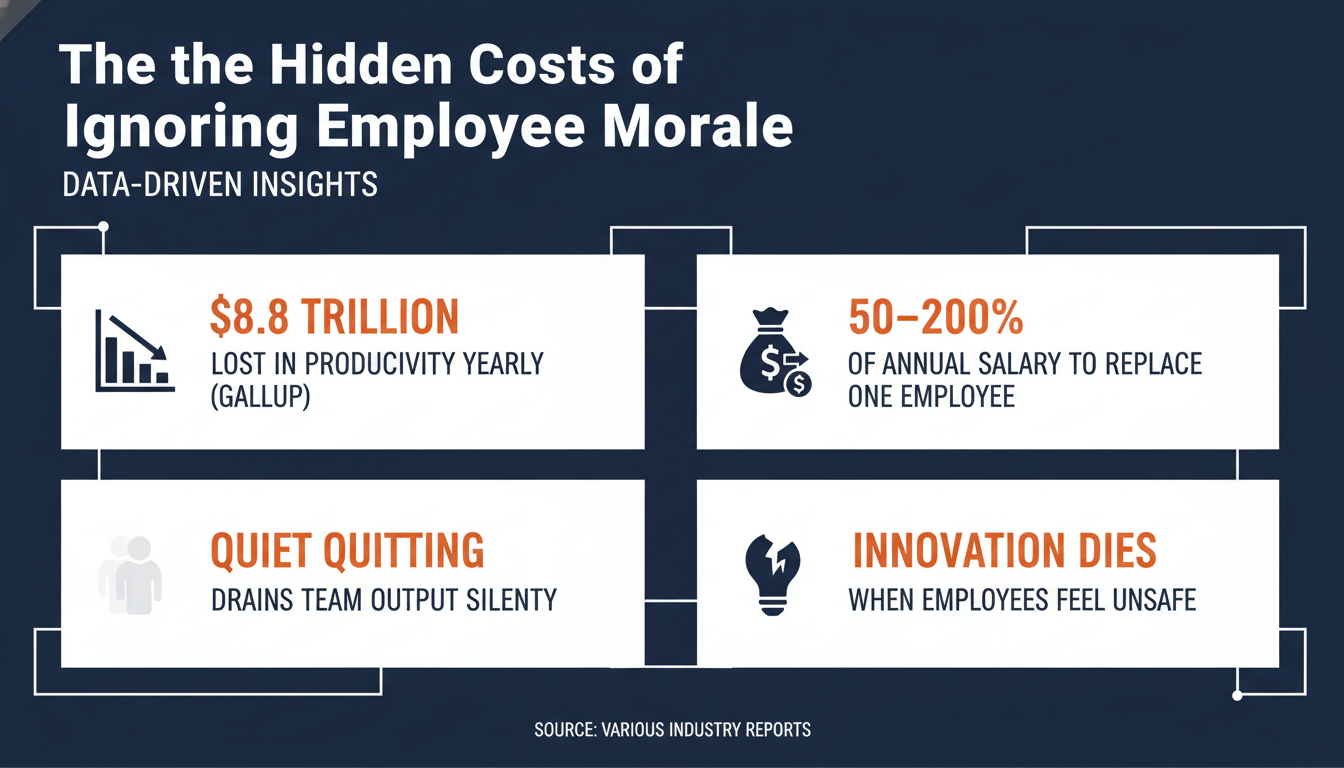
According to Gallup’s State of the Global Workplace report, disengaged employees cost companies $8.8 trillion in lost productivity yearly. Yes, trillion.
So employee sentiment isn’t a “nice to have.” It’s a core business metric. Think of it like the pulse of your company. A weak pulse means something’s wrong. A strong one means you’re growing.
The Real Cost of Ignoring Employee Morale and Sentiment
Most companies only look at output. Revenue, sales, products shipped.
But ignoring how your team feels is like ignoring a leaking pipe. It looks fine — until the ceiling collapses.
Here’s what happens when you skip employee sentiment tracking:
- Turnover spikes. Replacing one employee costs 50–200% of their annual salary.
- Productivity drops. Disengaged workers do the bare minimum.
- Culture suffers. One unhappy employee can poison a whole floor.
- Innovation dies. People stop sharing ideas when they don’t feel safe.
There’s a Bangladeshi saying that fits here perfectly: “দশের লাঠি একের বোঝা” — a burden shared by ten feels light for one. When everyone feels included and heard, the whole team carries more.
You can’t afford to skip this.
Key Employee Sentiment Metrics You Should Track
Feelings are real. But data makes them actionable. Here are the most important employee sentiment metrics to watch.
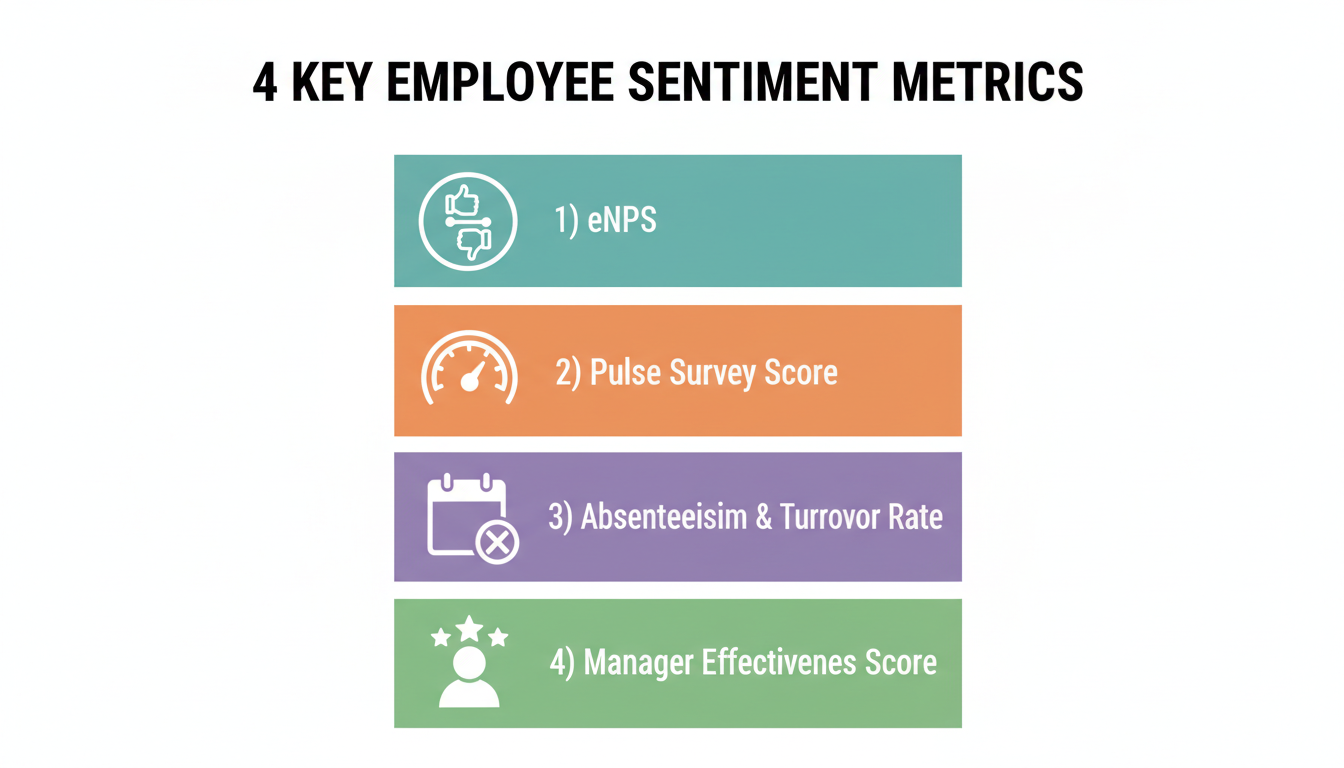
1. Employee Net Promoter Score (eNPS)
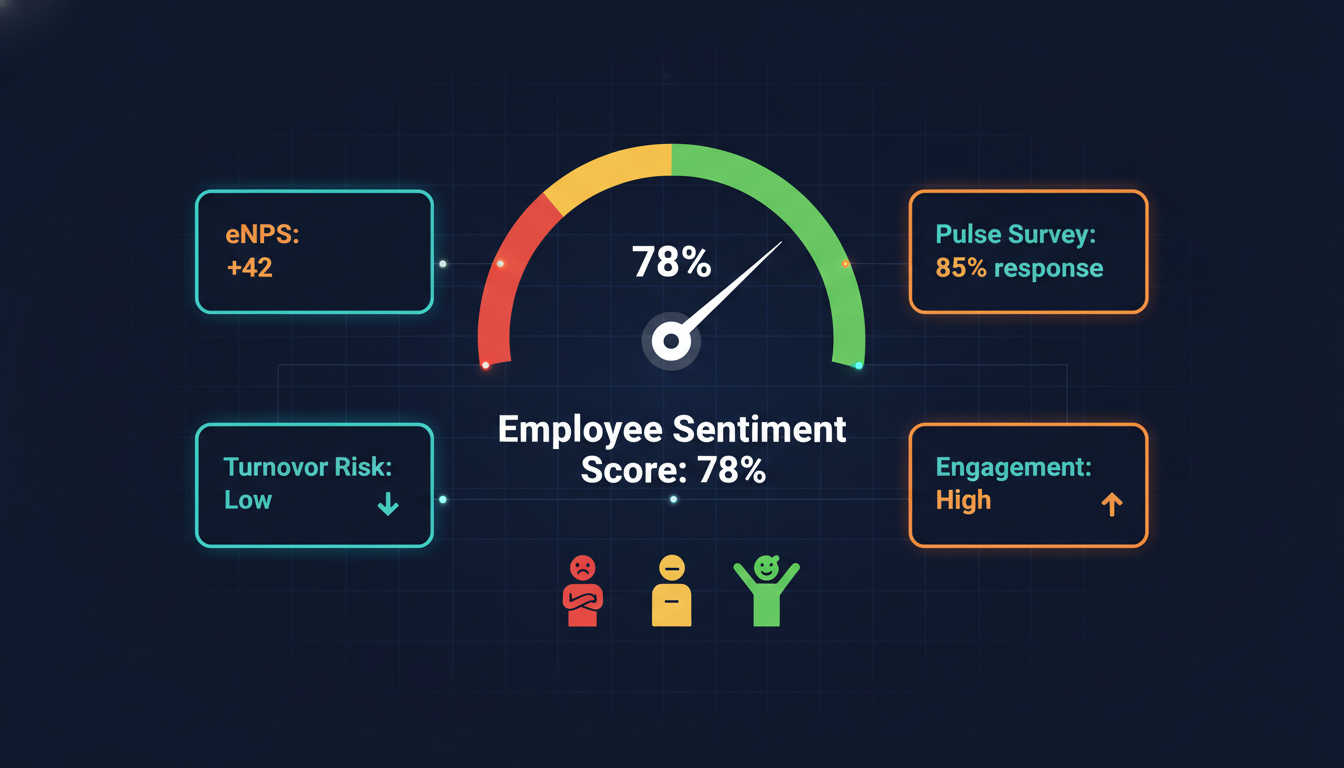
eNPS asks one simple question. “How likely are you to recommend this company as a place to work?” Rate on a scale from 0–10.
- Scores 9–10: Promoters — your biggest fans.
- Scores 7–8: Passives — not unhappy, but not committed.
- Scores 0–6: Detractors — at risk of leaving or spreading negativity.
Subtract the detractors’ percentage from the promoters’. That’s your eNPS. It’s fast. It’s honest. And it gives you a clear number to track over time.
2. Pulse Survey Scores
Pulse surveys are short, frequent check-ins. Usually 5–10 questions. Sent weekly or monthly.
They show how sentiment shifts in real time. Think of it like a weather app for your team’s mood. You don’t wait a whole year to check if it’ll rain.
3. Absenteeism and Turnover Rate
High absenteeism is a red flag. When people dread work, they find reasons to avoid it. Track absenteeism monthly. Track voluntary turnover quarterly.
4. Manager Effectiveness Scores
One bad manager ruins great teams. Track how employees rate their direct managers separately. Most problems start there — not at the executive level.
How to Run Employee Sentiment Surveys That Actually Work
Most sentiment surveys fail for one reason. Nobody trusts them.
Employees think HR will see this and use it against them. So they lie. Or skip it entirely.
Here’s how to fix that:
- Make surveys anonymous. Always. No exceptions.
- Keep them short. Under 10 minutes. Long surveys get abandoned halfway.
- Share the results. When employees see that leadership acted on data, trust builds.
- Run them often. Annual surveys are outdated. Problems grow while you wait.
Crafting Effective Employee Survey Questions
Bad question: “Are you satisfied with your job?” — too vague, gets vague answers.
Better questions that get real answers:
- “Do you have what you need to do your best work today?”
- “Does your manager recognize your contributions?”
- “Do you feel your voice matters in this team?”
- “Would you recommend our company to a friend as a great place to work?”
Specific questions unlock honest answers. Vague questions just waste everyone’s time.
Pulse Surveys vs. Annual Surveys — Which One Wins?
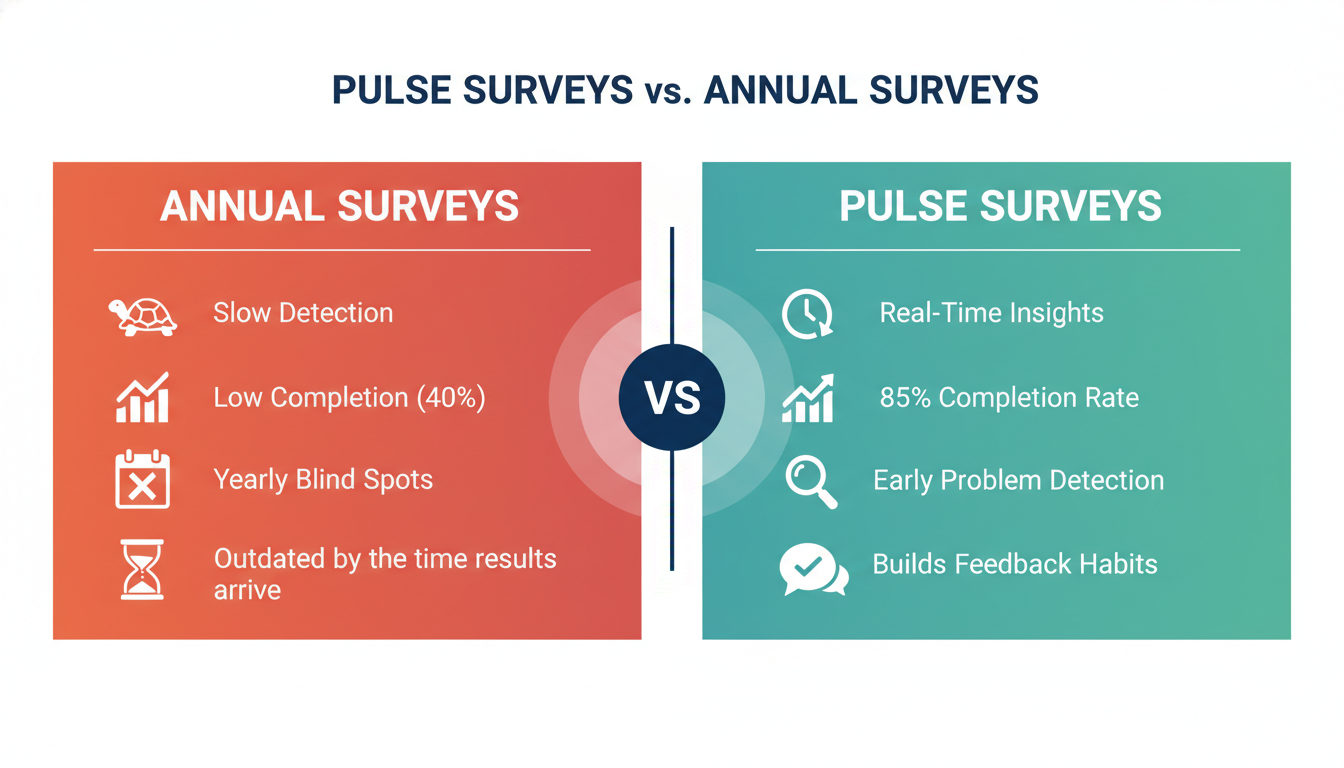
Annual surveys used to be the gold standard. That was ten years ago.
Now, running one survey a year is like checking the weather forecast once every twelve months. Totally useless for real decisions.
Pulse surveys win. Here’s why:
- They’re timely. You catch problems early — before they explode.
- They’re lighter. 5 questions vs 50. Completion rates jump from 40% to 85%.
- They build habits. Teams get comfortable sharing. Feedback becomes normal.
But pulse surveys only work if you act on them. If employees answer and nothing changes, they stop answering. Respect the data by doing something real with it.
How to Use Employee Feedback Tools Effectively
There are hundreds of employee feedback tools out there. Picking the right one matters a lot.
Look for tools that do these things well:
- Send automated pulse surveys on a schedule
- Show trend data over time — not just one-time snapshots
- Break down results by team, department, or location
- Keep all responses 100% anonymous
- Integrate with your existing HR systems
Platforms like Culture Amp, Lattice, and Officevibe are popular globally. But if your company needs a platform that handles HR, communications, and team management, Tipsoi is built exactly for that.
Tipsoi empowers managers, CEOs, and directors to send important updates, alerts, and reminders across multiple channels. That keeps teams informed and emotionally connected, even in hybrid or remote setups.
What Is Employee Sentiment Analysis?
Sentiment analysis sounds fancy. The idea is simple.
It’s the process of reading employee feedback and figuring out whether the tone is positive, negative, or neutral. You’re not just counting scores. You’re understanding the “why” behind the numbers.
Sentiment Analysis Tools and Software
Old-school sentiment analysis was manual. HR teams read hundreds of survey responses one by one. That’s slow, expensive, and biased.
Modern tools use AI and natural language processing (NLP). They scan open-text responses and detect patterns automatically.
For example, if 60 employees mention “no career growth” in their open-ended answers, the tool flags it immediately. You didn’t read 60 responses. The tool did.
Popular sentiment analysis platforms:
- Qualtrics EmployeeXM
- Medallia
- Culture Amp (with text analytics)
- Glint by LinkedIn
These tools help your HR team make sense of thousands of responses, fast. No more guessing. No more reading between the lines.
How to Measure Employee Engagement Alongside Sentiment
Sentiment and engagement are cousins. Related, but different.
- Employee sentiment = how employees feel about their work and company.
- Employee engagement = how connected and motivated they are to perform.
You need both. Here’s how to measure employee engagement:
- Track participation rates. Do people join meetings voluntarily? Attend optional trainings?
- Measure output quality. Engaged employees take pride in their work. Watch for quality drops.
- Look at collaboration. Are people helping each other, or working in silos?
- Monitor L&D usage. Engaged employees want to grow. Low training use = low engagement.
- Check feedback loop completion. High survey response rates signal high engagement.
Combine engagement data with sentiment data. That combination tells you everything you need to know.
Building a Culture of Psychological Safety at Work
Here’s a rhetorical question worth sitting with: What’s the point of a survey if no one feels safe answering it honestly?
Psychological safety means employees can speak up without fear. They can share ideas, report problems, and be wrong — without being punished for it.
Google’s Project Aristotle found that psychological safety was the number one factor in high-performing teams. Not skills. No experience. Safety.
How do you build it?
- Leaders go first. When a manager admits a mistake, teams feel safe to do the same.
- Reward honesty. Thank people who share hard feedback. Don’t just tolerate it, celebrate it.
- Drop the blame culture. When something goes wrong, ask “what” and “how”, not “who.”
Psychological safety turns sentiment data into gold. Because people actually tell you the truth.
How to Boost Employee Morale After Negative Feedback
You ran a survey. The results aren’t great. Now what?
First — don’t panic. Negative feedback is information, not an attack.
Here’s a clear action plan:
- Acknowledge it. Send a company-wide message. Say: “We heard you. Here’s what we found. Here’s what we’re doing.”
- Prioritize two or three things. You can’t fix everything at once. Pick the biggest-impact issues first.
- Create a visible action plan. Use a shared doc, Slack channel, or dashboard. Show the before and after.
- Follow up in 30 days. Run a 3-question check-in. Ask if people feel the changes are real.
This is where your HR team’s real work begins. Not in collecting data — but in acting on it. That’s what frees up your HR team to focus on people, not paperwork.
And Tipsoi’s communication tools make this easy. Your team can send push notifications, SMS, and email updates directly to employees. Keep them in the loop at every step. That builds trust. That builds belonging.
The Role of HR Technology in Workforce Sentiment Tracking
Manual tracking doesn’t scale. With 50 employees, you can manage. With 500, you’re drowning in spreadsheets.
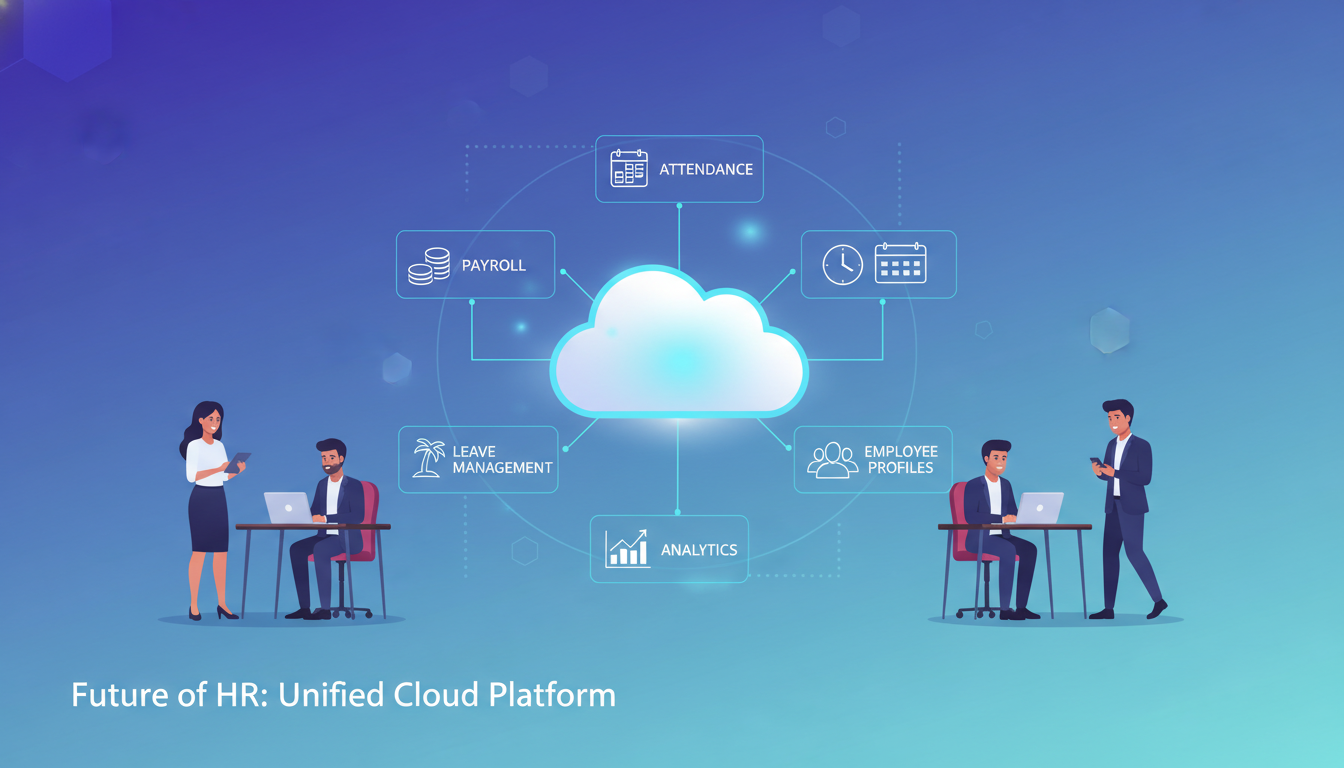
HR technology automates the boring stuff. It frees up your HR team to focus on people — not repetitive admin tasks.
Here’s what good HR tech should do for sentiment tracking:
- Automate survey delivery. No more “remember to send the survey.” It just goes automatically.
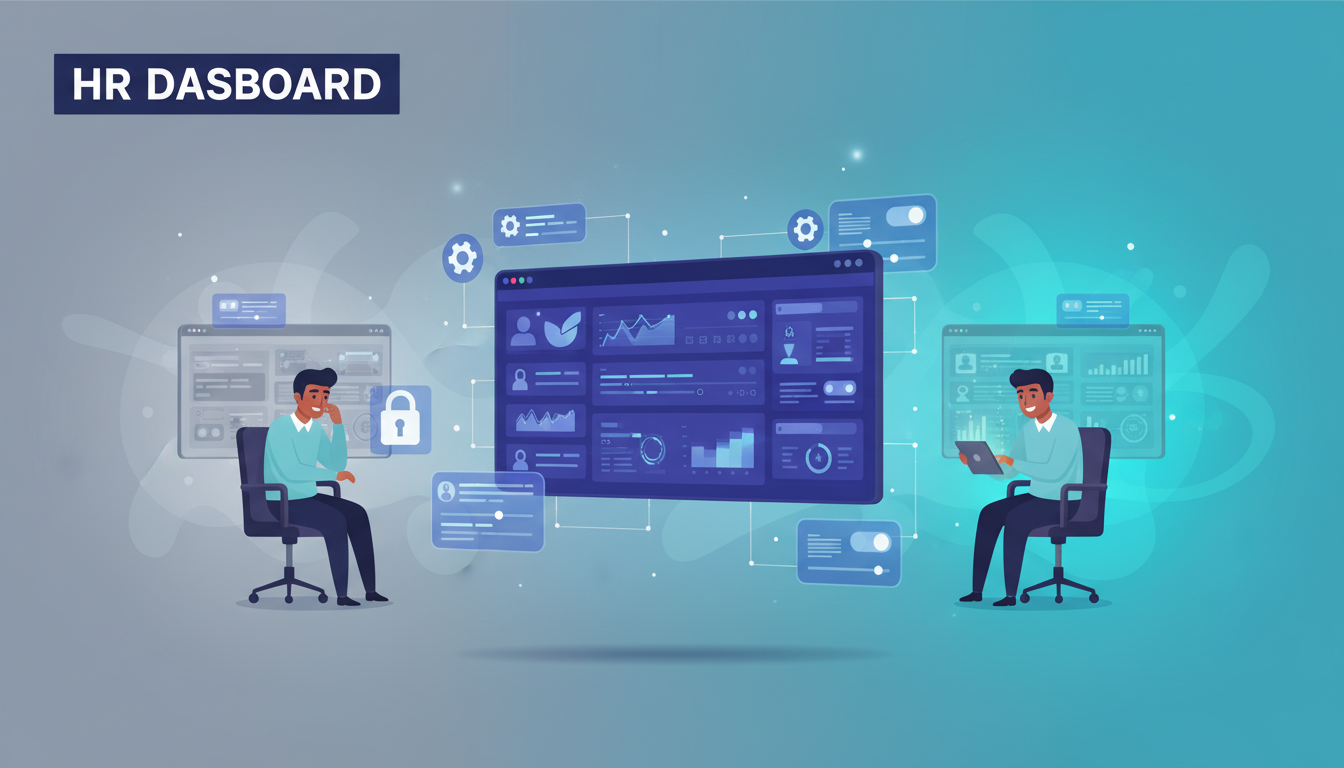
- Aggregate data in one dashboard. See scores, trends, and flags all in one place.
- Flag red alerts. If a team’s score drops 20% in a month, HR gets notified right away.
- Connect attendance with sentiment. High absenteeism often signals low sentiment. See the pattern.
Tipsoi does all of this. With biometric attendance tracking and smart notification features, Tipsoi gives managers and directors a real-time view of what’s happening on the ground.
Common Mistakes Companies Make When Measuring Employee Sentiment
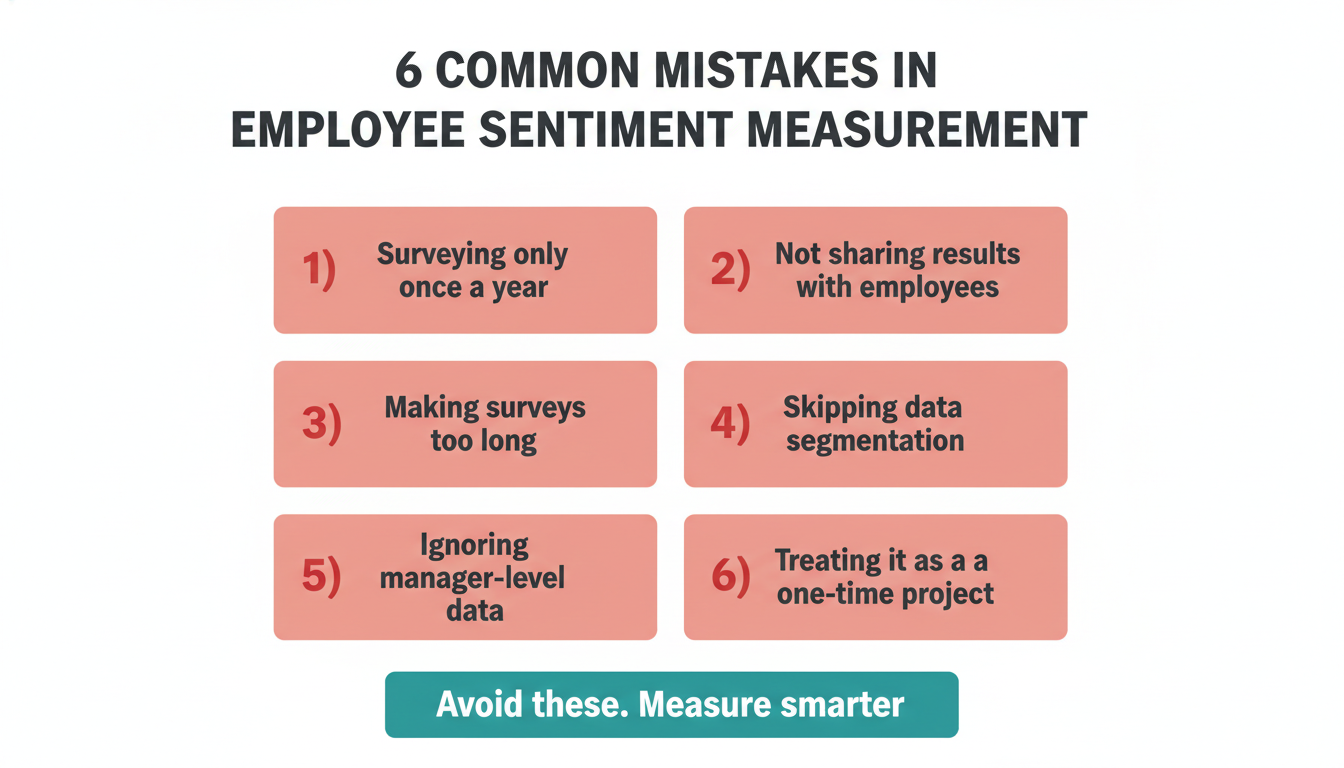
Let’s be honest. Most companies do this wrong.
- Surveying once a year. Too slow. Too late. The problem has grown by then.
- Not sharing results. Employees think nothing happened. They stop participating.
- Making surveys too long. Fifty questions mean nobody finishes.
- Skipping data segmentation. You can’t fix a sales team issue with a company-wide policy.
- Ignoring manager-level data. Most problems start with direct managers, not executives.
- Treating it as a one-time project. Sentiment measurement is ongoing. It’s a system, not an event.
Avoid these mistakes, and you’re already ahead of most companies.
Employee Wellbeing and Mental Health at Work — Don’t Skip This
Well-being and sentiment go hand in hand. An employee can score high on engagement but still be burning out quietly.
Here’s what to track:
- Are employees taking their paid leave? Unused leave = possible burnout risk.
- Are people working excessive overtime consistently?
- Do employees have access to mental health resources at work?
- Are there workload equity issues across teams?
When you track well-being alongside sentiment, you get the full picture. Not just how people feel — but whether they’re sustainable over the long run.
A Tipsoi leave management system helps HR spot patterns automatically. When someone’s taken zero leave in six months, that’s a signal worth investigating.
How to Turn Employee Sentiment Data Into Real Action
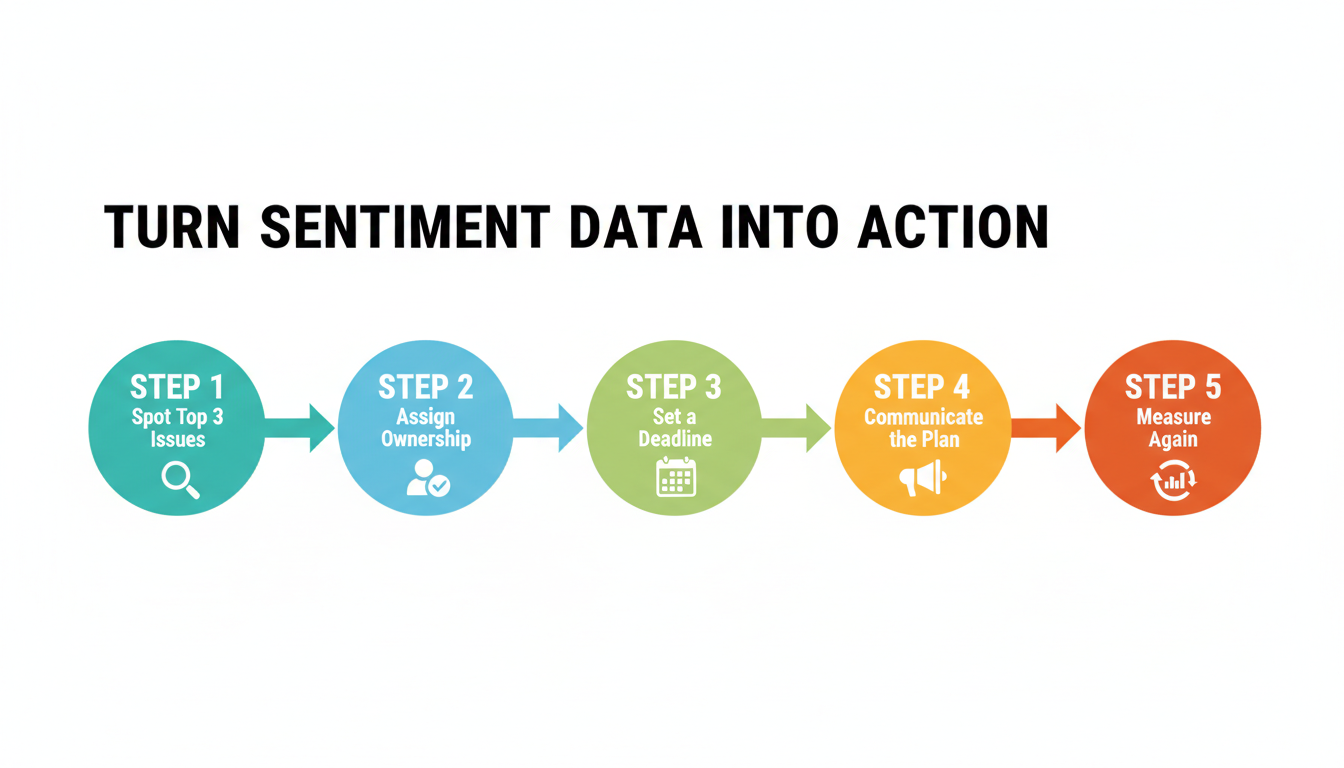
Data without action is just noise. Here’s a simple five-step framework:
- Step 1: Spot your top three issues. Look for patterns, not outliers.
- Step 2: Assign ownership. Name one person responsible. No owner means no action.
- Step 3: Set a deadline. No deadline = it never gets done.
- Step 4: Communicate the plan. Tell employees what’s changing. And when.
- Step 5: Measure again. Run a follow-up survey in 60 days. Did things improve?
This loop — listen, act, follow up, repeat — is the engine of a healthy workplace culture.
Here’s the analogy that nails it. Think of employee sentiment like a garden. You can’t plant seeds and walk away. You have to water it. Check it. Pull the weeds. Tend to it every season.
When you do that consistently, something beautiful grows.
How Tipsoi Helps You Stay on Top of Employee Sentiment
Tipsoi is more than an attendance tool. It’s a complete workforce management platform built for companies that take their people seriously.
Here’s how Tipsoi supports employee sentiment and engagement:
- Smart multi-channel notifications. Push, SMS, and email — all in one platform. Keep your team informed. Reduce uncertainty. Build trust.
- Biometric attendance tracking. Accurate data means fewer disputes. Less stress for HR and employees both.
- Leave and absence management. Spot absenteeism trends before they become turnover problems.
- Leadership communication tools. Managers, CEOs, and directors can broadcast updates across all channels. No one feels left out.
When your team feels informed and valued, sentiment improves naturally. Tipsoi makes it easy to get there.
Email: contact@tipsoi.pro Phone: +880 1313 359 294 | +880 1313 359 293 | +880 1313 359 295 Dhaka: H-18 (Level 4), Kazi Nazrul Islam Avenue, Shahbag, Dhaka-1000 Singapore: 10 Bukit Batok Crescent, #10-05b, The Spire, Singapore 658079
Your People Deserve to Be Heard: Final Thoughts on Employee Sentiment
Measuring employee sentiment isn’t about collecting data. It’s about showing your team that they matter.
When employees feel heard, they stay. They grow. They bring their best selves to work every single day. And that’s what builds a company worth being proud of.
Here’s a rhetorical question worth asking yourself right now: If you knew exactly how your team felt today, what would you change?
Start small. Send one pulse survey this week. Share the results. Take one action. Tell your team what you’re doing about it.
That first step matters more than you think. And Tipsoi is here to help you take it — and every step that follows.
Frequently Asked Questions About Employee Sentiment
Here are common questions regarding employee sentiment and its impact on your workforce:
1: What is employee sentiment, and how is it different from employee engagement?
Employee sentiment is how your team feels about their work, their manager, and the company overall. Engagement is how motivated and committed they are to perform. Sentiment drives engagement. When people feel good, they engage more. Both need to be tracked — and acted on.
2: How often should I measure employee sentiment?
Monthly pulse surveys are the sweet spot for most companies. Annual surveys are too slow — problems grow while you wait. Weekly surveys can feel exhausting. Monthly gives you regular, actionable data without burning out your team.
3: What are the best tools for employee sentiment surveys?
Popular global tools include Culture Amp, Lattice, Officevibe, Qualtrics, and Glint. If you need an all-in-one platform that also handles attendance, leave management, and team communications — Tipsoi is worth a close look.
4: Can AI and LLMs really help with employee sentiment analysis?
Yes — and they’re getting better fast. LLMs can scan thousands of open-text survey responses in seconds, detect emotional tone, and surface trending themes. But they work best alongside human judgment. Use AI to find the patterns. Let your HR team decide the actions.
5: What should I do when employee sentiment scores come back low?
Don’t ignore it — and don’t panic either. Acknowledge the results openly with your team. Identify two or three priority issues. Build a visible action plan with real deadlines. Then follow up in 30–60 days to show progress. Low scores are a starting point, not a failure. They’re an invitation to do better.