


Every business owner has been there.
You spend money on ads, get traffic to your website, people even sign up or add items to their cart, and then they just disappear. No purchase. No reply. No second visit.
What went wrong?
Most of the time, the answer is simple: you don’t fully understand the path your customer takes before they buy from you or why they stop halfway through.
That’s exactly what a customer journey map helps you figure out.
In this guide, you’ll learn what a customer journey map is, why it matters for your business, the key stages involved, and how to build one from scratch, even if you’ve never done it before.
What Is a Customer Journey Map?
A customer journey map is a visual representation of every step a customer takes when interacting with your brand, from the very first time they hear about you to long after they’ve made a purchase.
Think of it like a story. Your customer is the main character, and the map shows you every scene of their experience: what they’re doing, what they’re thinking, how they’re feeling, and where they’re getting frustrated.
It can be as simple as a timeline on a whiteboard or as detailed as a multi-layered diagram with data, emotions, and touchpoints mapped out at every stage.
The goal is always the same: understand your customer’s experience so you can make it better.
Now, you might be wondering, isn’t this just a sales funnel?
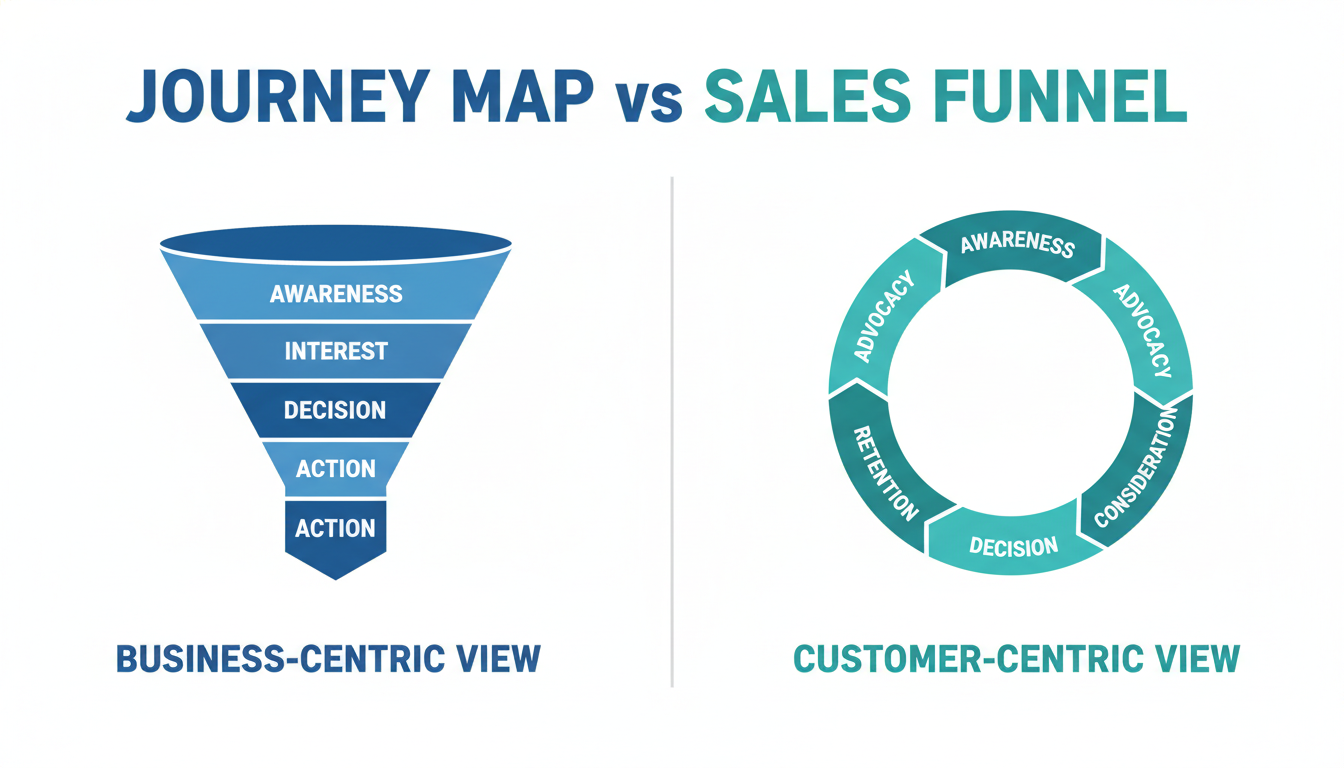
Not exactly. A sales funnel is business-centric. It focuses on how you push a prospect toward a sale. A customer journey map is customer-centric. It focuses on what the customer actually experiences, including their frustrations, questions, and emotions, at every stage. Journey maps also go beyond the funnel. They cover what happens after the sale: onboarding, loyalty, and even advocacy.
Why Customer Journey Mapping Matters for Business Owners
If you’re running a business, you already know that getting a customer is only half the battle. Keeping them and turning them into repeat buyers is where real growth happens.
Here’s why building a customer journey map is one of the smartest things you can do right now.
1. You Can See Exactly Where Customers Are Dropping Off
When you know where customers stop engaging, you can fix it. Whether it’s a confusing checkout page, a slow follow-up email, or a product page that doesn’t answer the right questions, the journey map shows you the gaps. You stop guessing and start making decisions based on what’s actually happening.
2. It Helps You Reduce Customer Acquisition Costs
Acquiring a new customer in B2B can cost anywhere from $500 to $700 per person. If you’re not retaining those customers, you’re burning money. A journey map helps you improve the experience so customers stay longer, buy again, and bring others with them.
3. It Aligns Your Whole Team Around the Customer
Sales, marketing, support, and product teams often work in silos. A customer journey map gives everyone a shared view of how the customer actually experiences the brand. When your teams are aligned, customers get a consistent experience, and that builds trust.
4. It Helps You Predict What Customers Will Do Next
When you understand your customer’s mindset at each stage of the journey, you can anticipate their next move. You know what content to show them, what objection to address, and what offer to make, at exactly the right time.
The 5 Key Stages of the Customer Journey
The customer journey isn’t a straight line. People bounce around, do research on multiple channels, talk to friends, and come back days or weeks later. But in general, most customer journeys follow five main stages.
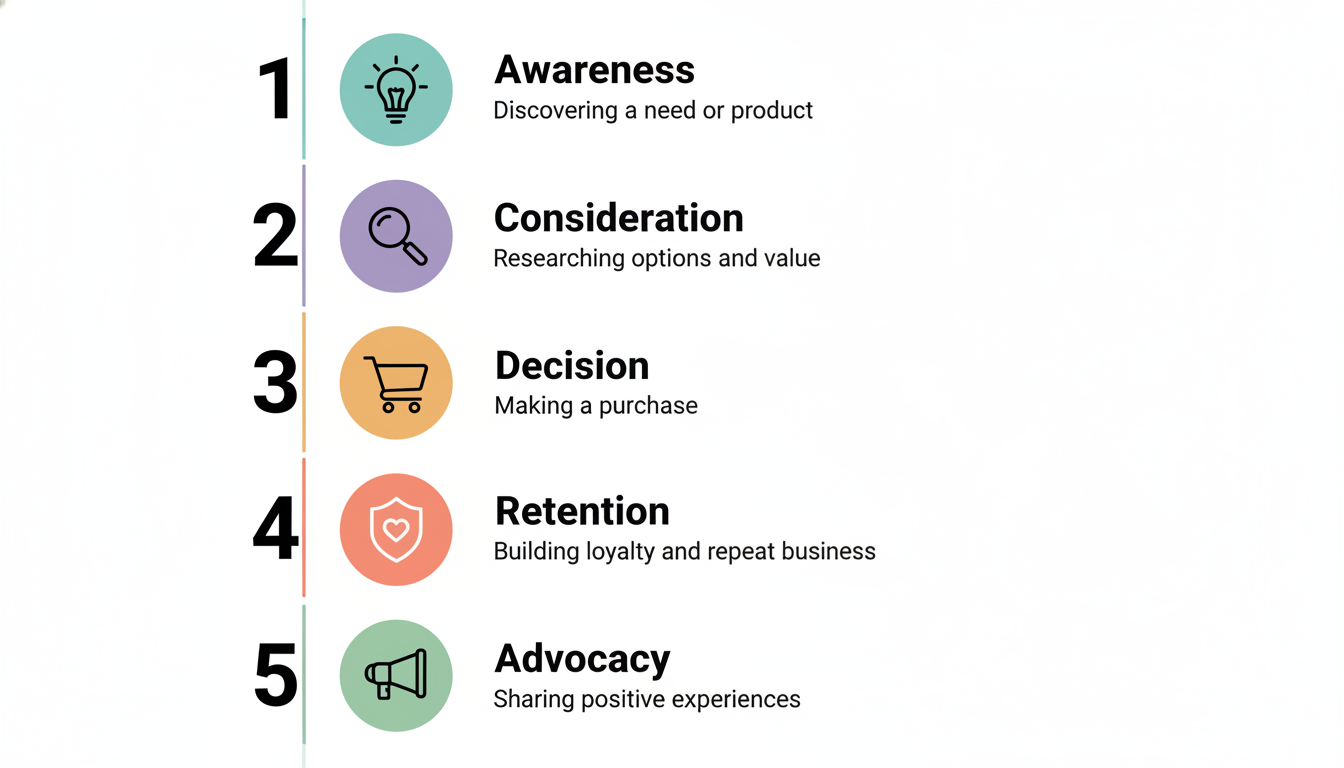
Understanding these stages is the foundation of any good customer journey map.
Stage 1: Awareness
This is where the journey begins. The customer realizes they have a problem or a need, but they may not know your brand exists yet.
They might see a social media post, read a blog article, or hear about you from someone they trust. At this point, they’re not ready to buy. They’re just starting to look for information.
Your job at this stage: be visible, be helpful, and make a great first impression.
Stage 2: Consideration
Now the customer knows about your brand and is actively evaluating their options. They’re comparing you with competitors, reading reviews, watching demos, and asking questions.
This is a critical stage because customers are paying close attention. If your messaging is unclear or your content doesn’t answer their questions, they’ll move on to someone else.
Your job at this stage: give them the information they need to feel confident choosing you.
Stage 3: Decision (Purchase)
The customer has done their research and is ready to buy. But even at this stage, small friction points, such as a complicated checkout, unclear pricing, or slow response from sales, can cause them to abandon.
Your job at this stage: make it as easy as possible to say yes.
Stage 4: Retention (Loyalty)
The sale is done, but the journey isn’t over. What happens after the purchase determines whether a customer comes back or disappears forever.
This is where onboarding, customer support, follow-up emails, and product experience matter most. A smooth post-purchase experience turns a one-time buyer into a loyal customer.
Your job at this stage: deliver on your promise and keep them engaged.
Stage 5: Advocacy
When customers are genuinely happy with their experience, they talk about it. They leave reviews, refer friends, and share your content. Advocates are your best salespeople, and they cost you nothing.
Your job at this stage: recognize loyal customers, ask for reviews, and create a referral system.
The Core Components of a Customer Journey Map
Now that you know the stages, let’s look at what actually goes inside a customer journey map. These are the building blocks that make the map useful, not just pretty.
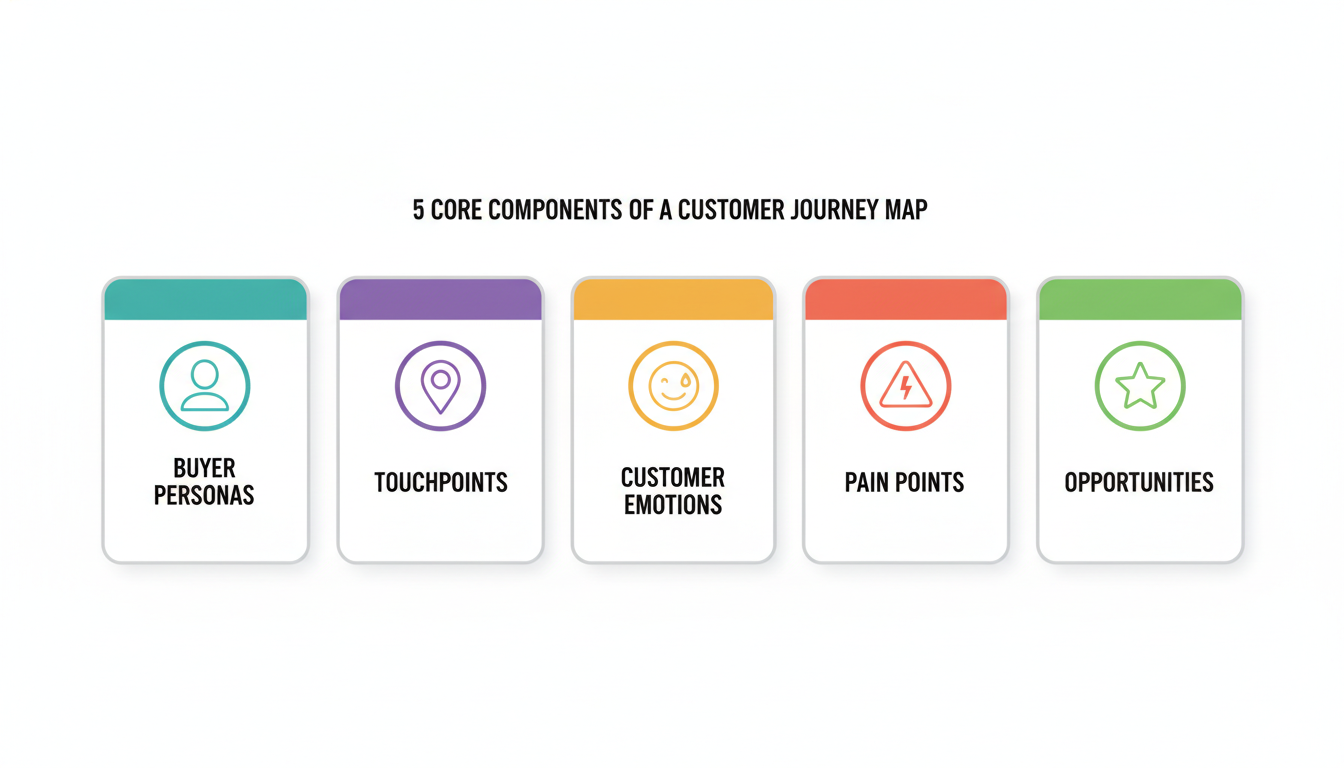
Buyer Personas
Before you can map the journey, you need to know who you’re mapping it for. A buyer persona is a detailed profile of your ideal customer, their goals, frustrations, behavior, and decision-making style.
Most businesses have two or three different types of customers. It’s best to create a separate journey map for each persona, because their experiences can be very different.
Touchpoints
A touchpoint is any moment where your customer interacts with your brand. This includes your website, social media posts, email campaigns, ads, sales calls, customer support chat, invoices, packaging, everything.
Mapping touchpoints helps you identify which interactions are creating value and which ones are causing friction.
Customer Emotions
This is what separates a good journey map from a great one. At each stage, you note how the customer is feeling: excited, confused, frustrated, confident, delighted. Emotion data helps you design experiences that feel good to go through, not just functional.
Pain Points
These are the specific moments where customers hit a wall. Maybe the pricing page is confusing. Maybe the onboarding email is too technical. Maybe support takes too long to respond.
Identifying pain points is often the most valuable outcome of journey mapping, because fixing them directly improves conversion and retention.
Opportunities
Once you’ve mapped the emotions and pain points, you’ll start to see opportunities: places where a small change could make a big difference. These become the action items your team works on.
How to Create a Customer Journey Map, Step by Step
You don’t need a fancy tool or a big budget to create your first customer journey map. You just need a clear process and honest data. Here’s how to do it.
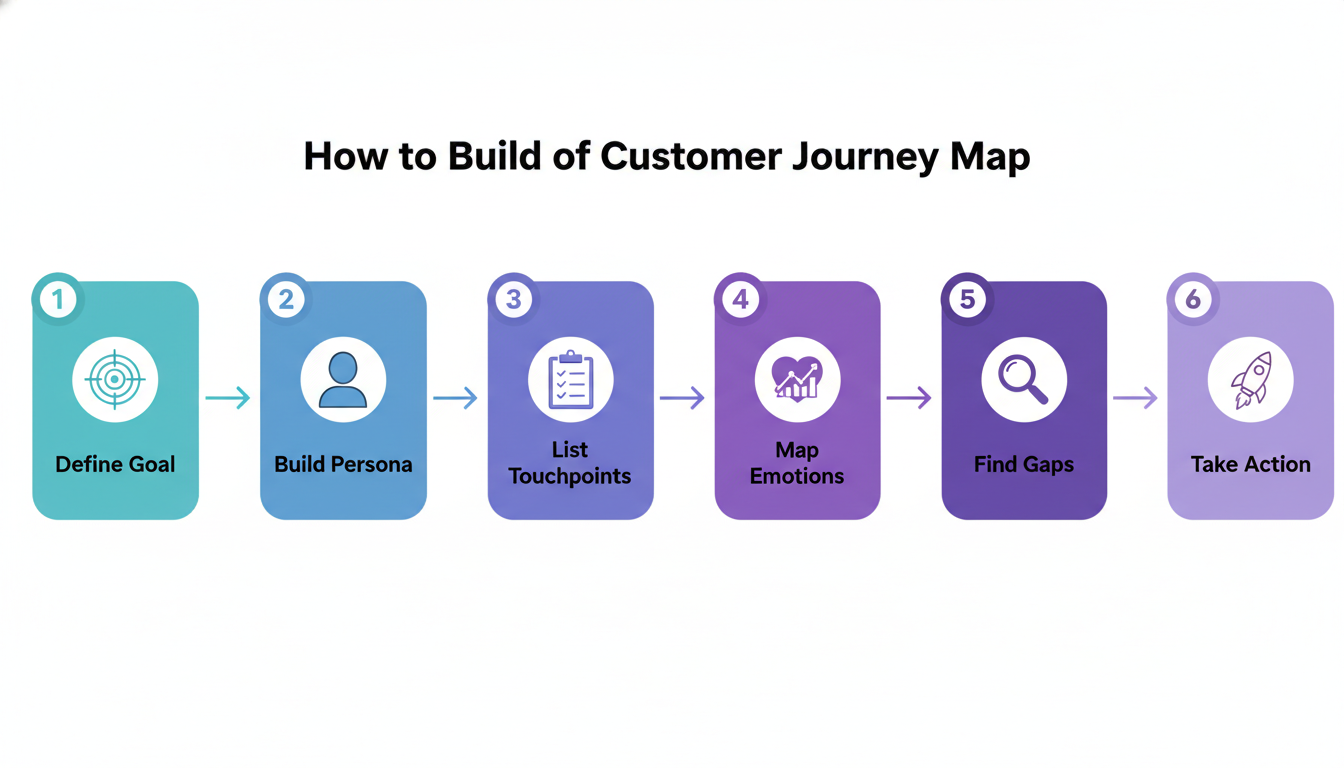
Step 1: Define Your Goal
Start by asking: What problem are you trying to solve with this map?
Are you trying to reduce churn? Improve onboarding? Increase conversions from the consideration stage? Having a clear goal keeps the process focused and makes the output actually useful.
Step 2: Build Your Buyer Persona
Use real data to build a detailed profile of your customer. Talk to your sales team, look at your support tickets, run a short survey, and review your analytics.
The goal is to understand your customer’s demographics, goals, pain points, and how they make buying decisions. The more specific you are, the more useful the map will be.
Step 3: List All Customer Touchpoints
Write down every single way a customer might interact with your brand, before, during, and after the sale.
This includes your website pages, blog posts, social media, email sequences, paid ads, sales conversations, onboarding materials, and even how you handle complaints.
Step 4: Map Emotions and Pain Points at Each Stage
For each touchpoint, ask: what is the customer feeling here? What questions do they have? What’s frustrating them?
Use a mix of real customer data, survey responses, support chat logs, reviews, sales call notes, and direct conversations with actual customers. Assumptions are the enemy of a good journey map.
Step 5: Identify Gaps and Opportunities
Look at the full picture and ask: where are we losing people? Where is the experience broken? Where could a small improvement make a big impact?
The best journey maps in 2026 don’t just list what customers feel; they connect those feelings directly to business outcomes like customer lifetime value, repeat purchase rate, and retention. If you can tie a pain point to a revenue impact, you can build a business case for fixing it.
Step 6: Take Action and Keep the Map Updated
A journey map is only useful if you act on it. Prioritize the biggest pain points, assign owners to each fix, and set a timeline.
Don’t treat the map as a one-time project. Customer behavior changes, new channels emerge, and expectations shift. Revisit and update your customer journey map at least once or twice a year, or whenever you launch a new product, enter a new market, or notice a drop in retention.
A Real-World Example: How a B2B Company Used Journey Mapping to Get More Demos
Let’s make this practical with a quick example.
A B2B software company was struggling to convert website visitors into demo requests. They had good traffic and a strong product, but the numbers weren’t moving.
When they built a customer journey map, they discovered the problem: prospects in the consideration stage didn’t have enough information to feel confident asking for a demo. The website had feature lists but no comparison guides, no industry-specific case studies, and no ROI data.
So they created detailed comparison content and targeted it at prospects in the middle of the funnel. The result? Demo requests went up by 40%.
The fix wasn’t complicated. But they never would have found the problem without mapping the journey first.
This is exactly the kind of insight that customer journey mapping gives you, and it applies to any business, whether you’re selling software, services, or physical products.
Common Mistakes Business Owners Make With Customer Journey Maps
Before you go ahead and build your map, here are some pitfalls to avoid.
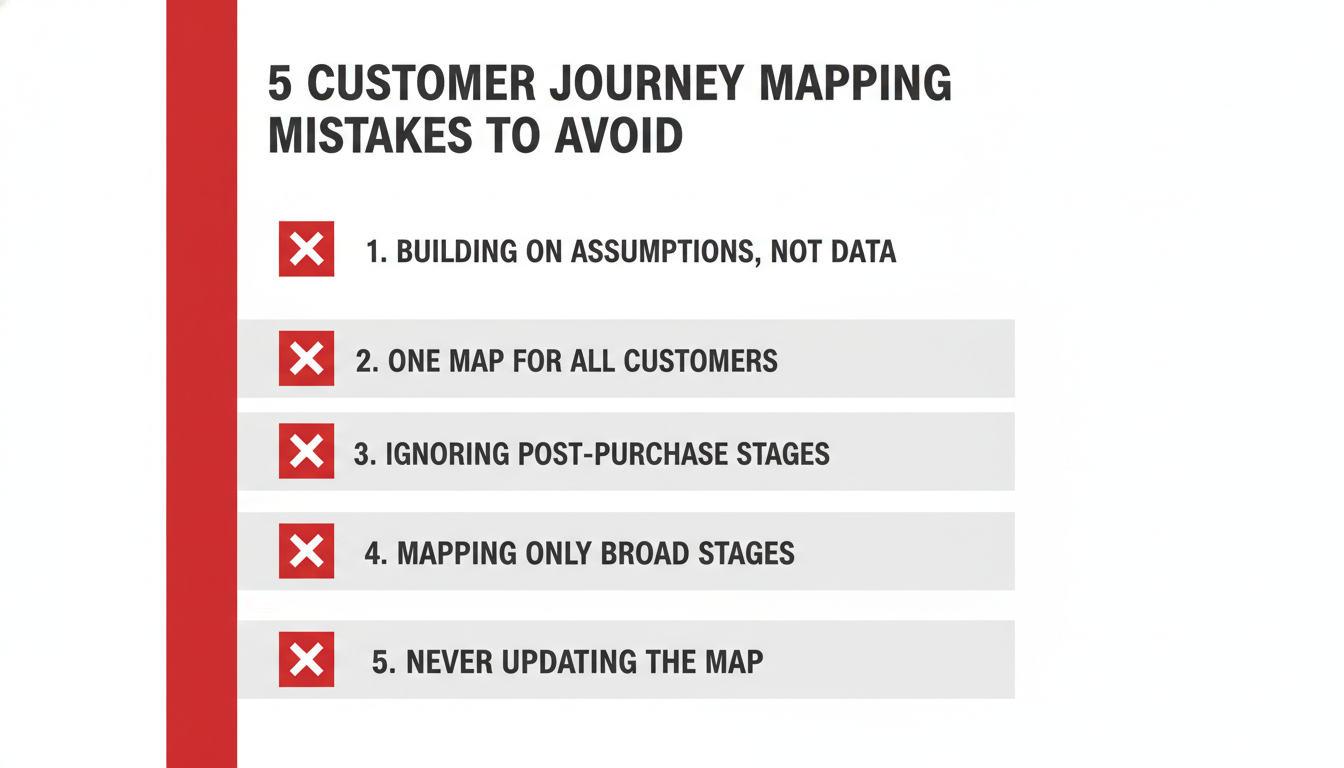
Building It on Assumptions, Not Data
The biggest mistake. If your map is based on what you think customers experience, rather than what they actually experience, it will lead you in the wrong direction. Always ground your map in real data.
Creating Only One Map for Everyone
If you have multiple customer types, one map won’t capture all of them. A small business owner buying your software has a very different journey than an enterprise procurement manager. Map them separately.
Ignoring the Post-Purchase Stages
Many businesses focus all their energy on getting the sale and then drop the ball on what comes after. Retention and advocacy are where long-term revenue comes from. Don’t leave them out of your buyer journey map.
Mapping Only Broad Stages
Saying “awareness” and “consideration” is not enough anymore. The most useful maps in 2026 track specific micro-behaviors, such as whether they browsed a pricing page but did not convert. Did they open three emails but never click? Each of these micro-moments tells a different story and calls for a different response.
Never Updating the Map
A journey map from two years ago is probably outdated. Customer expectations, channels, and behaviors shift constantly. Keep your map current.
From Journey Mapping to Smarter Business Operations
Here’s something most guides don’t tell you.
A customer journey map doesn’t just show you the customer experience. It often reveals deeper operational gaps, things happening inside your business that are creating friction on the customer’s side.
For example, if customers are dropping off after signing up because onboarding is too slow, that’s an internal process problem. If customers are leaving because support response times are too long, that’s a team management problem.
This is where journey mapping connects to the way you manage your people and your operations.
Many businesses that go through a serious journey mapping process end up realizing they need better tools to manage their workforce, because how your team operates directly affects how your customers feel. Things like tracking employee performance, managing attendance, and understanding workforce data all feed into how well your business can deliver a great customer experience.
If you’re thinking about how to improve operations from the inside out, it’s worth exploring how a workforce management system can give you the visibility you need across your teams. And when it comes to making data-driven decisions about your people, from tracking working hours to understanding productivity, having the right data in one place makes a big difference. You can also learn how centralized attendance and HR management help businesses stay organized as they grow.
Similarly, if managing your team’s data is becoming a challenge as you scale, looking into employee database management software can reduce the internal friction that eventually shows up in the customer experience.
The point is this: a great customer experience is built from the inside. Journey mapping shows you where the experience breaks. Then it’s your job to fix it, both on the customer-facing side and within your operations.
Frequently Asked Questions
What is a customer journey map in simple terms?
A customer journey map is a visual tool that shows every step a customer takes when interacting with your business, from first hearing about you to becoming a loyal customer. It helps you understand their experience, find problems, and improve the way you serve them.
What are the 5 stages of a customer journey?
The five main stages are: Awareness (they discover a need or your brand), Consideration (they evaluate their options), Decision (they make a purchase), Retention (they continue using your product or service), and Advocacy (they recommend you to others).
How is a customer journey map different from a sales funnel?
A sales funnel is designed from the business’s perspective, focused on moving prospects toward a sale. A customer journey map is designed from the customer’s perspective, focused on their actual experience, emotions, and pain points at every stage, including after the sale.
What tools can I use to build a customer journey map?
You can start with something as simple as a whiteboard or a Google Sheet. For more visual outputs, tools like Miro, Lucidchart, Canva, and dedicated platforms like Smaply work well. What matters more than the tool is the quality of your customer data.
How long does it take to create a customer journey map?
A basic map can be done in a few hours if you already have customer data. A more detailed, research-backed map can take one to two weeks, especially if it involves customer interviews. Start simple and add depth over time.
Do I need a separate journey map for each type of customer?
Yes, ideally. Different customer personas have different journeys, questions, and pain points. If you serve multiple segments, building separate maps will give you much more useful insights than trying to fit everyone into one map.
Conclusion
A customer journey map is one of the most practical tools a business owner can use.
It shows you exactly how your customers experience your brand, the good moments, the frustrating ones, and the gaps in between. And when you know where the problems are, you can fix them.
Start simple. Pick one customer persona. Map their journey from awareness to advocacy. Identify the two or three biggest pain points. Then fix those first.
You don’t need a perfect map. You need an honest one.
Once you see your business from your customer’s point of view, you’ll never go back to guessing again.