

Last year, a client who owns a large textile factory called me in a panic. Their old, manual paper system for tracking hours had just caused a major mistake, leading to a huge fine from the government because their records were inconsistent. They asked, “Why didn’t we fix this system sooner?” Having worked to install workforce management systems and HR solutions for over two decades, I have seen this question asked countless times. The simple truth is that managing employees with paper and spreadsheets is not just old-fashioned; it is a major problem that prevents your business from growing.
HR software is no longer just a nice extra tool for your company; it is a fundamental need. We define HR software you might hear it called HRMS or HRIS, as a set of digital tools that are designed to automate and centralize all the tasks related to managing your people, from the first time you hire them until they leave your company. This software is a strategic imperative because it lets you make decisions based on real facts, helps you obey all the laws, and truly makes the work experience better for your team. This article will explore the basic functions that make your business run smoothly, the strategic value that helps you grow, and the important details (like the true cost and future potential) that other articles often forget.
Core Value Proposition: The Pillars of Efficiency and Compliance

To rank highly and be helpful, content must first explain the foundational advantages of these systems. HR software addresses the main pain points of running a business today: wasted time and legal risks.
A. Automation and Maximized Efficiency
The most immediate benefit is saying goodbye to slow, repetitive tasks.
- Streamlining Routine Tasks: HR software is built to automate the tasks that take up most of your HR team’s day. This includes tasks like tracking who is present or absent, making sure payroll is processed correctly, and conducting performance reviews. When these processes are automated, your HR staff is set free to focus on more important, strategic work that helps the business grow.
- Minimizing Paperwork and Errors: In my experience, the amount of paperwork required for employee management is a nightmare. This software tackles that by digitizing everything, including all your reporting, benefits enrollment forms, and employee records. This not only cuts down on paper waste but also dramatically reduces the costly errors that often happen when data is entered manually.
- Real-Time Data Centralization and Security: Every piece of information about an employee their personal details, pay rate, and review history is put into one single, safe platform. This centralization eliminates scattered data and protects sensitive information. The system uses things like encryption and access controls to ensure that only the right people can see the right information, making your data much safer than files stored in a physical cabinet.
B. Ensuring Comprehensive Compliance and Risk Mitigation
Legal compliance is one of the most critical reasons to adopt HR software. Avoiding fines is often the clearest path to realizing a return on investment.
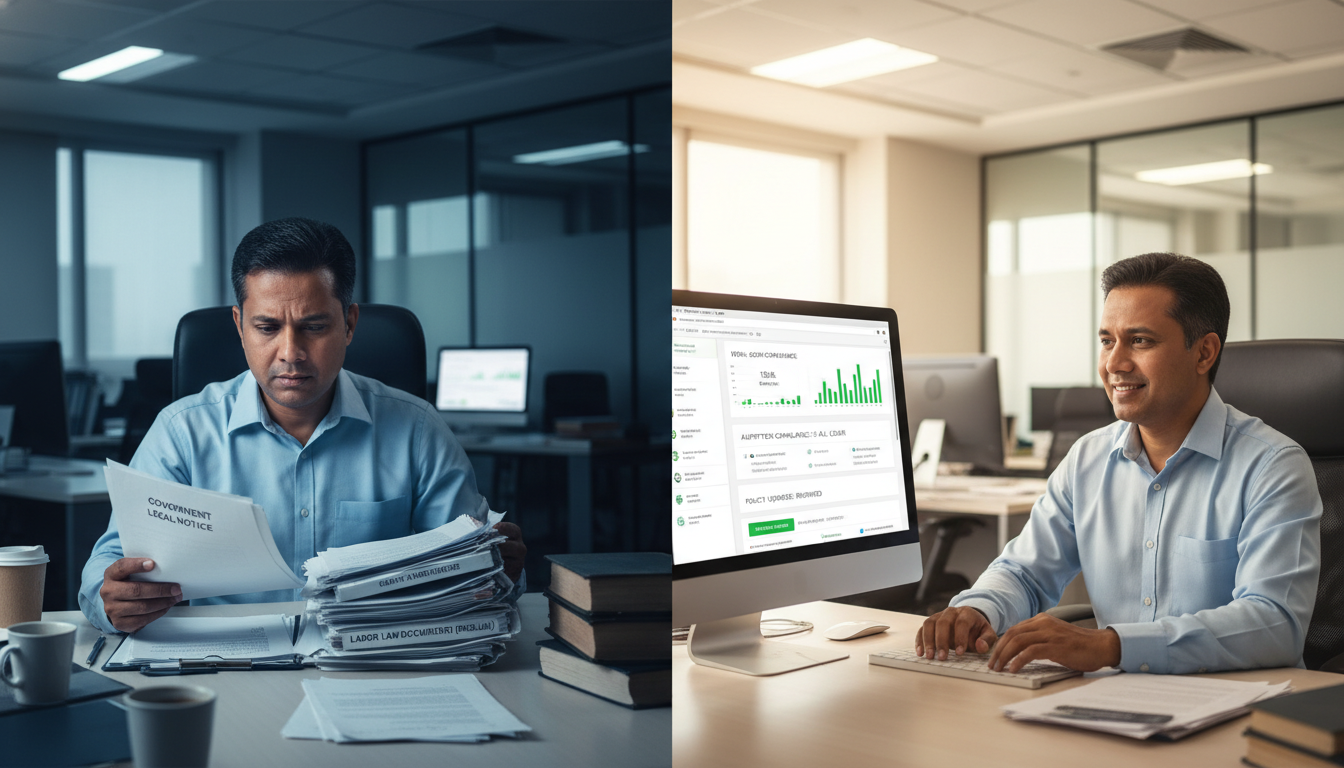
- Navigating Complex Labor Laws: The laws about employing people are confusing and change all the time. HR software plays a huge role in helping businesses understand and follow the many federal, state, and local labor laws.
- Automatic Regulatory Updates: The best systems are designed to update themselves automatically. This means that when there is a change in tax rates or a new labor regulation, the system adjusts instantly. This feature drastically reduces the risk of making costly legal errors or facing non-compliance fines.
- Audit Readiness: The software creates clear, organized records and audit trails for everything that happens. This makes it simple to show inspectors or auditors that your company is following all the necessary rules.
HR Software as a Strategic Business Tool
If HR software only offered efficiency, it would be useful, but its true power lies in how it helps you make better business choices.
A. Data-Driven Decision-Making and Analytics
As a CEO who looks at business strategy, I have found that you cannot manage what you cannot measure. HR software provides the facts you need to make smart decisions.
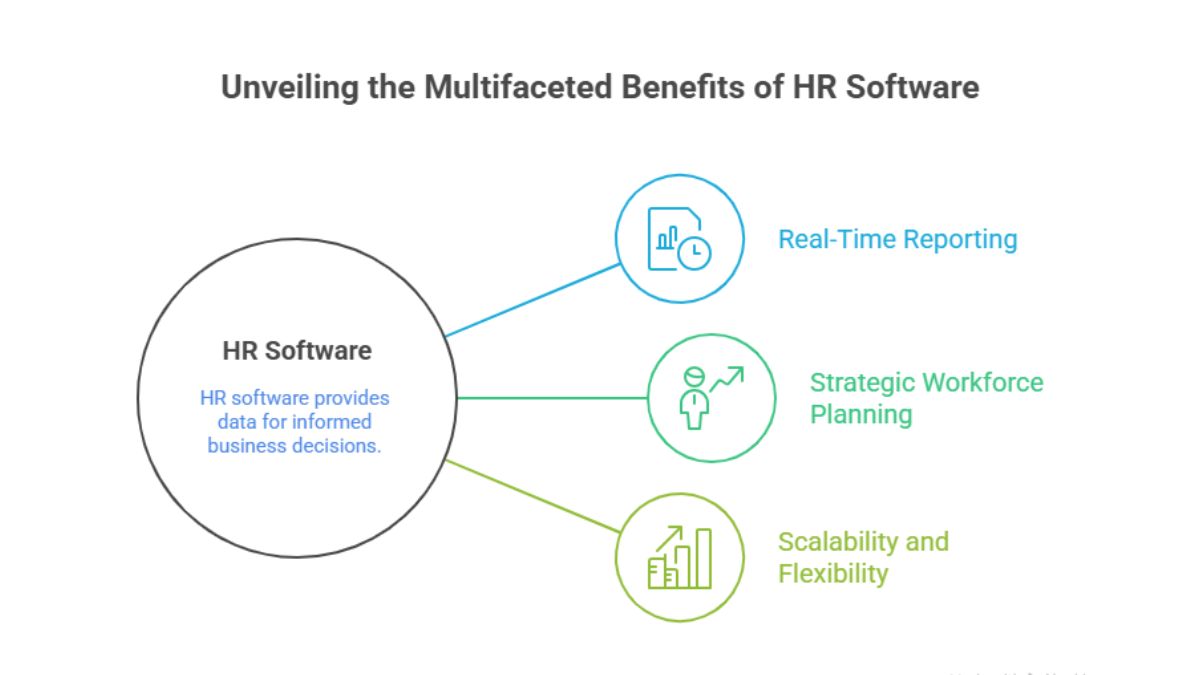
- Real-Time Reporting: The software gives managers powerful tools that offer immediate insights into how employees are performing, how often they are absent, and how quickly people are leaving the company. These are called key metrics, and knowing them instantly allows you to act fast.
- Strategic Workforce Planning: By using the data collected, companies can forecast their future employee needs and manage their resources much better. This kind of planning helps with hiring the right people and preparing future leaders for key roles.
- Scalability and Flexibility: For any business that plans to grow, scalability is very important. You need a system that can easily adapt to a larger number of employees, new departments, new office locations, and the increasing complexity that comes with growth, all without breaking down.
B. Enhancing the Employee Experience

Modern employees expect technology to help them, not frustrate them. Good HR software is crucial for keeping employees happy and productive.
- Employee Self-Service (ESS) Portals: ESS portals are a major benefit. They empower employees to handle their own HR tasks, such as requesting time off, updating their personal information, enrolling in benefits, and viewing their pay stubs. Giving employees this level of control and transparency boosts their satisfaction.
- Streamlined Talent Acquisition (ATS): When you are hiring, you need a smooth process. An Applicant Tracking System (ATS) automates the whole hiring flow, from posting the job to screening candidates and getting the new hire set up. This ensures that the new person has a great starting experience and gets productive faster.
- Performance and Development: The best tools allow for continuous, real-time feedback and clear goal setting, instead of just a yearly review. Using Learning Management Systems (LMS) within the software helps coach and develop staff. This effort increases productivity and helps you keep your best people.
The Critical Differentiation: Addressing the Hidden Costs and Advanced Potential
When you read many articles about HR software, they tend to skip the hard truths and the newest possibilities. From my perspective as someone who helps companies implement these systems, providing this deeper, critical information is vital for success.
A. Beyond ROI: Navigating Implementation and True Cost (The Reality Check)

It is simple to talk about long-term savings, but what about the immediate challenges? Here is what most sales pitches won’t tell you.
- Total Cost of Ownership (TCO) Details: We must look past the simple difference between initial investment and long-term savings. You need detailed information on the true cost. This includes understanding the different pricing models—whether you pay per user or for specific feature modules and the mandatory, often expensive, implementation fees that are necessary to get the system running. Failing to account for these costs can ruin a budget.
- Implementation Challenges and Risks: I have seen businesses make this mistake repeatedly. The conversion process—migrating years of old data stored in paper files and spreadsheets into the new system—is a huge drain on company resources. Sales teams ignore the critical risks, such as how long the process takes, resistance from employees who do not want to change, and the surprisingly high rate of failure when users do not adopt the new software properly. You must emphasize planning over rushing.
B. Deep Integration and Strategic System Alignment
HR data is not just for HR; it affects the entire company.
- Integration with ERP and CRM: Everyone knows the HR system needs to handle payroll correctly. However, the real strategic value comes when you link HR data with other large company systems like Enterprise Resource Planning (ERP) and Customer Relationship Management (CRM) tools. For instance, integrating employee training status and specific skills (from the HR system) into the CRM can help your sales team assign the most qualified person to a client, leading to better sales success and project efficiency.
- Industry-Specific Needs: Different industries require specialized integrations. For a manufacturing company, the time-tracking software needs to talk directly to the factory floor systems. For healthcare, scheduling software needs seamless integration with the HR platform to ensure compliance with shift limits.
C. The Future of HR: Advanced Predictive Modeling (Advanced Potential)

HR systems are quickly becoming smarter than just simple data reporters. The current standard of automated resume screening and general turnover prediction is becoming basic. We need to look forward.
- From Forecasting to Prescriptive Analysis: The most modern systems use complex analysis to do more than just guess what will happen; they suggest what you should do next.
- Advanced Behavioral Modeling: These sophisticated tools can perform deep analysis to predict if a high-value employee is likely to quit soon, allowing you to intervene before it is too late. They can also look at large amounts of internal communication or performance review text to identify if managers are showing systemic unfairness or bias in their reviews. Furthermore, they can measure employee happiness by analyzing feedback and communication, helping managers proactively improve employee well-being. This is the kind of insight that moves a business forward.
HR Software Needs by Business Type (Customization and Scale)
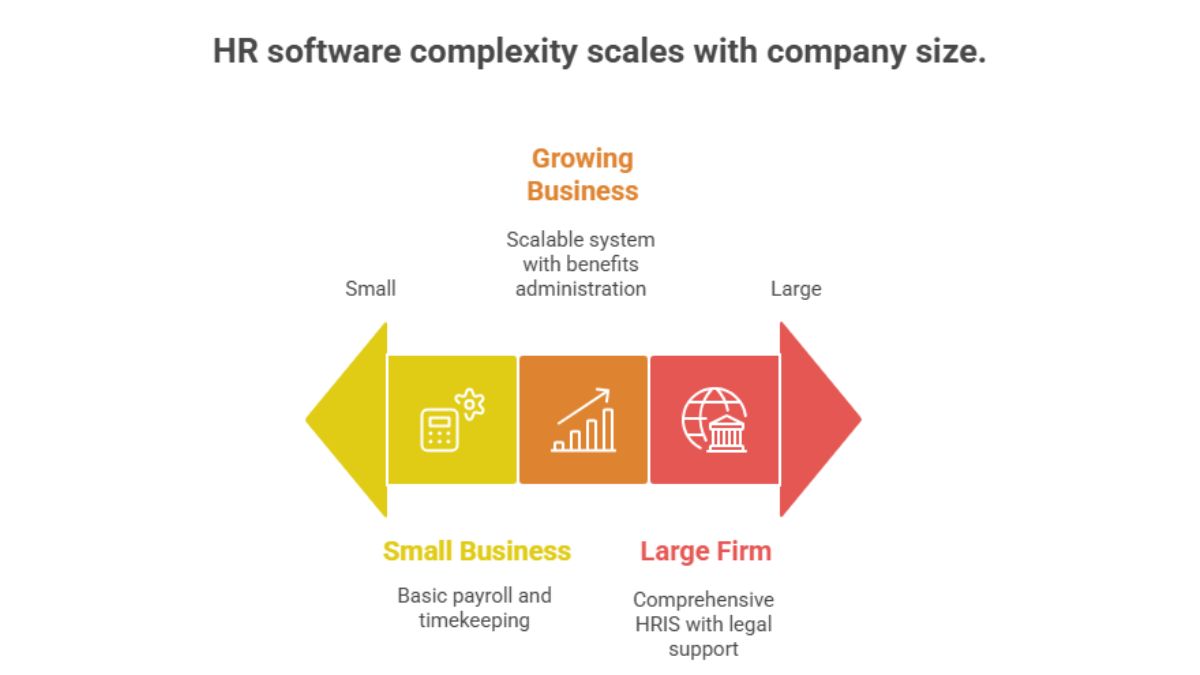
The right HR software looks very different depending on the size of your company.
- Small (Mom-and-Pop/Startup): Small businesses often need simple, affordable solutions. The focus should be on basic, accurate payroll processing and easy timekeeping. They might start by using outsourced services before buying a full system.
- Growing Businesses (SMEs): As the company grows, the needs get more complex. These businesses require scalable systems that can handle benefits administration, detailed performance tracking, and customized data analysis modules.
- Large/Multistate Firms: For very large companies, especially those operating in many states or countries, the requirement is a comprehensive HRIS or HRMS. These systems must offer strong legal support for managing complex and varying labor laws across multiple jurisdictions. They need the ability to standardize processes globally while still adapting to local regulations.
Conclusion: Investing in Your Core Asset
HR software is foundational for running an efficient company. It is crucial for staying compliant with the law and is the main driver of strategic, data-driven workforce growth. By automating the boring tasks, giving employees easy access to information, and giving leaders powerful data, these systems turn your people data into a key competitive advantage.
As biometric technology and data analysis continue to evolve, the businesses that will thrive are those that implement these systems thoughtfully. Do not simply buy the first flashy software you see. Instead, take the time to audit your current problems and calculate the True Cost of Ownership, including the hidden costs of migration and implementation. Ask yourself what integration level you truly need with your other business systems. Move beyond manual processes and embrace technology to create a more engaged and productive workforce.