

Managing employee attendance can be a real headache for small business owners. If you are still using punch cards, manual timesheets, or outdated attendance registers, you are probably losing money without even realizing it.
Biometric attendance systems are changing the way small businesses track employee work hours. These systems use unique physical features like fingerprints or facial recognition to record when employees clock in and out. The technology sounds fancy, but it has become surprisingly affordable and easy to use for businesses of all sizes.
In this guide, you will learn exactly how biometric attendance systems work and why thousands of small businesses are making the switch in 2026.
What is a Biometric Attendance System?
A biometric attendance system uses your employees’ unique physical characteristics to track their working hours. Instead of swiping cards or entering PIN codes, employees simply scan their fingerprint, face, or iris to mark their attendance.
Here is how it works in three simple steps:
- An employee places their finger on a scanner or looks at a camera
- The device matches their biometric data with stored records
- The system automatically records the time and sends data to your attendance software
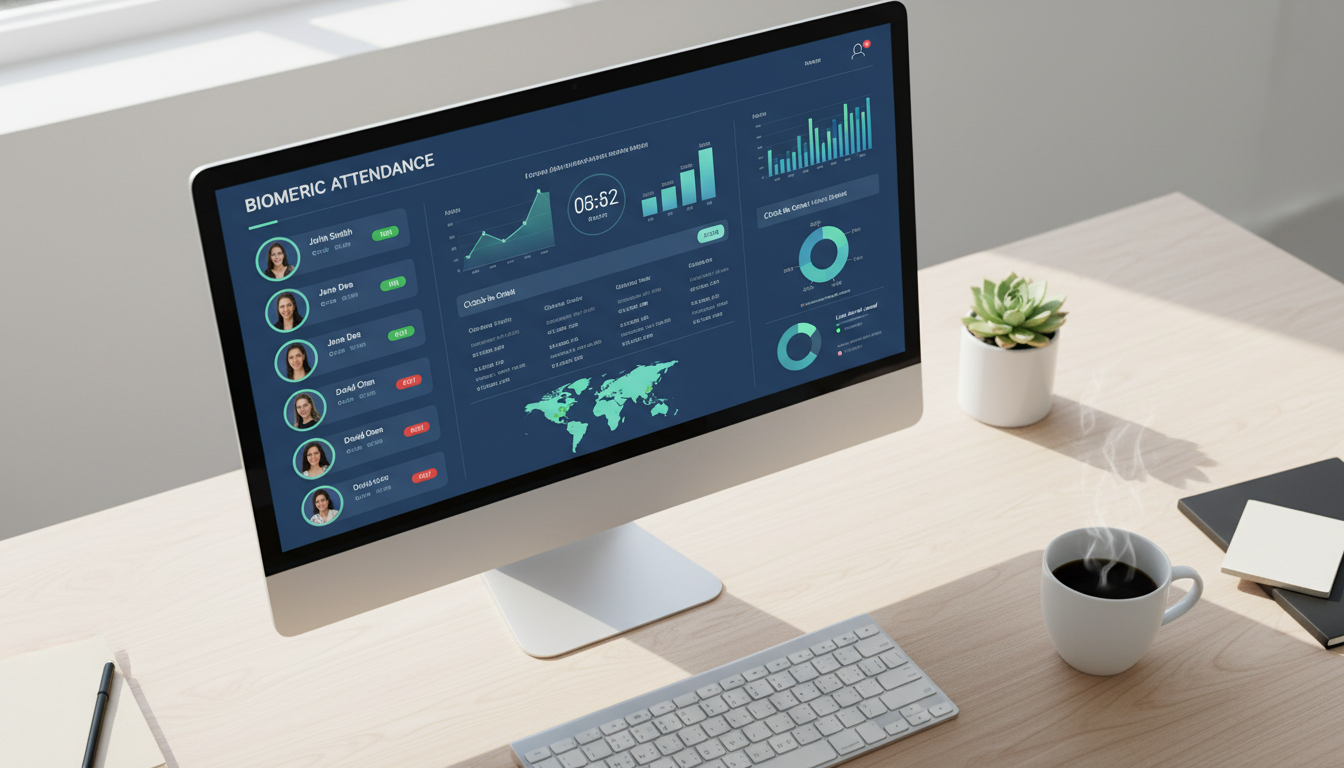
Most modern systems are cloud-based, which means you can access attendance records from anywhere using your phone or computer. The data syncs automatically with payroll software, making the entire process smooth and hassle-free.
Top Benefits of Biometric Attendance for Small Businesses
1. Stops Time Theft and Buddy Punching
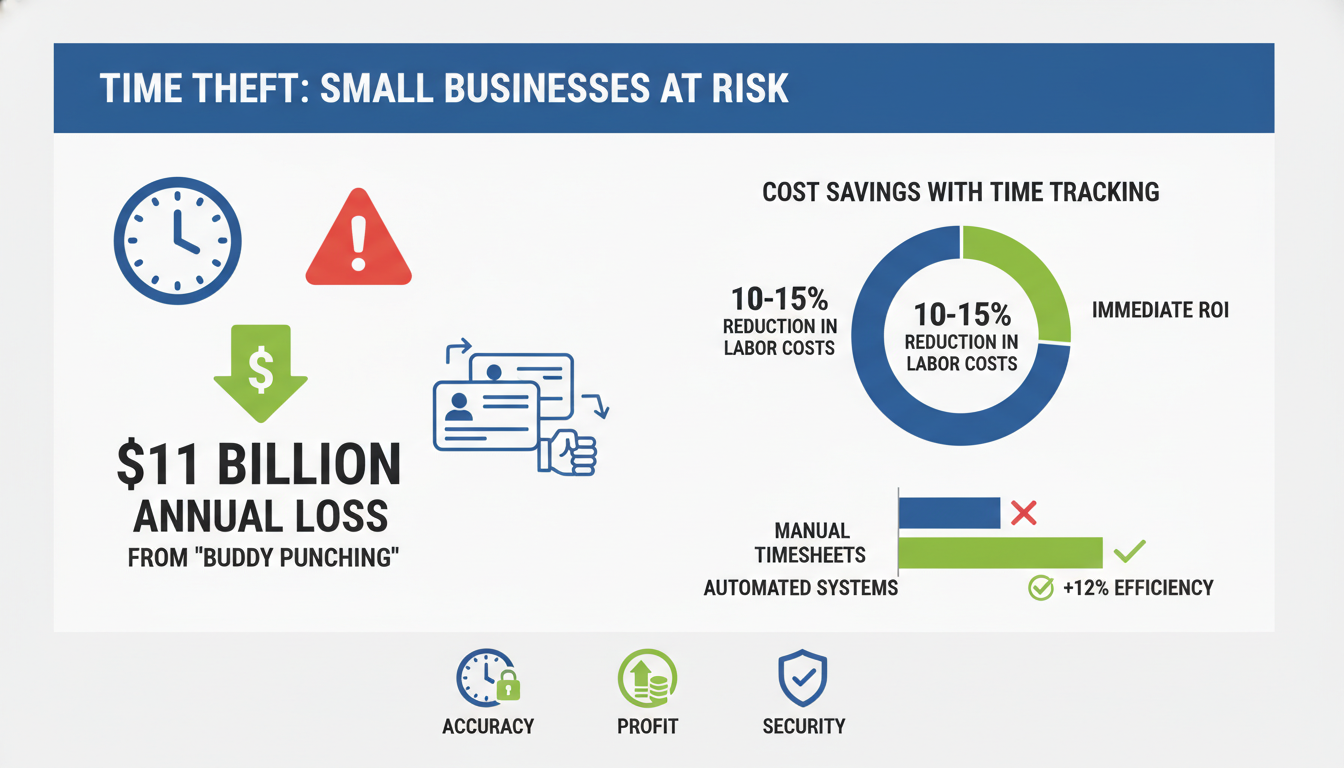
Time theft costs American businesses over $11 billion every year, according to the American Payroll Association. Buddy punching happens when one employee clocks in for another who is running late or absent.
With biometric systems, this becomes impossible. You cannot ask someone to use your fingerprint or face to clock in for you. Each person must be physically present to mark their attendance.
A small retail business with 20 employees can save anywhere from $2,000 to $5,000 per year just by eliminating buddy punching and time rounding errors.
2. Saves Hours on Payroll Processing
Manual attendance tracking takes up valuable time that you could spend growing your business. Calculating work hours, overtime, and leaves from paper timesheets is slow and error-prone.
Biometric systems do all this work automatically:
- Record exact clock-in and clock-out times
- Calculate total work hours
- Track overtime automatically
- Generate reports instantly
- Send data directly to payroll software
Business owners report saving 4-6 hours per week on payroll processing after switching to biometric systems. That is an entire workday back in your schedule every month.
3. Increases Accuracy and Reduces Disputes
Human errors happen when you rely on manual data entry. Illegible handwriting, lost timesheets, and calculation mistakes lead to payroll errors that upset employees and waste time fixing.
Biometric systems offer 99.9% accuracy in recording attendance. There is no guesswork involved. The system captures exact timestamps down to the second, which means:
- No more disputes about who worked how many hours
- Keep clear records if you ever face a labor audit
- Accurate overtime calculations
- Fair pay for everyone
Employees appreciate the transparency because they can trust the system to record their hours correctly.
4. More Affordable Than You Think
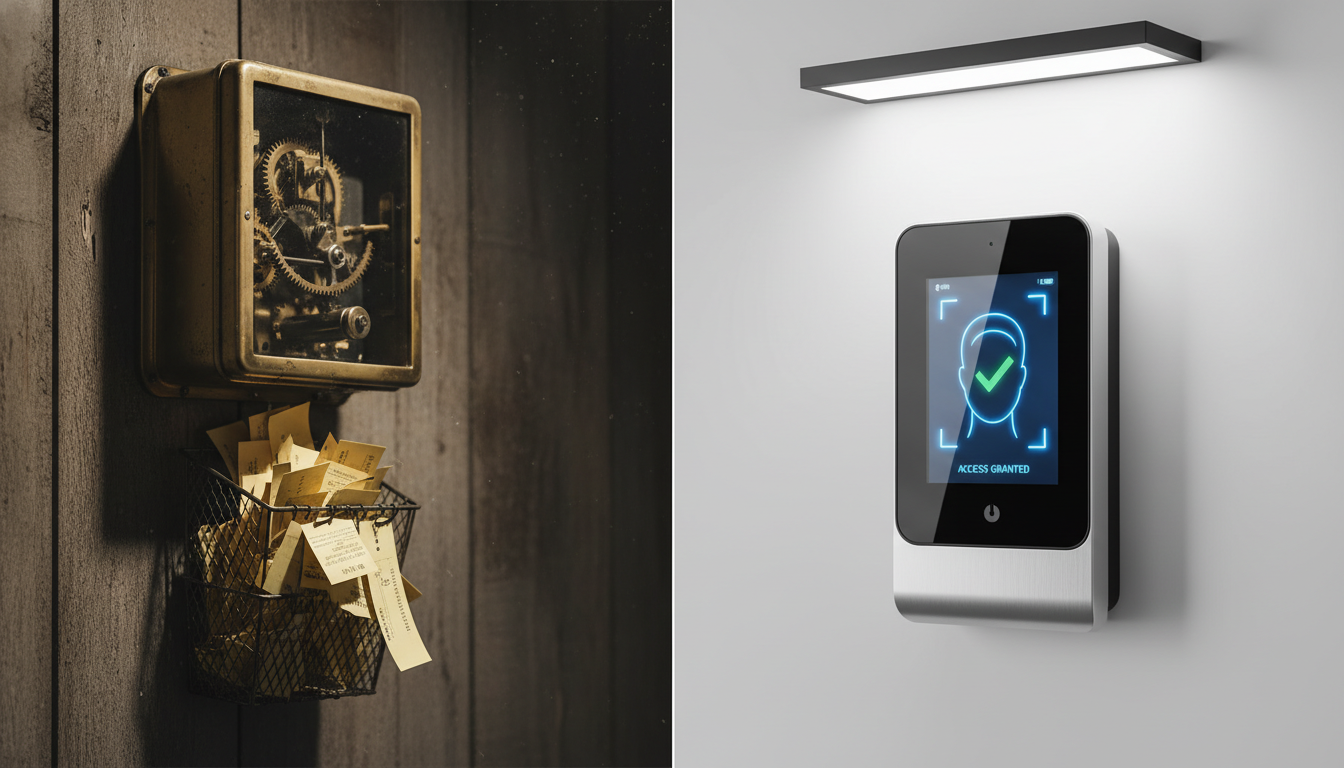
Many small business owners assume biometric systems are too expensive. The truth is that prices have dropped significantly over the past few years.
You can get a basic fingerprint scanner for $100-$300, while advanced facial recognition systems cost between $500-$1,500. Cloud-based software subscriptions typically range from $2-$5 per employee per month.
Let’s look at a simple cost comparison:
| Traditional System | Biometric System |
|---|---|
| Time cards: $200/year | Device: $400 (one-time) |
| Manual processing: 5 hours/week | Software: $60/month |
| Buddy punching losses: $3,000/year | Processing time: 1 hour/week |
| Total Year 1: $3,200+ | Total Year 1: $1,180 |
Most small businesses see full ROI within 6-12 months. After that, the savings continue year after year.
5. Builds Employee Accountability
When employees know their attendance is being tracked accurately, behavior changes. Chronic lateness decreases, and people become more conscious about their work hours.
The system creates a culture of accountability without you having to play the bad guy. Employees can see their own attendance records through self-service portals, which helps them understand their patterns.
Real-time monitoring also helps you:
- Identify attendance trends
- Spot potential issues early
- Have data-backed conversations about punctuality
- Recognize and reward consistently punctual employees
6. Grows With Your Business
Starting with 5 employees but planning to hire 50 more? Biometric systems scale easily. Adding a new employee takes just a few minutes to register their biometric data.
Cloud-based systems are especially flexible. You can add or remove users, set up multiple locations, and adjust permissions as your business needs change. There is no need to buy expensive new hardware every time you expand.
7. Works for Remote and Field Employees
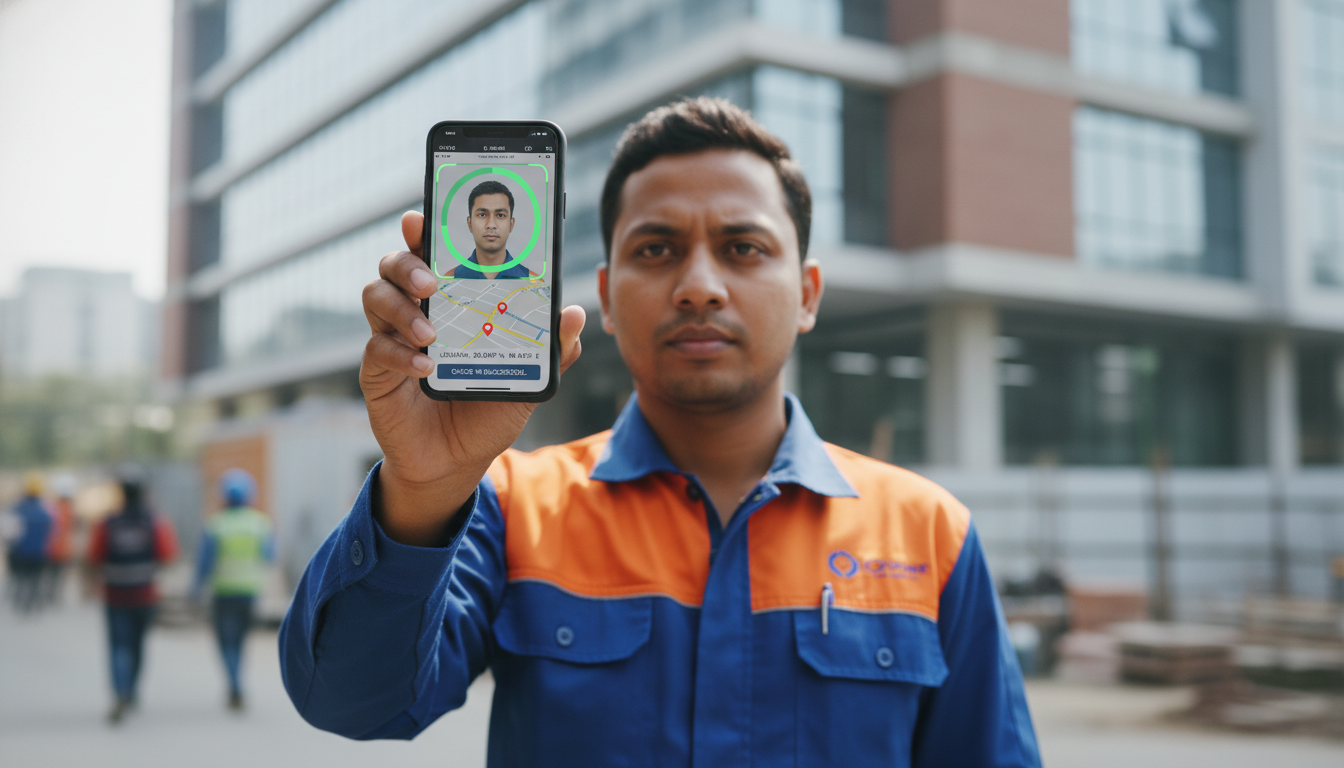
Modern biometric attendance systems are not just for office workers. If you have employees working from home, visiting client sites, or working in the field, mobile biometric apps solve your tracking problems.
These apps use:
- Facial recognition through smartphone cameras
- GPS tracking to verify location
- Geo-fencing to create virtual boundaries
- Photo capture for visual verification
A cleaning service company, for example, can track when employees arrive at different client locations throughout the day. The system records their attendance and location automatically without any paperwork.
8. Reduces Security Risks
Unlike ID cards or passwords, biometric data cannot be shared, stolen, or forgotten. An employee cannot lend their fingerprint to someone else or leave it at home.
This extra security helps with:
- Controlling access to restricted areas
- Maintaining audit trails of who entered, where, and when
- Protecting sensitive business information
- Meeting compliance requirements for certain industries
According to research from the International Biometric Society, biometric authentication is 99.8% more secure than traditional password or card-based systems.
9. Improves Employee Satisfaction
Happy employees are productive employees. Biometric systems improve the employee experience in several ways:
- No lost or forgotten ID cards
- Quick and contactless clocking in (takes 2-3 seconds)
- Transparent access to their own attendance records
- Fair and accurate pay based on actual hours worked
- Less time wasted in attendance-related disputes
Contactless facial recognition systems became especially popular after 2020, when hygiene concerns increased. Employees appreciate not having to touch shared surfaces multiple times per day.
10. Simplifies Compliance and Reporting
Labor laws require businesses to maintain accurate records of employee work hours. Biometric systems make compliance easier by:
- Automatically generating detailed attendance reports
- Storing records securely for the required time periods
- Providing audit-ready documentation
- Tracking breaks and overtime according to labor laws
- Creating digital paper trails for legal protection
When tax season arrives or you face an audit, having organized digital records saves enormous stress and time.
Common Questions Small Business Owners Ask
How much does installation and training take?
Most systems can be set up in 1-2 hours. Employee training takes about 10-15 minutes per person. The actual enrollment process (scanning and storing biometric data) takes less than a minute per employee.
What if an employee refuses to use the system?
While rare, some employees may have privacy concerns. The key is communication. Explain how their data is encrypted and stored securely. Emphasize that biometric data is only used for attendance and never shared with outside parties. Most privacy laws allow biometric attendance tracking with proper employee consent.
Do these systems work during power outages?
Quality biometric devices have battery backup that lasts 4-8 hours. Cloud-based systems sync data once power returns. Some businesses keep a manual backup process for extended outages, though this is rarely needed.
Can the system be fooled with photos or fake fingerprints?
Modern biometric systems use liveness detection technology. Facial recognition systems detect 3D features and micro-movements that photos cannot replicate. Fingerprint scanners detect temperature and blood flow. These features make spoofing nearly impossible.
Making the Switch: What to Consider
Before buying a biometric attendance system, think about your specific needs:
For office-based teams: A wall-mounted fingerprint or facial recognition device works perfectly. Look for systems that integrate with your existing payroll software.
For multiple locations: Choose cloud-based systems that let you monitor all locations from one dashboard. Make sure the system supports unlimited devices.
For remote workers: Pick a system with mobile apps and GPS tracking. Verify that the app works on both iOS and Android devices.
For field employees: GPS-enabled attendance with geo-fencing helps verify that employees are at the correct job sites.
Popular options like ZKTeco, TimeClock Plus, and BioMetric Attendance System offer different features at various price points. Most companies offer free trials or demos, so you can test before committing.
The Bottom Line
Biometric attendance systems are no longer luxury items for big corporations. Small businesses are seeing real benefits: less time theft, fewer payroll errors, improved accuracy, and significant time savings.
The technology has matured, prices have dropped, and implementation has become simpler. If you are still managing attendance manually, you are likely losing money and wasting time that could be better spent growing your business.
Start by calculating how much time theft and payroll processing currently costs your business. Compare that to the cost of a biometric system. For most small businesses with 10 or more employees, the math clearly favors making the switch.
The investment pays for itself quickly, and the long-term benefits keep adding up year after year.
Frequently Asked Questions
How accurate are biometric attendance systems?
Biometric systems offer 99.9% accuracy, which is significantly higher than manual tracking or card-based systems. False acceptance rates are less than 0.001%.
Are biometric attendance systems legal?
Yes, but you must comply with local privacy laws. Always get written employee consent, explain how data is used and stored, and follow data protection regulations in your area.
How much does a biometric system cost for 20 employees?
Expect to spend $400-$800 for hardware plus $40-$100 per month for cloud software. Total first-year cost typically ranges from $900-$2,000.
Can biometric data be hacked?
Biometric systems do not store actual fingerprints or face images. They store encrypted mathematical templates that cannot be reverse-engineered. Even if data is stolen, it cannot be used to recreate the original biometric.
What happens if an employee injures their finger?
Most systems allow multiple biometric registrations per employee. You can register both index fingers, or use facial recognition as a backup. Some advanced systems support multiple biometric types.
Do I need internet for biometric attendance to work?
The device itself works offline and stores data locally. However, you need internet to sync data to the cloud and access reports from other locations. Most systems cache data and sync automatically when connection returns.