Understanding Access Control Systems
Access control systems keep your building safe from strangers. They decide who can come inside and when. Think of them as smart locks for your office. These physical access security tools check if someone should be allowed in. Modern authentication systems use everything from number pads to finger scanners. Learning access control basics helps you pick what works best.
1.What Access Control Means
Access control is a way to manage who enters your doors. It lets some people in and keeps others out. Think of it like a guard at your gate. Controlled entry systems are better than old metal keys. Secure access management makes sure only the right people enter important rooms. This access security method keeps your stuff, information, and workers safe.
2.How Authentication Works
Authentication proves who you are before opening the door. The system checks your details against its memory. When everything matches up, the door opens by itself. Biometric authentication uses your finger, face, or eyes to check. Card-based authentication uses special cards or badges. This identity verification process takes just a few seconds. New systems write down every time someone enters or leaves. Some use two different checks to be extra safe. According to NIST’s Digital Identity Guidelines, multi-factor authentication significantly improves security.
3.Common Business Use Cases
Here’s where companies use access control for offices:
- Computer rooms need extra protection for important data
- Boss offices keep management areas private
- Storage buildings track workers and stop stealing
- Science labs protect expensive tools and research
- People departments lock up private worker files
- Data centers need multiple checks to get in
- Factory floors control who can use dangerous machines
These business security systems work for enterprise security use cases in all kinds of jobs.
Biometric Access Control vs Card Access Control: Key Comparison Table
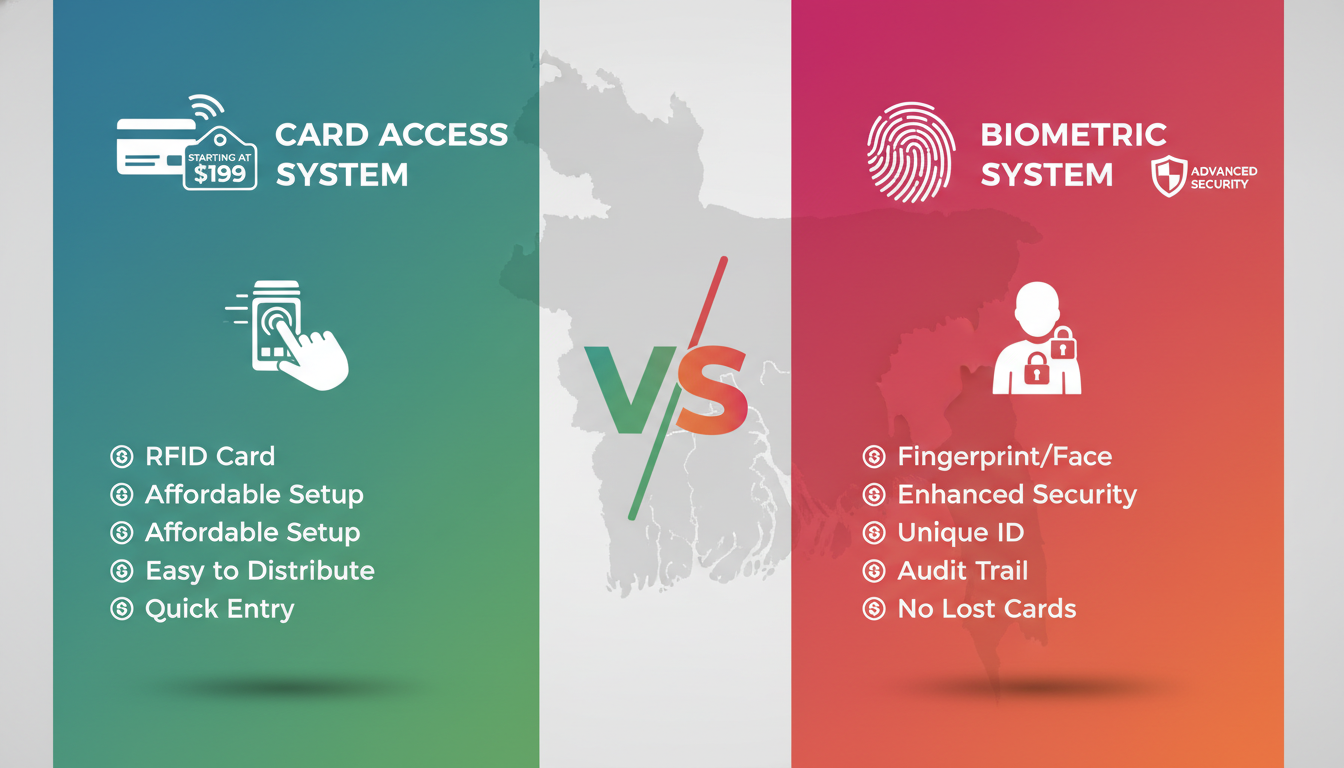
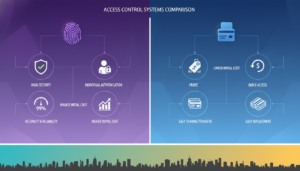
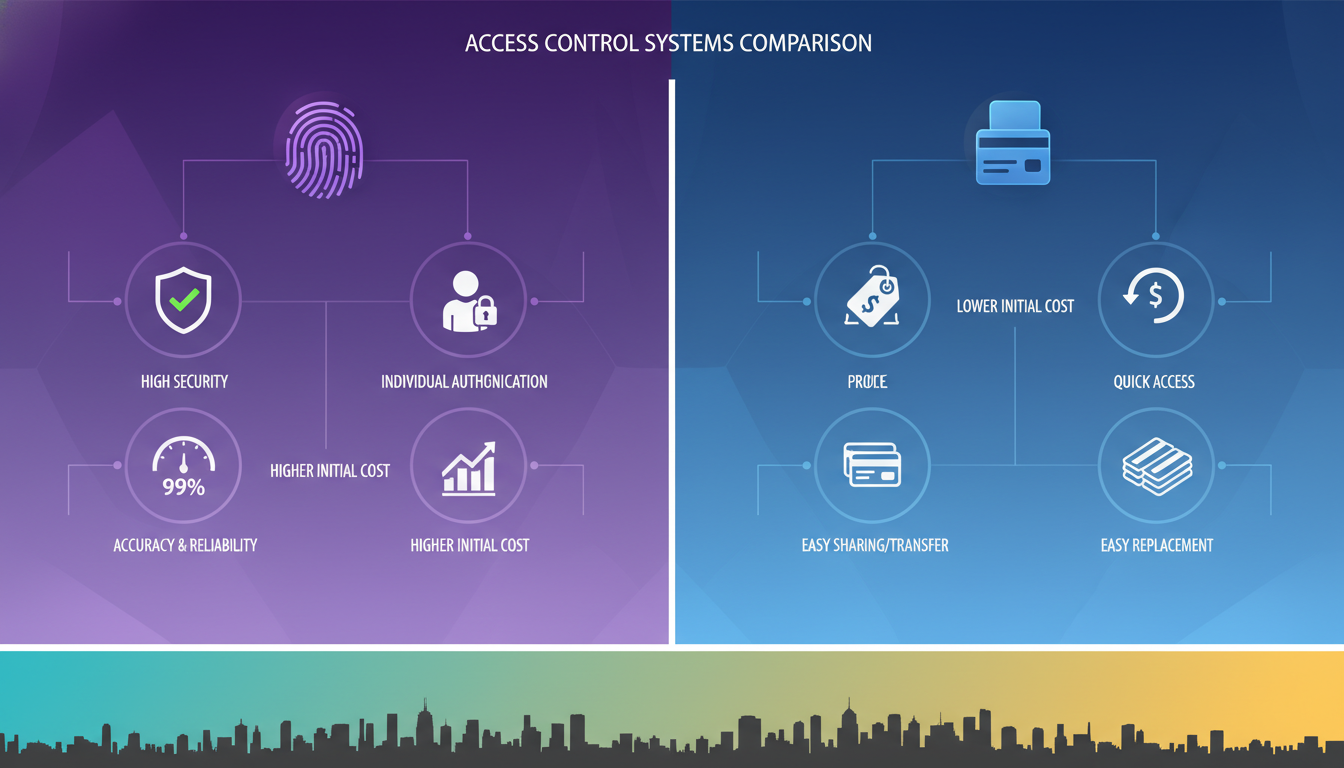
Picking between biometric access control vs card access control depends on what matters most to you. Both ways offer good things for different needs. Here’s a simple access control system comparison to help you choose. This biometric vs RFID access chart shows the main points.
| Feature | Biometric Access Control | Card Access Control |
|---|---|---|
| How Safe | Very safe – uses your body parts | Medium safe – cards can get lost |
| How Easy | Easy – nothing to carry | Medium – you need the card |
| Price | Costs more at start | Costs less at start |
| Upkeep | Medium – clean the scanner | Low – just replace cards |
| How Fast | Takes a few seconds | Super quick tap |
| Works for Big Groups | Good for any size | Great for many people |
| Can Share | Can’t share your finger | Easy to give card to someone |
| Privacy Issues | Some worry about their info | Not much to worry about |
Biometric vs Card Access Control in Bangladesh: Which to Choose?
Finding the best access control system for business in Bangladesh takes some thought. Your security system selection guide starts with knowing what you need. Think about these things before buying access control systems in Bangladesh.
Pick biometric if you need:
- The safest option for important rooms
- To stop people from sharing their way in
- Records that show exactly who entered
- To save money over many years
Pick card system if you want:
- Quick setup with easy learning
- Lower cost to start
- Simple guest passes for visitors
- Cheap replacements when cards go missing
Pick both together when:
- Different rooms need different safety levels
- You want choices for different workers
- You can spread out the cost
- Rules say you need two ways to check
Most Bangladesh companies start with cards then add finger scanners to important areas.
Biometric Access Control Systems in Bangladesh
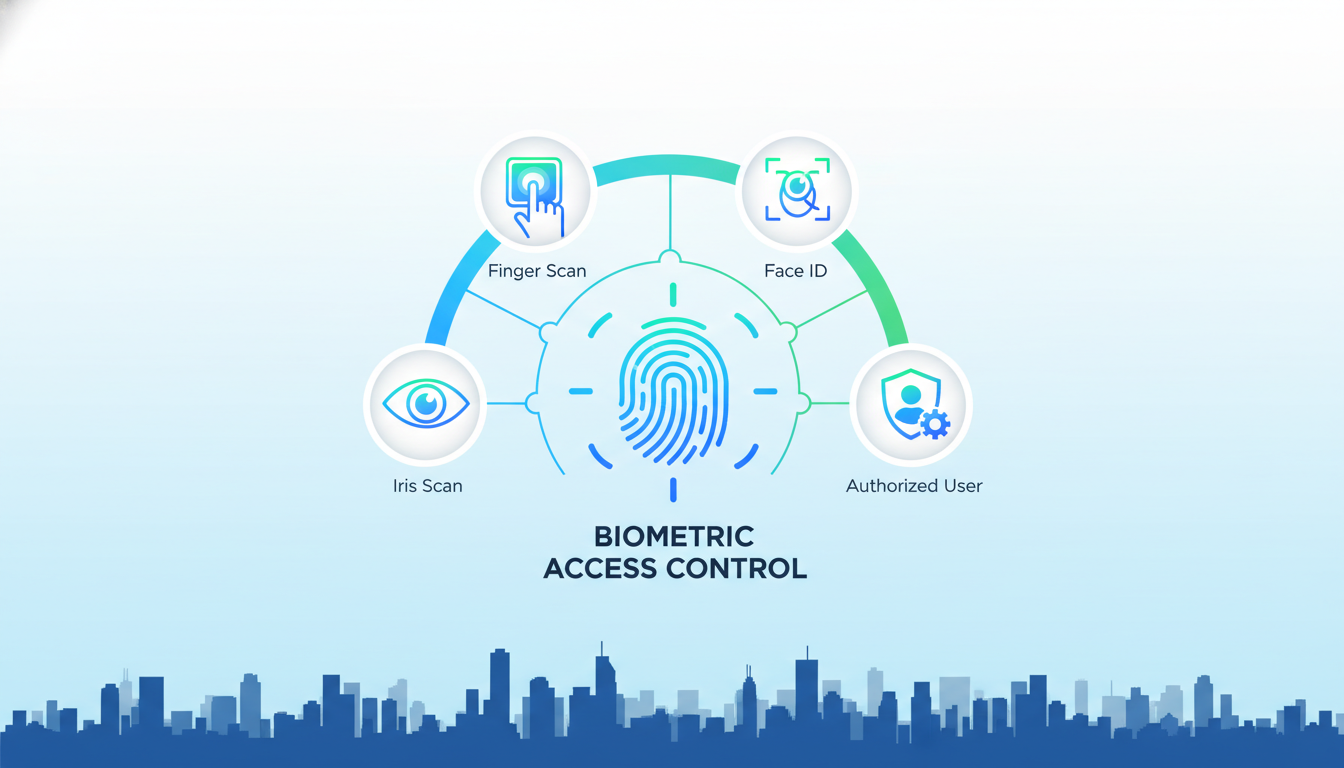
Biometric access control systems Bangladesh businesses are using more each year. Companies see how good identity-based safety is. Biometric security solutions stop people from sharing their pass completely. Finger scanners are most popular, then face readers. Eye scanners show up in super safe government and bank places. Research from IEEE on biometric security shows these systems continue improving every year.
Best For
Biometric access control for enterprises works great in these high-security environments:
- Banks and money places that handle cash
- Medicine companies keeping recipes secret
- Tech companies protecting their ideas
- Government offices with secret papers
- Science places with private projects
- Hospitals keeping patient information safe
Pros
Biometric accuracy and identity-based access give clear wins:
- Prevent unauthorized access because you can’t copy fingerprints
- Workers never forget their pass at home
- No lost cards means no rush replacements
- Each entry connects to one specific person
- Can’t share your finger with someone else
- Full records show exactly who came in when
- Stops cheating in clock-in systems
Cons
Knowing biometric access control disadvantages helps you plan better:
- Costs more money at the beginning
- Some people don’t like giving their fingerprint data
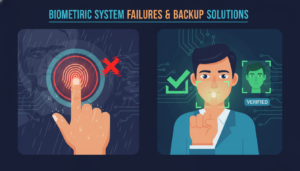
- Dirty or wet fingers might not scan well
- Biometric system limitations mean sometimes it says no by mistake
- If data gets stolen, you can’t change your finger
- Setting up everyone takes more time
- Power cuts need backup ways to get in
The Electronic Frontier Foundation provides helpful guidance on protecting biometric privacy rights.
Biometric Access Control Systems: Tied to the Person
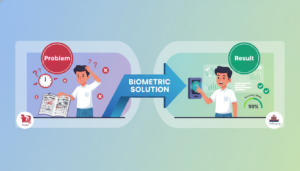
Person-based authentication is where safety is going. You can’t lose your finger like a card. You can’t forget your face at home. This big plus makes biometric systems super reliable. Eliminate credential sharing totally with body checks.
Biometric identity verification makes people responsible in ways cards can’t. When someone enters using their finger, you know who it was. No doubts, no questions, no excuses.
Look at these strong benefits:
- Can’t give to others – your pass ends when you leave the job
- Stop access fast – fired workers lose entry right away
- No replacement costs – body parts never need new copies
- Makes people think – workers think twice before breaking rules
- Perfect records – finding out what happened becomes easy
- Control from anywhere – add or remove people from any place
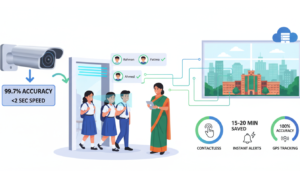
The technology works really well now in Bangladesh. New scanners work with rough hands, small cuts, and older skin. Wrong rejections happen less than once in a hundred tries.
Card Access Control Systems in Bangladesh
Card access control systems Bangladesh companies still like for good reasons. They work well and don’t cost too much. RFID access control has been around for many years. Cards work fine even in tough conditions. The setup exists all over Dhaka, Chittagong, and Sylhet.
Best For
Card access control for small businesses fits these low-cost access systems situations:
- Offices with a few workers needing basic safety
- Shops managing worker entry to storage
- Schools controlling who comes on campus
- Gyms giving members all-day entry
- Shared workspaces with changing members
- Apartment buildings keeping common spaces safe
Pros
Easy access management gives convenience and flexibility in many ways:
- Fast setup gets you going in days
- Simple teaching means everyone learns quickly
- Easy guest entry with temporary cards
- Lost cards get replaced cheaply
- Works great in dusty or wet places
- No worries about giving body data
- Battery options work for far-away doors
Cons
Watch out for these card access control vulnerabilities:
- Lost or stolen access cards make gaps in safety
- Workers often give cards to people who shouldn’t have them
- Cards stop working suddenly for no reason
- Forgotten cards slow down work
- Buying new cards over time costs money
- No way to prove who really used a card
- Workers who leave might keep their cards
Card-Based Access Control Systems: Convenient but Vulnerable
Card-based authentication risks need serious thought before you start. Cards are easy but let credential misuse happen. Reduce internal security risks by understanding these problems.
The main weakness is simple: cards aren’t attached to people. A worker can give their card to anyone. That person walks right into locked areas. Cameras might show someone entering, but can’t prove who it is.
Common safety gaps include:
- Following – people without cards walking in behind cardholders
- Card copying – smart attackers make fake copies
- Sharing passes – team members using one card together
- Lost card waits – hours go by before turning it off
- Stealing chances – stolen cards work right away
Ways to fix problems:
- Add number codes with cards for double checking
- Put in gates that only let one person through
- Use fancy cards that are hard to copy
- Turn off lost cards instantly through phone apps
- Add cameras at all doors
- Check all cards regularly to find missing ones
The CISA (Cybersecurity & Infrastructure Security Agency) recommends layered security approaches for better protection.
Even with limits, cards work fine for less important places. Offices without much to steal find them good enough. Saving money makes up for slightly more risk.
Smart companies add finger scanners to important rooms while keeping cards everywhere else.
Hybrid Biometric and Card Access Control Solutions in Bangladesh
Hybrid access control solutions mix the good parts of both ways. Advanced access control Bangladesh setups use both methods more and more. Multi-factor access control gives choices without losing safety.
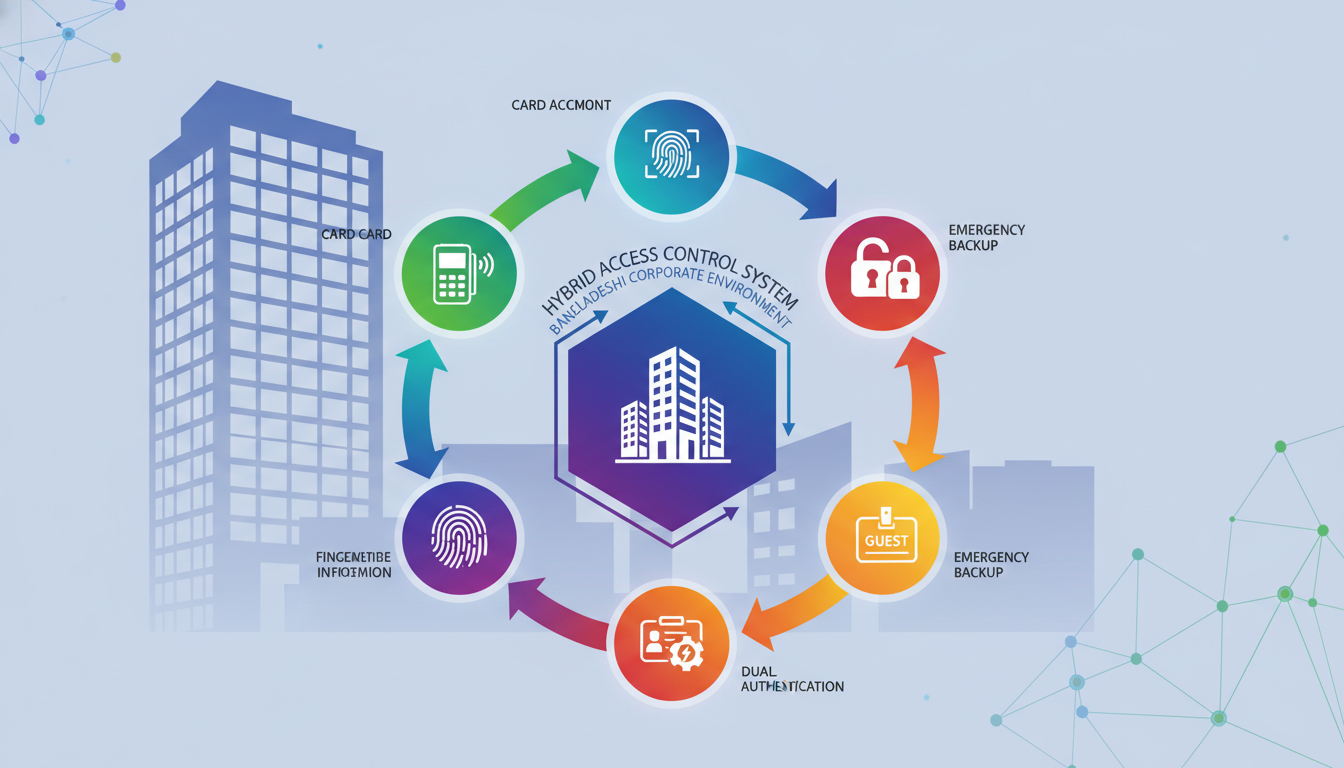
A normal mixed setup uses cards for regular areas and fingers for secret zones. Workers tap cards at the main door but need fingerprints for computer rooms. This step-by-step way balances cost, ease, and safety perfectly.
Ways to set it up:
- Area-based safety – different methods for different rooms
- Double checking – card plus fingerprint for top safety
- Backup plans – finger first with card as backup
- Guest handling – cards for visitors, fingers for workers
- Time switching – fingers at night, cards during work hours
Good things about mixed systems:
- Spend safety money on places that need it most
- Help people who don’t like giving fingerprints
- Have backup when one system breaks
- Grow slowly from cards to fingers over time
- Follow rules that need two different checks
- Save money by putting finger scanners in smart places
Many Bangladesh companies start with cards then add fingers to important doors. This slow way spreads cost over many months. Workers get used to new stuff gradually. Computer teams learn how to run things step by step.
The choices help a lot during emergencies. If finger scanners break, cards keep things working. If card readers stop, fingers keep important areas locked.
Access Control System Comparison: Technical Considerations
System integration and scalability matter just as much as safety features. Computer stuff affects long-term success. Access control hardware and software must work together smoothly. Understanding system performance metrics helps avoid expensive mistakes.
Connection abilities:
- Internet-based control lets you manage from anywhere
- Computer links connect with worker databases
- Camera links show you who entered
- Clock systems combine entry with pay tracking
- Building systems control heat and lights together
- Phone apps let bosses control things instantly
Growth factors:
- User space holds anywhere from fifty to fifty thousand people
- Computer setup works for one or many buildings
- Database handles thousands of entries each day
- Reader mixing lets you use different technologies
- Software updates keep things safe without buying new equipment
Performance numbers:
- Wrong yes rate – letting in people who shouldn’t get in
- Wrong no rate – blocking people who should get in
- Speed – time from showing pass to door opening
- Working time – how often it works without problems
- Record keeping – how long information is saved
- Battery life – how long wireless parts work
Upkeep needs:
- Finger scanners need monthly cleaning to work right
- Card readers need yearly fixing
- Software updates happen every few months
- Information backups run every day
- Computer updates fix safety problems
Weather stuff:
- Hot and cold limits affect outside setups
- Wetness resistance matters in Bangladesh weather
- Dust guards needed for factory places
- Strong boxes protect readers people can touch
- Lightning guards save electronics during storms
Pick systems made for Bangladesh’s hot, wet weather. High wetness affects some types more than others. Standards organizations like ISO (International Organization for Standardization) provide guidelines for access control systems.
Cost Considerations for Access Control Systems in Bangladesh: Which System Fits Your Budget?
Access control system cost Bangladesh changes a lot based on features and size. Understanding biometric vs card access control pricing helps plan money right. Smart security system ROI thinking weighs starting costs against long-term value.
Starting money breakdown:
| Part | Card System | Biometric System |
|---|---|---|
| Door reader | 8,000-15,000 Taka | 25,000-45,000 Taka |
| Controller | 12,000-20,000 Taka | 15,000-25,000 Taka |
| Software | 5,000-10,000 Taka | 10,000-20,000 Taka |
| Setup | 3,000-8,000 Taka per door | 5,000-12,000 Taka per door |
| Cards/setup | 100-200 Taka per person | 0 Taka |
Ongoing costs:
- Card replacement – 5,000-15,000 Taka yearly for one hundred workers
- System fixing – 20,000-40,000 Taka every year
- Software subscriptions – 15,000-30,000 Taka yearly for internet systems
- Power use – very small for both
- Worker teaching – 10,000-25,000 Taka to start
Hidden savings with fingers:
- Zero card replacement costs forever
- Less cheating saves pay money
- Lower insurance bills for better safety
- Fewer safety problems mean less stealing
- Better rule-following avoids fines
Getting money back timeline:
- Card systems pay themselves back in a few years
- Finger systems make money back in three to five years
- Mixed ways balance starting costs with smart safety
Money-saving tricks:
- Start with important doors, add more later
- Use internet systems to skip buying servers
- Buy good stuff once instead of replacing cheap stuff
- Ask for deals when buying for many doors
- Think about renting for big setups
Most Bangladesh companies find fingers worth it for places with fifty or more workers. Smaller places often stay with cards until they grow bigger.
Figure out total cost over five to ten years, not just buying price. The cheapest choice at first rarely gives best value long-term. Business experts at Forbes Technology Council regularly discuss ROI strategies for security investments.
Ready to make your business safe? Pick the access control system that fits your safety needs and wallet. Start with a free talk to find your perfect choice.
FAQs
1. What is the difference between biometric access control vs card access control?
Biometric access control uses your body parts like fingerprints or face to let you in. Card access control uses special cards you tap on readers. Biometric systems are safer because you can’t lose your finger. Card systems cost less money to start. Biometric stops people from sharing passes. Cards are easier to give to guests.
2. Which access control system is best for small businesses in Bangladesh?
Card access control systems Bangladesh work great for small companies. They cost less to buy and set up. You can start using them in just a few days. Workers learn how to use them super fast. Card-based authentication fits offices with fewer than fifty people. If you need top safety, add biometric security solutions to important rooms later.
3. How much does biometric access control cost in Bangladesh?
Biometric access control systems cost 25,000-45,000 Taka per door reader. Setup costs 5,000-12,000 Taka per door. Software runs 10,000-20,000 Taka. You save money over time because cards never need replacing. Most companies get their money back in three to five years.
4. Can I use both biometric and card access control together?
Yes! Hybrid access control solutions mix both methods perfectly. Use cards for regular doors and fingerprints for secret rooms. This multi-factor access control gives the best safety and saves money. Many advanced access control Bangladesh companies use this mixed approach.
5. What are the main disadvantages of card access control?
Card access control vulnerabilities include lost or stolen cards. Workers can share cards with others easily. Lost or stolen access cards create safety gaps. Cards stop working without warning sometimes. You can’t prove who really used the card to enter.