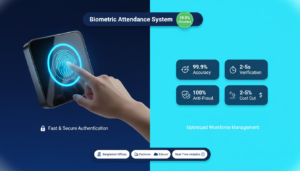
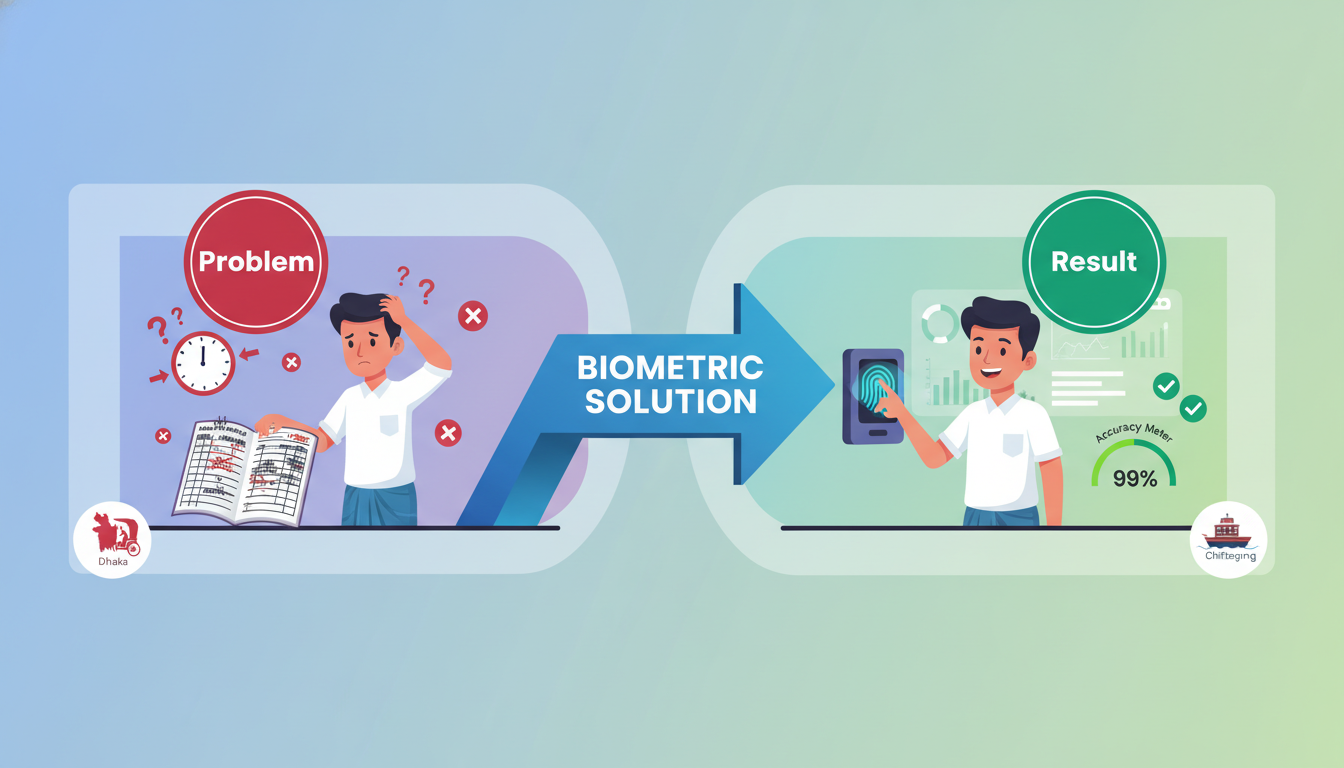
Getting your team to show up on time is hard.
You need answers. You need solutions. You need them now.
Biometric attendance systems change how Bangladesh workplaces track time. They make employee accountability easier than ever before.
Let’s see how this tech can transform your workplace.
What Employee Accountability Means in the Workplace
Employee accountability is simple. Your team takes care of their work and time.
When someone is accountable, they show up on time. They finish tasks they promise to complete. They own both wins and mistakes.
In modern workplaces, accountability creates trust. It creates trust between managers and teams. It builds a culture where everyone knows what to expect. It makes work flow better for everyone.
Workplace accountability isn’t about watching people all day. It’s not about micromanaging. It’s about creating clear rules and fair systems. When your team knows the rules, they can follow them easily.
Strong accountability in modern workplaces leads to better work. It reduces conflicts. It builds respect across all levels of your organization. It creates an environment where people want to do their best work.
Employee Accountability Challenges in Bangladesh Workplaces
Bangladesh businesses face unique employee accountability challenges every day.
Old attendance methods create gaps in tracking. Manual books get lost or damaged. Supervisors can’t always verify who arrived when. Disputes about working hours become common headaches.
Workplace discipline issues Bangladesh companies deal with include:
- Inconsistent tracking across different shifts
- Difficulty monitoring remote workers
- Cultural expectations clashing with strict policies
- Limited technology in smaller companies
Attendance control problems get worse as teams grow. What works for 10 people fails completely with 100 people. The manual systems can’t scale up.
Workforce management Bangladesh teams struggle with paper-based systems. These rely on trust alone. This opens doors to manipulation and errors.
The result? Managers spend hours fixing attendance disputes instead of focusing on growth.
Common Attendance Problems That Reduce Accountability
Attendance problems at work destroy accountability faster than anything else.
When tracking systems fail, employees lose trust. They lose trust in the fairness of policies. Managers lose visibility into actual working patterns. Attendance accountability issues create a ripple effect across your entire operation.
Let’s look at the specific problems causing the most damage.
1.Buddy Punching and Proxy Attendance
Buddy punching happens when one employee clocks in for another employee.
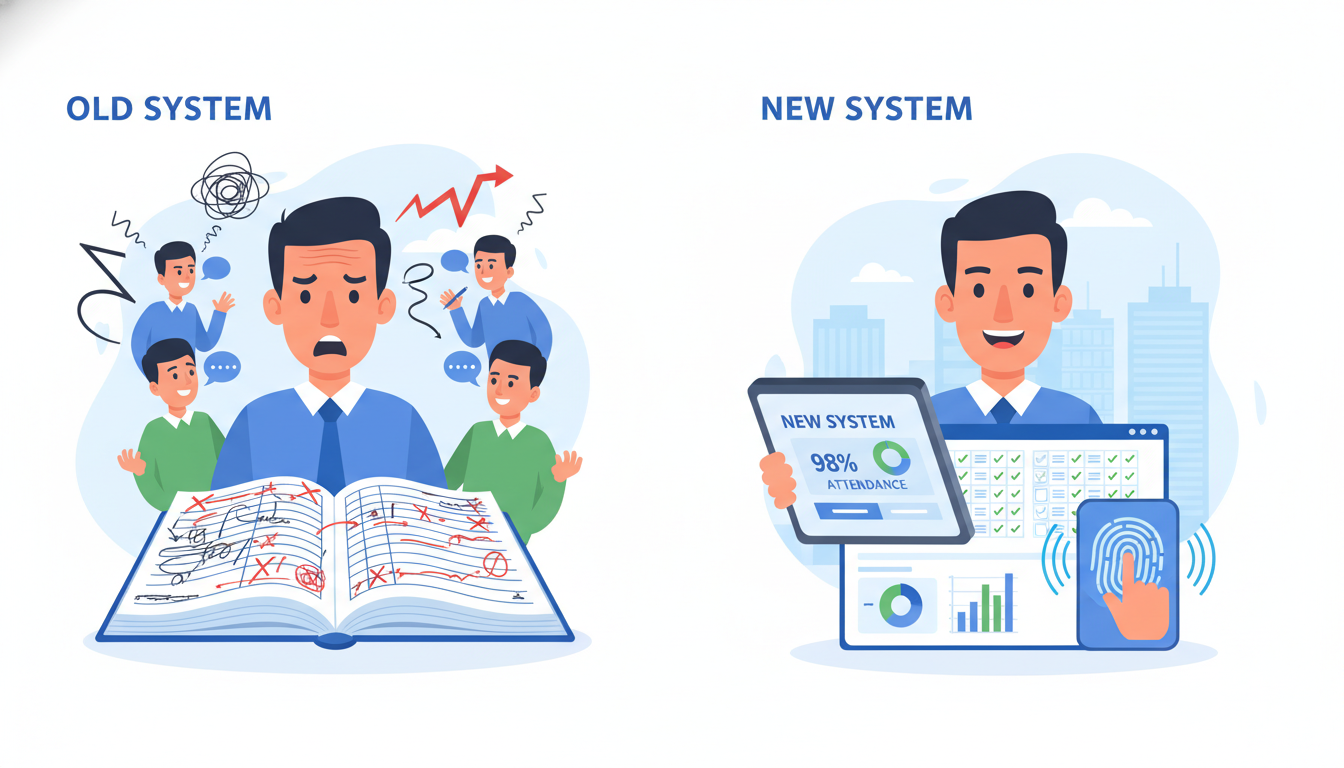
Your team member asks a coworker to mark them present. But they’re actually late or absent. This proxy attendance fraud costs companies real money. It damages workplace trust severely.
Attendance manipulation like this is common. Studies show that 75% of businesses see time theft through buddy punching.
It’s not just lost hours. It’s unfairness that honest employees feel when others cheat.
2.Manual Time Entry Errors
Manual attendance errors happen even with the best intentions.
Someone forgets to sign in the register. A supervisor writes down the wrong time by accident. Records get smudged or lost in filing cabinets.
Human error in attendance creates inaccurate time logs. These lead to payroll mistakes. Problems with manual attendance add up. Small daily errors become massive monthly discrepancies.
3.Late Arrivals and Early Leaving
The late attendance problem might seem minor at first glance.
But punctuality issues at work add up quickly. When employees arrive 10 minutes late regularly, you lose hours every week.
Early exit tracking becomes impossible without automated systems. The impact of lateness on productivity goes beyond lost hours. It affects team morale.
4.Payroll Disputes and Conflicts
Payroll disputes attendance issues create the worst workplace conflicts.
When employees feel underpaid due to attendance payroll mismatch, trust breaks down. Salary conflicts due to attendance waste HR time and damage relationships.
Payroll accuracy issues stem from poor tracking. Without good data, finance teams guess. This leads to mistakes that hurt everyone.
Biometric Attendance Systems in Bangladesh Workplaces
Biometric attendance system Bangladesh adoption is growing rapidly.
From factories to tech startups, companies discover the power of biometric workforce management. These systems use unique physical features to verify identity and track time.
Biometric attendance adoption in Dhaka and Chittagong has accelerated. Companies see immediate improvements.
Attendance software Bangladesh providers offer solutions for local needs. They understand power cuts and internet issues.
Manufacturing units use fingerprint scanners. Offices use facial recognition. Even small businesses embrace this tech as prices drop.
How Biometric Attendance Systems Work
Understanding how biometric attendance works helps you appreciate the technology’s power.
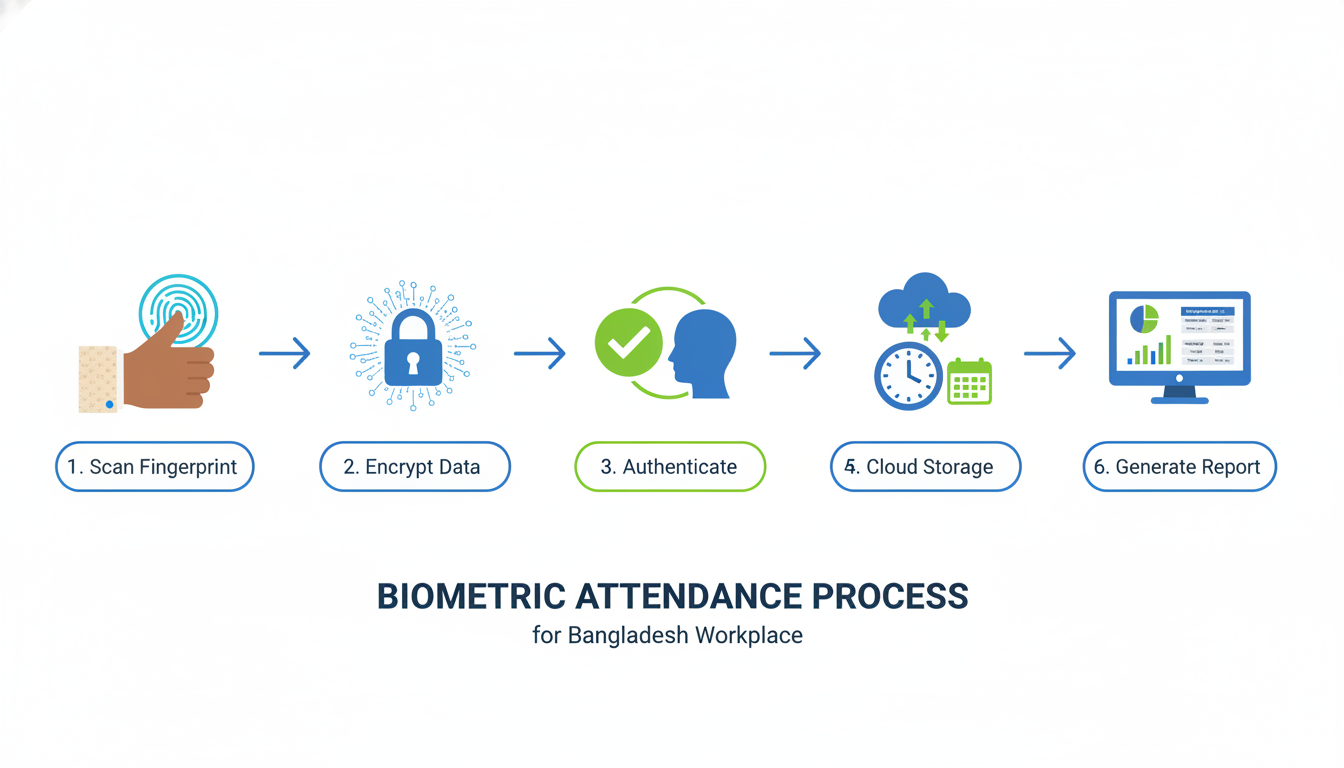
Here’s the biometric attendance system process step by step:
- Enrollment: Each employee registers their unique biometric data. This includes fingerprint, face, or iris scan.
- Storage: The system converts this data. It converts it into an encrypted digital template.
- Authentication: When clocking in, the employee presents their biometric identifier.
- Verification: The biometric authentication process matches the live scan. It matches against stored templates.
- Recording: Upon successful match, the system logs the exact time and date.
- Reporting: Data flows instantly into attendance verification dashboards and reports.
Biometric attendance technology uses advanced algorithms for accuracy. According to NIST research, modern systems work even with minor changes like facial hair.
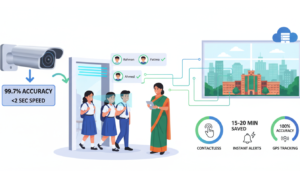
Modern systems complete attendance verification in under two seconds. Employees scan and go without disrupting workflow.
Key Ways Biometric Attendance Systems Improve Employee Accountability
Biometric attendance improve accountability in powerful ways.
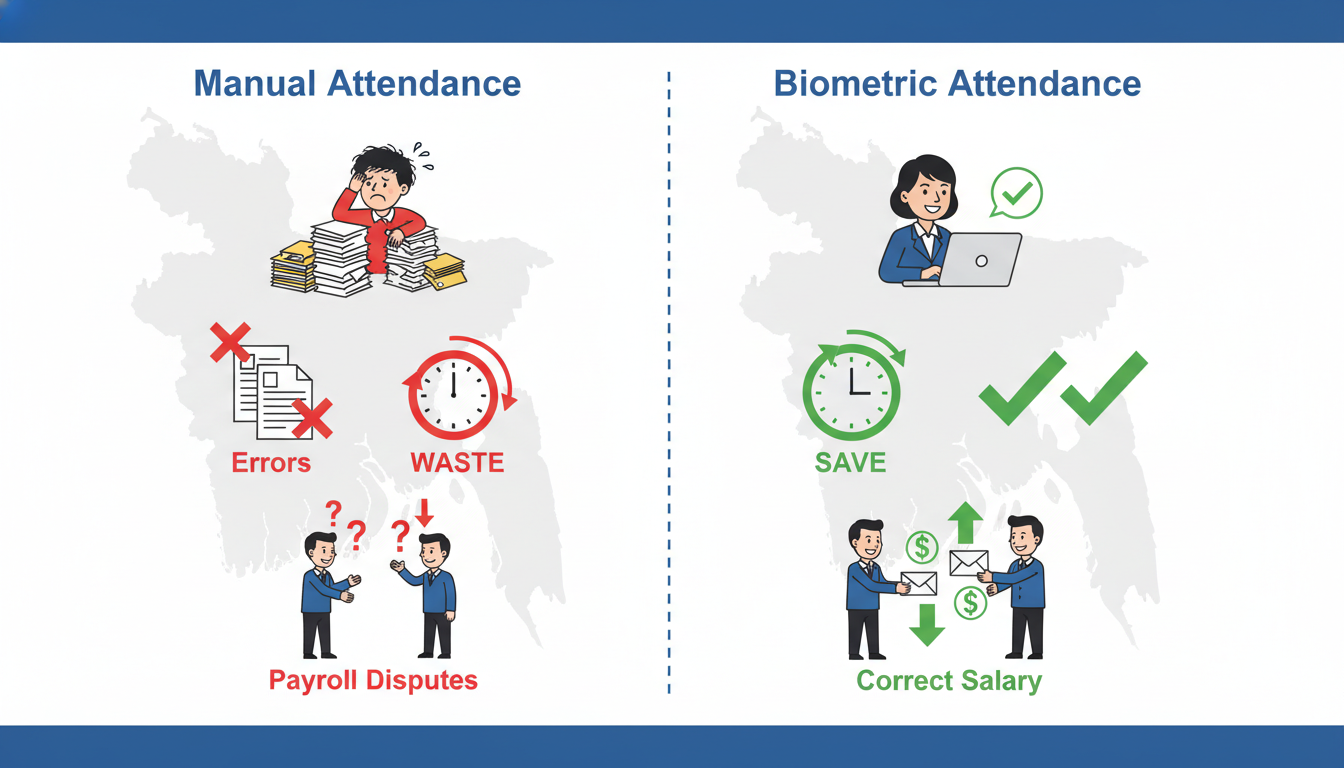
This employee accountability system creates transparency. Managers gain visibility. Employees gain fairness. Companies gain productivity.
1.Elimination of Buddy Punching
The ability to eliminate buddy punching alone justifies the investment. It justifies it for many companies.
Biometric attendance fraud prevention makes it impossible for one person to clock in for another. Each fingerprint is unique and cannot be replicated.
This time theft prevention system saves businesses money. Companies lose up to 5% of payroll to time theft.
2.Accurate Time Tracking
Accurate time tracking transforms how you understand workforce patterns.
The system captures precise attendance records down to the exact second. No rounding up. No approximations. No estimates. Just pure, verifiable data.
This time accuracy system gives you the truth about working hours. You can analyze trends. You can identify patterns. You can make informed decisions based on real data.
Attendance tracking accuracy means payroll calculations become bulletproof. Disputes disappear almost overnight. Everyone trusts the numbers.
3.Real-Time Monitoring & Reporting
Real time attendance monitoring gives managers instant visibility. Visibility into workforce presence.
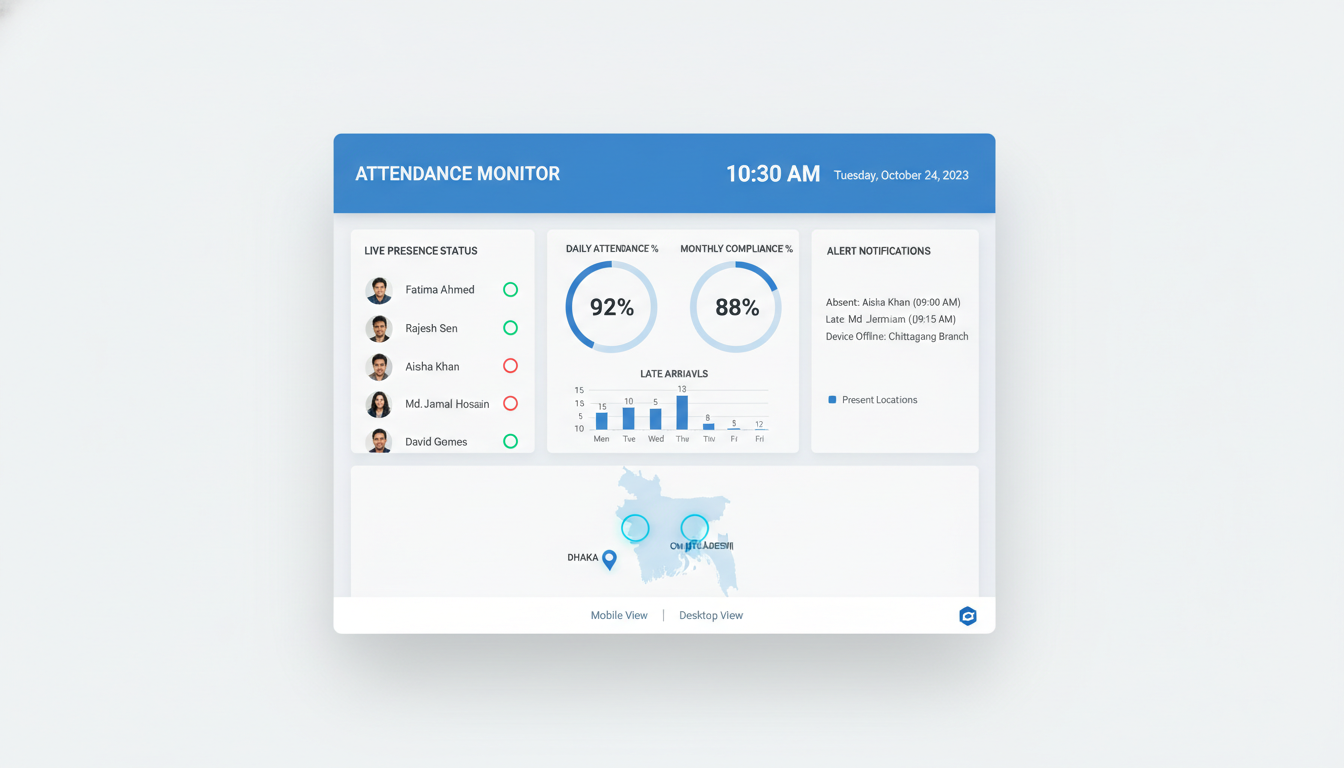
Your live attendance dashboard shows exactly who’s in, who’s out, and who’s late. It shows this right now. No waiting for end-of-day reports. No waiting for weekly summaries.
Workforce visibility through real time attendance reporting allows immediate action. You can address problems before they become patterns. You can respond to coverage gaps instantly.
This instant access to data changes how managers lead their teams. It empowers them with information.
4.Culture of Responsibility
Installing a biometric system creates a culture of accountability naturally.
When tracking is fair and transparent, employees develop responsible work behavior. They know their attendance matters. They know it’s being measured accurately and fairly.
This discipline culture spreads beyond just attendance. It influences how people approach deadlines. It influences quality standards and team commitments. The effect is organization-wide.
The employee responsibility system becomes self-reinforcing. Team members see everyone held to the same standard. This creates respect and fairness.
5.Fair Payroll Processing
Fair payroll processing builds trust like nothing else can.
When salary calculations are based on payroll accuracy with biometrics, disputes virtually disappear. Everyone can verify their hours matched their pay. There’s no room for disagreement.
Attendance based payroll removes the guesswork. It removes human bias from compensation. The system treats everyone equally. It treats them based on actual time worked.
This fairness strengthens the relationship. The relationship between employers and employees significantly.
6.Tamper-Proof Audit Trail
The attendance audit trail created by biometric systems is invaluable.
Tamper proof attendance data means records can’t be altered after the fact. Every entry is timestamped. Every entry is secured with encryption. Nobody can change the history.
These permanent attendance logs help with attendance compliance tracking. They help with labor law requirements. During audits or disputes, you have ironclad evidence. Evidence that protects everyone.
This documentation protects both the company and employees. It protects them from false claims or misunderstandings.
Role of Biometric Data in Manager Oversight
Biometric data oversight transforms how managers lead their teams.
The manager attendance control enabled by these systems is powerful. But it’s also fair and transparent. Leaders can see patterns without micromanaging individuals.
This workforce monitoring system provides the data managers need. They need it to make better decisions.
1.Real-Time Attendance Visibility
Attendance visibility gives managers superpowers they never had before.
Live employee presence tracking shows exactly who’s available right now. This workforce transparency helps with shift planning. It helps with task assignment. It helps with resource allocation.
When emergencies arise, you know instantly who’s on-site to help. No more walking around looking for people. No more making phone calls to track people down.
2.Exception Handling and Approvals
Attendance exception handling becomes systematic and fair. Fair with biometric systems.
The attendance approvals workflow flags unusual patterns automatically. Late arrivals, early exits, or missed punches trigger notifications. Notifications for manager review.
Attendance rule enforcement happens consistently. It happens across all departments. Nobody slips through the cracks. Nobody receives special treatment without documentation.
This standardized approach reduces favoritism. It improves morale across the organization.
3.Performance Monitoring Support
Performance monitoring attendance data reveals important patterns. Patterns about productivity.
Attendance performance metrics help identify top performers. They help identify those needing support. Attendance based performance tracking shows correlations. Correlations between presence and output.
This data informs coaching conversations. It informs performance reviews with objective facts. Not just opinions or feelings.
How Automated Alerts and Notifications Improve Punctuality
The attendance alerts system is a game-changer. A game-changer for punctuality improvement tools.
Automated late arrival alerts notify managers immediately. They notify them when someone misses their shift start. Employees can receive reminders before their shifts begin.
How alerts improve attendance is straightforward. People respond to timely nudges. A notification 30 minutes before shift start reduces late arrivals. It reduces them significantly.
The attendance notification system can include:
- Pre-shift reminders sent to employee phones
- Manager alerts when team members are late
- Escalation notices for repeated violations
- Absence pattern warnings for HR review
- Overtime alerts when limits are reached
These punctuality improvement tools create accountability. They create it without confrontation. The system does the monitoring. This frees managers to focus on coaching. Not policing.
Employees appreciate the reminders. The reminders prevent accidental lateness. Managers appreciate the alerts. The alerts enable quick response to coverage gaps.
Key Features of Attendance Software That Promote Employee Discipline
Modern attendance software features go far beyond simple time tracking.
Employee discipline software includes tools that reinforce positive behaviors. HR attendance tools help build structure. They build structure while maintaining flexibility.
Biometric attendance software features that promote attendance discipline system include:
- Shift scheduling integration that shows employees their expected hours
- Leave management that connects absences with attendance records
- Policy configuration that enforces company-specific rules automatically
- Mobile accessibility allowing remote punch-in with geo-fencing
- Overtime tracking that calculates extra hours precisely
- Holiday calendars that adjust expectations for local observances
- Department-specific rules that accommodate different operational needs
- Multi-location support for businesses with several branches
These features work together. They work together to create clarity about expectations. Employees know the rules. Managers know the exceptions. HR knows the system enforces policies fairly.
The best attendance discipline system feels supportive. It doesn’t feel punitive or harsh.
Implementation Benefits of Biometric Attendance Systems
The biometric attendance benefits extend across your entire operation.
Attendance system advantages include both immediate and long-term gains. The biometric attendance ROI typically appears within the first few months. Months of implementation.
Let’s look at the specific biometric attendance benefits. The benefits that matter most.
1.High Accuracy in Attendance Tracking
Attendance accuracy improvement is the foundation. The foundation of all other benefits.
Precise attendance data means every decision you make is based on truth. No more estimating. No more arguing about who was where when. Just facts.
This accuracy eliminates the gray areas. The gray areas that create disputes and inefficiency.
2.Seamless Payroll Integration
Payroll integration attendance saves countless hours. Hours of manual data entry.
The system feeds time data directly. Directly into your payroll software. Automated payroll processing reduces errors. It speeds up payment cycles dramatically.
Finance teams love the payroll integration attendance. They love it because reconciliation becomes simple and quick.
3.Enhanced Security
Biometric attendance security protects both your facility and your data.
Only authorized individuals can access work areas. The secure attendance system creates an additional layer. A layer of physical security beyond just tracking time.
This dual-purpose functionality adds value. Value beyond HR functions alone.
4.Scalability
A scalable attendance system grows with your business seamlessly.
Whether you have 50 employees or 5,000, enterprise attendance software handles the load. Adding new users takes minutes. Not days or weeks.
This scalable attendance system means you won’t outgrow your investment. You won’t outgrow it quickly.
When to Implement Biometric Attendance Systems in Bangladesh
Knowing when to implement biometric attendance helps you time your investment right.
Look for these signs you need biometric attendance in your workplace:
- Frequent payroll disputes about working hours
- Suspicion of buddy punching or time theft
- Difficulty tracking employees across multiple locations
- Manual attendance processes taking excessive HR time
- Rapid company growth straining existing systems
- Compliance requirements demanding better documentation
- High turnover potentially linked to perceived unfairness
Biometric attendance for companies makes sense. It makes sense when accuracy matters more than flexibility. If you’re running shift-based operations, the case becomes even stronger.
Biometric system Bangladesh workplaces implementation is particularly valuable. Valuable in industries like manufacturing, retail, healthcare, and hospitality. In these fields, presence directly correlates with productivity.
Don’t wait for problems to become crises. Proactive implementation of biometric attendance for companies prevents issues. It prevents them before they damage your culture.
According to Harvard Business Review, companies that implement biometric systems early see results. They see faster ROI and smoother transitions.
The right time to implement is when you recognize something. You recognize that your current system can’t scale with your ambitions.
Employee accountability isn’t about control. It’s about fairness.
Biometric attendance systems create that fairness automatically. They remove doubt. They eliminate manipulation. They build trust across your organization.
Your team deserves clear expectations and accurate tracking. Your managers deserve reliable data. Your business deserves the productivity. The productivity that comes from strong accountability in modern workplaces.
For more insights on workforce management best practices, check out resources. Resources from SHRM and International Labour Organization.
The technology is ready. The benefits are proven. The time to act is now.
Transform your workplace accountability with systems. Systems that work as hard as your team does.
FAQs
1: What is biometric attendance and how does it work?
Biometric attendance uses your fingerprint or face to track when you come to work. You put your finger on a scanner or look at a camera. The system checks it’s really you and saves the time. It’s fast and can’t be cheated.
2: How does biometric attendance stop buddy punching?
Buddy punching is when a worker signs in for a missing friend. Biometric systems stop this because you can’t share your fingerprint or face. Each person must be there in person to sign in. This cuts time theft by 95% or more.
3: Can biometric attendance improve payroll accuracy?
Yes! Biometric attendance saves exact work hours automatically. No hand-written mistakes. No rounding errors. Payroll accuracy reaches almost 100%. Workers get paid exactly for hours worked. This stops payroll disputes and builds trust.
4: Is biometric attendance expensive for small businesses in Bangladesh?
No. Many attendance software Bangladesh companies now offer cheap systems. Even small shops with 10 workers can afford them. The system usually pays for itself within 6-12 months by stopping attendance fraud and saving HR time.
5: When should a company implement a biometric attendance system?
Implement when you see frequent payroll fights, suspected attendance cheating, or your HR team spends too much time fixing attendance. Also when you’re growing fast or need better workforce management. The best time is before small problems become big.