

If you’re looking for the best HR management software, the first thing you need to understand is – what features actually matter?
Whether you run a small business or a large enterprise, the right HRMS (Human Resource Management System) can save hours of manual work, reduce costly errors, and keep your entire workforce organised in one place.
In this guide, we’ll walk you through all the essential HR management software features you should look for – and why each one matters for your business.
What Is HR Management Software?
HR management software (also known as HRMS or HRM software) is a digital platform that helps businesses manage their entire HR operations – from hiring new employees to processing payroll, tracking attendance, and monitoring performance.
Instead of managing spreadsheets, paper files, and disconnected tools, HR software brings everything under one unified system – making HR teams faster, smarter, and more efficient.
According to SHRM (Society for Human Resource Management), HR technology investment has grown 60% year-over-year globally — making it one of the fastest-growing areas in modern business operations.
Top HR Management Software Features You Need in 2026
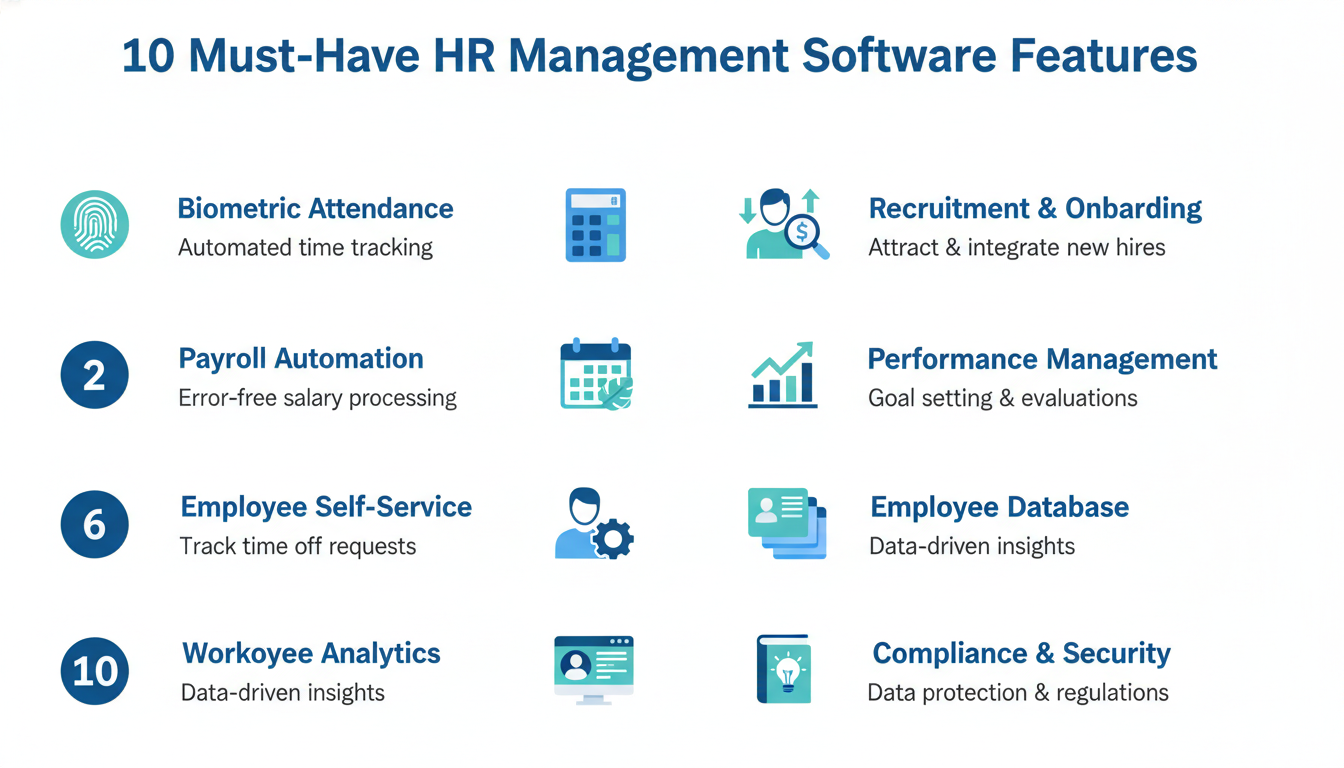
1. Biometric Attendance Management
One of the most critical features in any HR management system is accurate attendance tracking. Traditional punch cards and manual registers are outdated and prone to errors.
Modern HR software integrates biometric attendance systems that use:
- Fingerprint scanning
- Facial recognition
- RFID card authentication
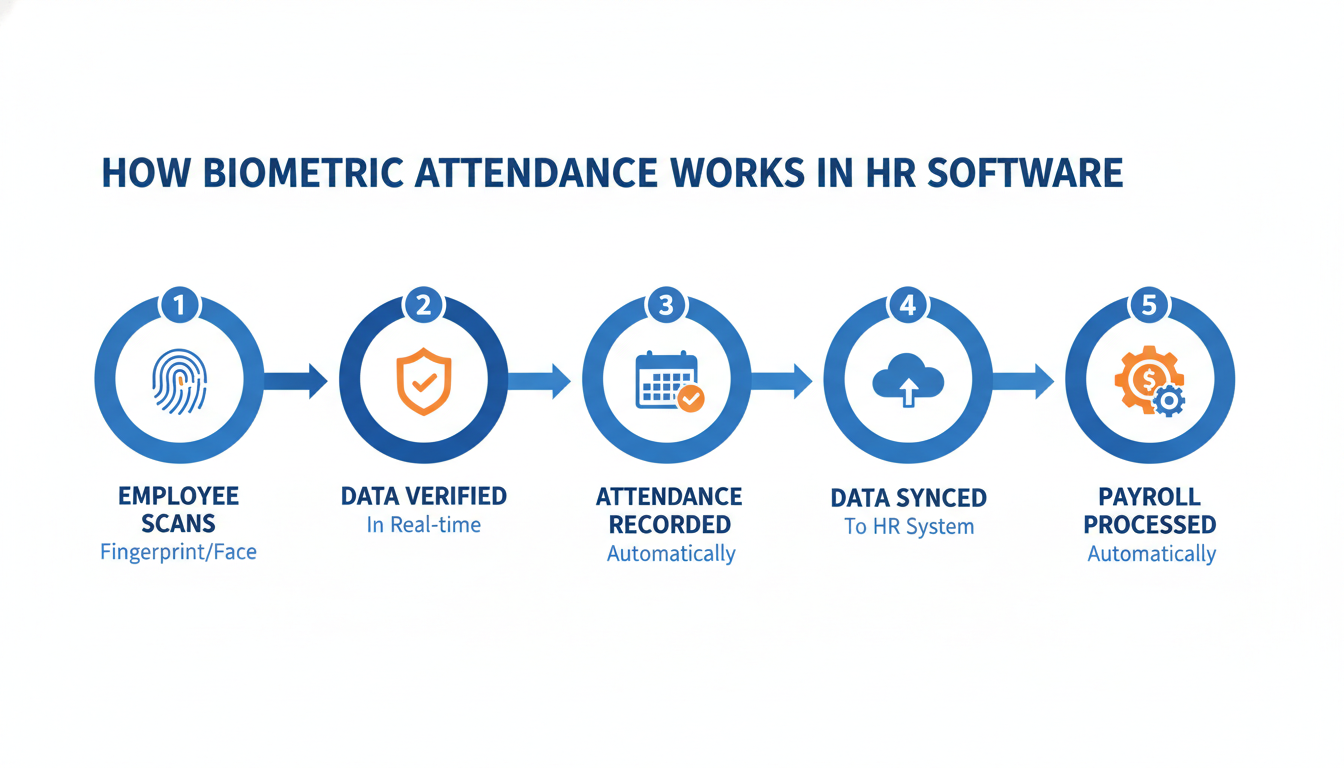
Why it matters:
- Eliminates “buddy punching” (one employee clocking in for another)
- Provides tamper-proof, real-time attendance records
- Automatically syncs with payroll — no manual data entry needed
- Cloud-based access lets managers monitor attendance from anywhere
Best for: Manufacturing, healthcare, corporate offices, and any business with shift-based workers.
2. Payroll Management & Automation
Payroll is one of the most time-consuming HR tasks – and one of the most error-prone. A good HR software feature list must include automated payroll processing.
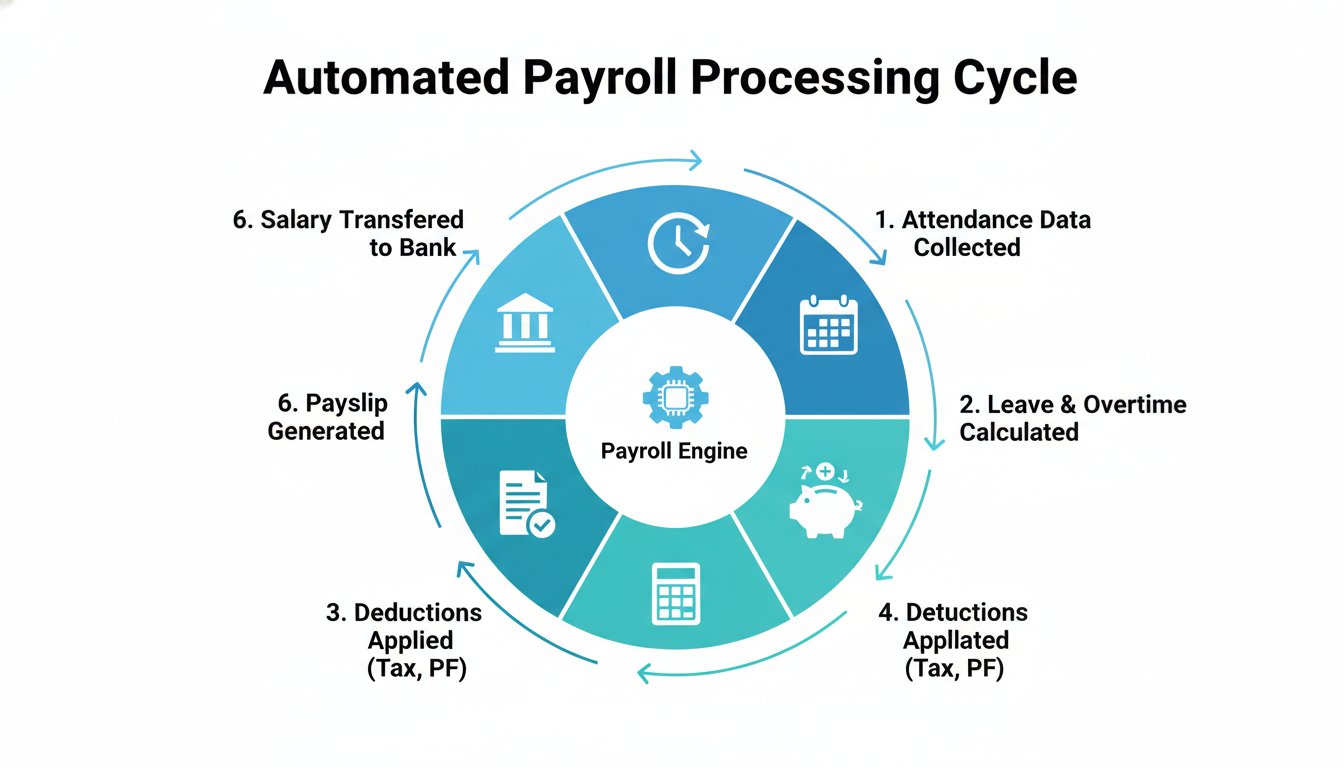
Key payroll features include:
- Auto salary calculation based on attendance, leaves, and overtime
- Tax deduction management (TDS, PF, ESI, etc.)
- Payslip generation with one click
- Bank transfer integration for direct salary deposits
- Compliance with local labor laws
Why it matters: Automated payroll reduces calculation errors, ensures employees are paid on time, and keeps your business compliant with tax regulations – all without manual effort.
3. Recruitment & Onboarding
Finding and hiring the right talent is the foundation of a great team. Modern HR management software features include end-to-end recruitment tools that cover:
- Job posting across multiple platforms from one dashboard
- Applicant Tracking System (ATS) to manage candidates
- Interview scheduling and automated reminders
- Offer letter generation and digital signing
- Onboarding checklists for new hires
Why it matters: A structured onboarding process improves new hire retention by up to 82%. With HR software, new employees get a smooth, organised experience from day one – reducing confusion and increasing early productivity.
4. Leave & Holiday Management
Managing employee leaves manually leads to miscommunication, scheduling conflicts, and payroll errors. HR software solves this with a smart leave management system.
Features include:
- Employee self-service leave requests (apply, approve, reject – all online)
- Custom leave policies (annual leave, sick leave, casual leave, maternity leave)
- Real-time leave balance visibility for both employees and managers
- Holiday calendar management by location or department
- Integration with attendance and payroll
Why it matters: Employees can check their leave balance, apply for leave, and get approvals without emailing HR – saving time for everyone.
5. Performance Management
Great HR software doesn’t just manage admin tasks – it also helps you build a high-performing team through structured performance management.
Key features:
- Goal setting & OKR tracking (Objectives and Key Results)
- 360-degree feedback from peers, managers, and self
- Performance review cycles (monthly, quarterly, annual)
- KPI dashboards for individual and team performance
- Recognition and reward management
Why it matters: When employees know what’s expected of them and receive regular feedback, they perform better. Performance management features help HR and managers make fair, data-driven promotion and appraisal decisions.
6. Employee Self-Service Portal
A great HR system empowers employees to handle their own HR tasks – reducing the workload on the HR team significantly.
Through a self-service portal, employees can:
- View and download payslips
- Apply for leaves and check balances
- Update personal information
- Access company policies and documents
- Submit expense reimbursement requests
Why it matters: Self-service portals reduce repetitive HR queries by up to 60%, freeing up HR staff to focus on strategic work instead of answering basic employee questions.
7. Employee Database & Organisation Management
A centralised employee database is the backbone of any HR software. It stores and organises all employee information in one secure location.
This feature includes:
- Digital employee profiles (personal info, documents, employment history)
- Org chart builder – visual company hierarchy
- Department and role management
- Document storage (offer letters, contracts, certifications)
- Employee lifecycle tracking – from hiring to exit
Why it matters: Instead of digging through filing cabinets or outdated spreadsheets, HR managers can find any employee information in seconds.
8. Workforce Analytics & HR Reports
Data-driven decision-making is no longer optional – it’s essential. The best HRMS software features include powerful workforce analytics tools that give you real-time insights.
Analytics features include:
- Attendance and absenteeism reports
- Turnover and retention analysis
- Headcount and hiring trend dashboards
- Payroll cost analysis
- Department-wise performance reports
Why it matters: HR analytics help leadership understand workforce patterns, identify problems early (like rising turnover in a specific department), and make smarter business decisions backed by real data.
9. Training & Development (Learning Management)
Employee growth is a top priority for modern businesses. Many HR software platforms now include a built-in Learning Management System (LMS) or integrate with one.
Training features include:
- Course creation and assignment
- Training progress tracking
- Certification and compliance training management
- Skill gap analysis
- E-learning content library
Why it matters: Investing in employee training improves productivity, boosts morale, and reduces turnover. HR software makes it easy to track who has completed what training – especially important in regulated industries like healthcare and finance.
10. Compliance & Data Security
HR departments handle some of the most sensitive data in a company – employee salaries, contracts, health information, and more. That’s why compliance and security features are non-negotiable.
Essential compliance and security features:
- Built-in labour law compliance tools
- Automatic regulatory updates
- Audit-ready reporting
- Role-based access control (only authorised users see sensitive data)
- End-to-end data encryption
- Multi-factor authentication (MFA)
- GDPR and local data protection compliance
Why it matters: A data breach or compliance violation can result in heavy fines and reputational damage. HR software with robust security ensures your employee data is always protected.
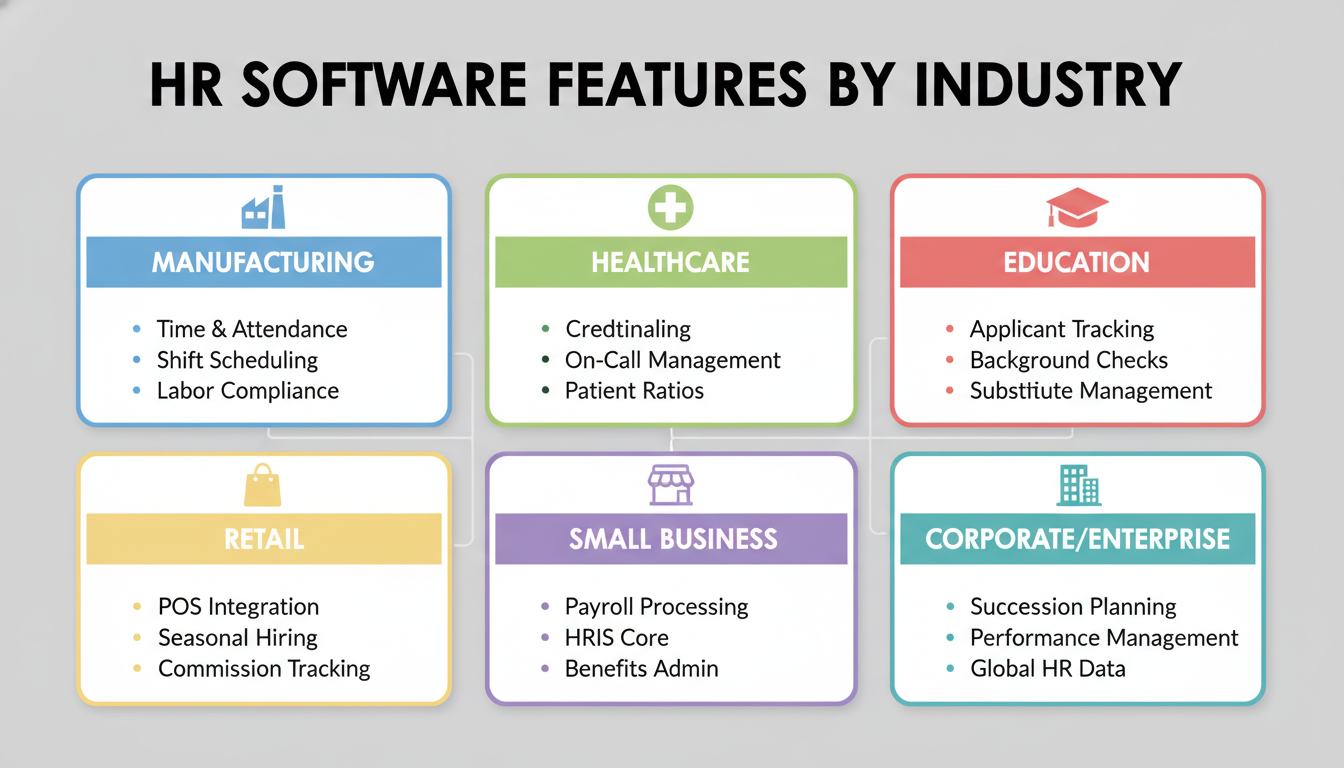
HR Software Features by Industry
Different industries have different HR needs. Here’s a quick breakdown:
| Industry | Most Important Features |
|---|---|
| Manufacturing | Biometric attendance, shift scheduling, compliance tracking |
| Healthcare | Attendance tracking, payroll, and training management |
| Education | Attendance tracking, payroll, training management |
| Retail | Shift management, leave tracking, performance reviews |
| Small Business | Payroll automation, self-service portal, basic reporting |
| Corporate/Enterprise | Analytics, OKR tracking, full HRMS suite |
How to Choose the Right HR Management Software
With so many options available, here’s a simple checklist to help you choose:
- Does it cover all the core HR features your business needs?
- Is it easy to use for both HR teams and employees?
- Does it integrate with your existing tools (accounting software, ERP, etc.)?
- Is it cloud-based with mobile access?
- Does it comply with your country’s labour laws?
- Is customer support responsive and helpful?
- Is it scalable as your team grows?
Frequently Asked Questions (FAQs)
What is the most important feature of HR management software?
It depends on your business size and needs, but payroll automation and attendance management are the most universally important features for any organisation.
Can small businesses benefit from HR management software?
Absolutely. Many HR software platforms offer affordable plans designed for small businesses. Even basic features like digital employee records, leave management, and payroll automation can save small teams hours every week.
What is the difference between HRMS, HRIS, and HCM?
HRIS (HR Information System) – focuses on data storage and basic HR functions
HRMS (HR Management System) – includes HRIS + payroll + attendance
HCM (Human Capital Management) – the broadest, which includes talent management and strategic workforce planning
Is biometric attendance data secure?
Yes. Modern biometric systems use end-to-end encryption and comply with data protection standards to ensure employee biometric data is stored securely and cannot be misused.
Does HR software reduce operational costs?
Yes. By automating manual tasks like payroll calculation, attendance tracking, and report generation, HR software significantly reduces administrative overhead and human errors — directly cutting operational costs.
Final Thoughts
The right HR management software features can transform how your organisation manages its most important asset – its people. From automating payroll and tracking attendance with biometrics to managing performance and ensuring compliance, a modern HRMS handles it all.
When evaluating your options, don’t just look at price – look at the features, scalability, ease of use, and security. The best HR software is the one that fits your team’s needs today and grows with you tomorrow.
Ready to simplify your HR operations? Explore our HR management software and see how it can work for your business.