

Many NGOs in Bangladesh still use paper registers to track staff attendance. This is slow, easy to fake, and hard to check. Donors and auditors want proof that money is being used correctly. That proof starts with accurate attendance data.
Biometric attendance for NGOs solves this problem. It records who came to work, when they arrived, and when they left. The data is stored safely and cannot be changed. This guide explains everything you need to know to get started.
Whether you run a small community NGO or a large development organization with field teams across Bangladesh, this guide is for you.
Why NGOs in Bangladesh Need Attendance Automation
Manual Attendance Problems
Paper attendance sheets have many problems. Staff can sign for others who are not there. Records can be lost or changed. HR teams spend hours every month counting data by hand. Mistakes are common and hard to fix.
Donor Pressure for Transparency
Most donors now ask NGOs to show clear records of staff time and costs. If you cannot prove that your team worked on a project, you may lose funding. Biometric attendance gives you clean, trusted records that satisfy donor audits.
Government and Compliance Requirements
The NGO Affairs Bureau (NGOAB) in Bangladesh requires development organizations to keep proper employee records. Automated systems make this much easier and reduce the risk of compliance issues.
How Automation Fixes These Problems
A biometric attendance system records data automatically. No one can sign in for someone else. Reports are ready in minutes. HR teams save time, and management gets real data to make good decisions.
Overview of Biometric Attendance Systems
A biometric attendance system uses a person’s body features, like their fingerprint or face, to confirm who they are. Here is how the full system works:
• A hardware device is placed at the entry point of your office or field location
• Staff scan their finger or face when they arrive and leave
• The device sends the data to a cloud-based software platform
• Managers can see attendance reports from any device with internet
The hardware and software work together. The device captures the data. The software stores it, organizes it, and creates reports. Some systems also work without internet and sync data later when the connection is back.
NGO-specific solutions are different from regular office systems. They include features like GPS tracking for field staff, donor project reporting, and multi-location management. Standard corporate systems often do not have these features.
Key Benefits for NGOs and Development Organizations
Improved Transparency and Donor Trust
When donors see accurate, tamper-proof attendance records, they trust your organization more. You can show exactly who worked on each project and for how long. This builds confidence and helps you secure future funding.
No More Ghost Workers or Time Theft
Ghost workers are fake employees added to the payroll. Time theft happens when someone marks attendance without actually working. Biometric systems stop both problems. Only the real person can scan their own fingerprint or face.
Accurate Payroll and Project Cost Reporting
Attendance data connects directly to payroll. This means salaries are calculated correctly every time. You can also track how much time and money each project is using, which helps with donor budget reports.
Real-Time Monitoring of Field Staff
Many NGO staff work far from the main office. GPS-enabled mobile attendance lets them check in from the field. You can see where they are and when they checked in, all in real time.
Less Work for HR Teams
HR staff no longer need to count sheets or fix data errors. Reports are created automatically. This gives them more time to focus on important work like staff welfare and training.
Core Features to Look For
Not all biometric systems are the same. Before you buy, check that the system includes these important features:
• Remote and mobile attendance with GPS location tracking
• Offline mode that saves data and syncs when internet returns
• Donor-specific reports that can be exported easily
• Payroll automation and leave management built in
• Multi-location and multi-project support
• Data security with role-based access so only the right people see sensitive data
GPS tracking is especially important for NGOs with field teams. Make sure the mobile app works on low-cost Android phones, since that is what most field staff use in Bangladesh.
Types of Biometric Systems Used in Bangladesh
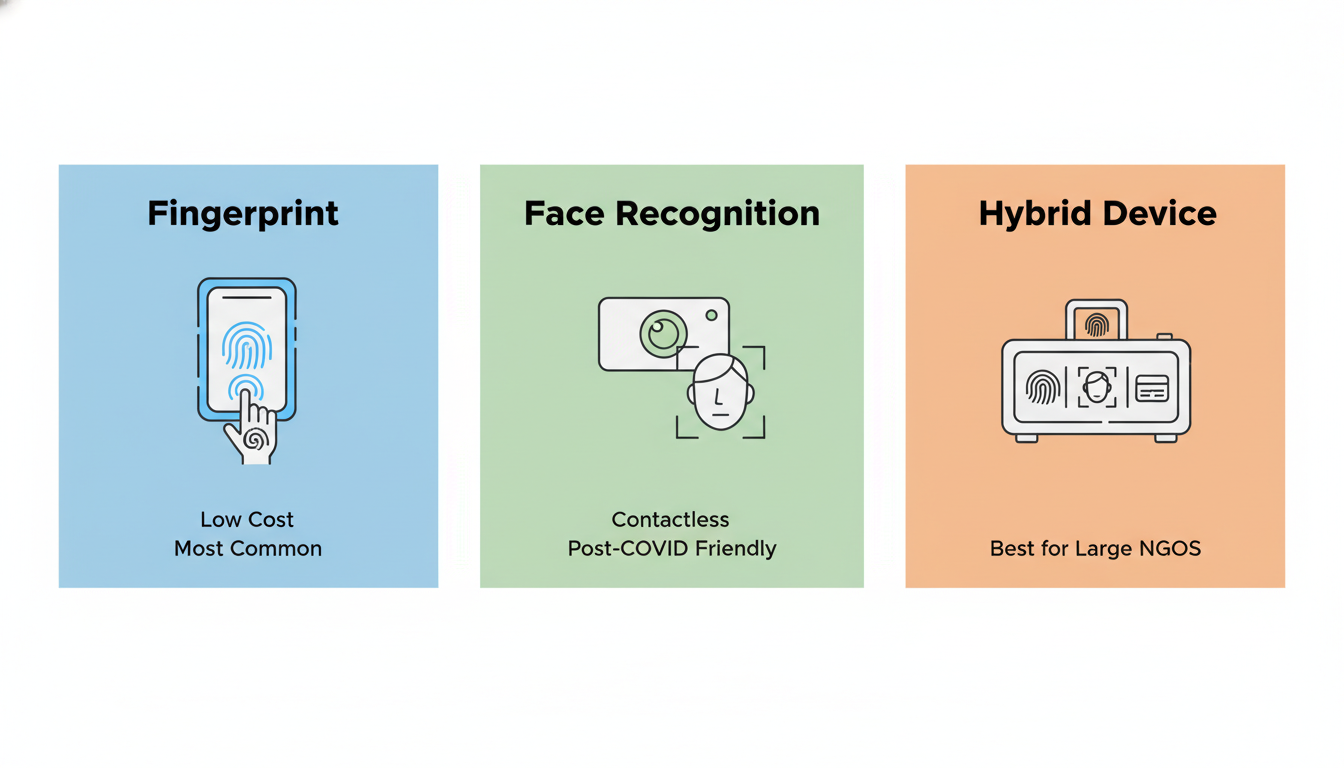
There are three main types of biometric attendance systems available in Bangladesh. Each has strengths and weaknesses depending on your NGO’s needs.
| Type | How It Works | Best Use | Cost |
| Fingerprint | Scans finger patterns | Office & field staff | Low |
| Face Recognition | Scans face features | High-traffic locations | Mid to High |
| Hybrid Device | Fingerprint + Face + Card | Large multi-site NGOs | Mid to High |
Fingerprint Attendance Systems
These are the most common types in Bangladesh. They are affordable and easy to use. Staff place their finger on a small scanner. The device matches the fingerprint to the stored record and marks attendance. Good for offices and indoor locations.
Face Recognition Attendance Systems
These systems use a camera to scan the face. No touching is needed, which makes them more hygienic. After the COVID-19 period, many organizations moved to face recognition. They work well in busy entry points where speed matters.
Hybrid Biometric Devices
Hybrid devices combine fingerprint, face recognition, and sometimes card scanning in one unit. They are flexible and work in more situations. They cost more but are a good choice for large NGOs with many types of locations.
Popular Biometric Attendance Solutions in Bangladesh
Several vendors offer biometric attendance solutions in Bangladesh. Here is a comparison of the most popular ones:
| Solution | Type | Best For | NGO Friendly | Price Range |
| Tipsoi | Cloud + Hardware | Local NGOs, SMEs | Yes | Budget to Mid |
| Rysenova | SaaS Platform | Development orgs | Yes | Mid Range |
| ZKTeco | Hardware Only | Any size org | With extra software | Low to Mid |
| Link-Up | Software | Multi-branch NGOs | Yes | Mid Range |
Tipsoi
Tipsoi is a Bangladeshi attendance and HR platform built for local organizations. It offers cloud-based software with hardware devices, making it a complete solution. It supports fingerprint attendance, real-time reporting, and payroll integration. It is a strong choice for NGOs that want a locally supported system with good customer service. You can learn more about their biometric attendance system in Bangladesh on their website.
Rysenova
Rysenova offers an attendance and payroll platform built for development organizations. It has good reporting features and supports multi-project tracking, which is useful for NGOs managing several donor-funded projects at once.
ZKTeco
ZKTeco is a global hardware brand widely used across Bangladesh. Their devices are reliable and affordable. However, you may need additional software to get full NGO-specific features like donor reporting and field tracking.
Link-Up Technology
Link-Up Technology focuses on software solutions for attendance management. It works well for NGOs with multiple branches and needs strong reporting tools.
How to Choose the Right Vendor
• Check if the vendor has experience with NGOs or development organizations
• Ask if they offer local technical support in Bangladesh
• Test the system with a free demo before committing
• Make sure the software can generate donor-specific reports
• Check if the mobile app works offline
Cost of Biometric Attendance Systems in Bangladesh
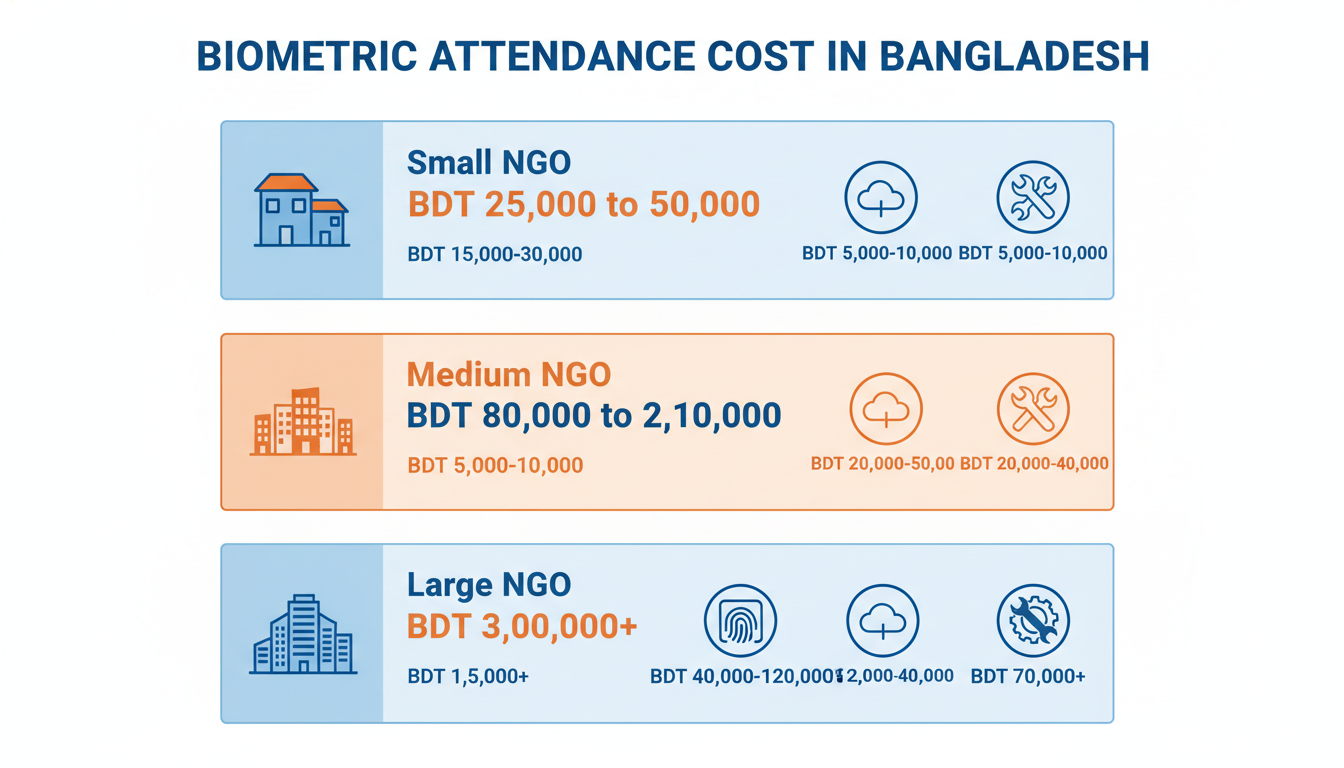
Cost depends on the size of your NGO, the number of locations, and the features you need. Here is a general breakdown:
| NGO Size | Hardware Cost (BDT) | Software/Year (BDT) | Total Est. (BDT) |
| Small (1-2 locations) | 15,000 – 30,000 | 10,000 – 20,000 | 25,000 – 50,000 |
| Medium (3-10 locations) | 50,000 – 1,50,000 | 30,000 – 60,000 | 80,000 – 2,10,000 |
| Large (10+ locations) | 2,00,000+ | 1,00,000+ | 3,00,000+ |
Cost Components
• Hardware and installation: This includes the physical devices and setup at each location
• Software subscription: Most platforms charge a yearly fee per user or per device
• Maintenance and support: Annual maintenance contracts (AMC) cover repairs and updates
Hidden Costs to Watch For
• Training fees for staff
• Customization costs for donor reports
• Extra charges for additional users or locations
• Data migration fees if switching from another system
Always ask vendors for a full cost breakdown before signing any agreement. Compare at least three vendors before making a decision.
Legal and Compliance Considerations in Bangladesh
Digital Security Act 2018
The Digital Security Act 2018 governs how digital data is stored and used in Bangladesh. NGOs must make sure that employee biometric data is stored securely and only used for the stated purpose. Storing data without proper consent can lead to legal problems.
Labour Act 2006
The Bangladesh Labour Act 2006 requires employers to keep proper attendance and working hour records. A biometric attendance system helps you meet this requirement automatically. The system creates a reliable, time-stamped record for every employee.
Employee Data Protection and Consent
Before collecting biometric data, NGOs must get written consent from each employee. Explain clearly what data is being collected, why it is needed, and who can see it. This protects both the employee and the organization.
NGOAB Reporting Obligations
The NGO Affairs Bureau requires development organizations to submit regular reports on their operations. Accurate attendance records support these reports and reduce the risk of compliance issues during audits.
Best Practices for Staying Compliant
• Get written consent from all employees before enrollment
• Store data on secure, encrypted servers
• Limit data access to authorized HR and management staff only
• Keep records for the required time period as per local law
• Work with a vendor who understands Bangladesh’s legal requirements
Challenges of Implementing Biometric Attendance for NGOs
Connectivity and Internet Limitations
Many NGO field offices in rural Bangladesh have limited or no internet. Choose a system that works offline and syncs data when the connection is available. This is a must-have feature for field-based organizations.
Power Outage Issues
Power cuts are common in many parts of Bangladesh. Make sure your biometric devices have built-in backup batteries. Also, check if the device can store attendance data locally during power cuts and upload it when power returns.
User Adoption and Training
Some staff, especially older employees or those in rural areas, may find the new system difficult at first. Plan a proper training session before going live. Use simple step-by-step guides in Bangla if needed. Assign a go-to person at each location to help others.
Data Privacy and Ethical Concerns
Some staff may be uncomfortable sharing their biometric data. Address this clearly. Explain what the data is used for and how it is protected. Having a transparent data policy helps build trust with your team.
Managing Remote and Seasonal Workers
Many NGOs hire seasonal or short-term field workers. Make sure your system allows easy enrollment and removal of users. GPS mobile check-in is useful for workers who move between locations regularly.
Real-World Use Cases in Development Organizations
Field Staff and Remote Workforce Management
A development NGO with field teams across multiple districts can use mobile GPS attendance to track staff in real time. Field workers check in on their phones. Managers in Dhaka see the data instantly. No more phone calls to confirm who is on site.
Multi-Location Project Monitoring
Large NGOs running projects in five or ten districts can manage all locations from one dashboard. They can see total attendance per project, compare locations, and identify patterns quickly.
Emergency and Humanitarian Response Projects
During disaster response operations, NGOs need to deploy staff fast and track them in difficult conditions. Mobile biometric attendance with offline mode works well in these situations. Data syncs when connectivity returns.
Donor-Funded Project Audit and Reporting
A donor asks for proof that staff were present during a project. The biometric system generates a report with exact dates, times, and locations. This takes minutes instead of days. Audits become smooth and simple.
Integration with Existing NGO Management Systems
HR and Payroll Software Integration
A good biometric attendance system should connect with your HR and payroll software. This removes the need to enter data twice and reduces errors. Salary calculations happen automatically based on real attendance records.
ERP and Financial Management Integration
For NGOs using ERP systems, attendance data can link directly to project cost tracking. This gives finance teams a clearer picture of how staff time is allocated across different donor projects.
Donor Management and Grant Reporting Software
Some advanced systems can export attendance data in formats that match donor reporting templates. This saves a lot of time at the end of each reporting period.
API and Custom Integration Options
If you use a custom-built management system, ask your vendor if they offer an API. An API allows the two systems to exchange data automatically. This is useful for larger NGOs with more complex IT setups.
Step-by-Step Implementation Guide for NGOs
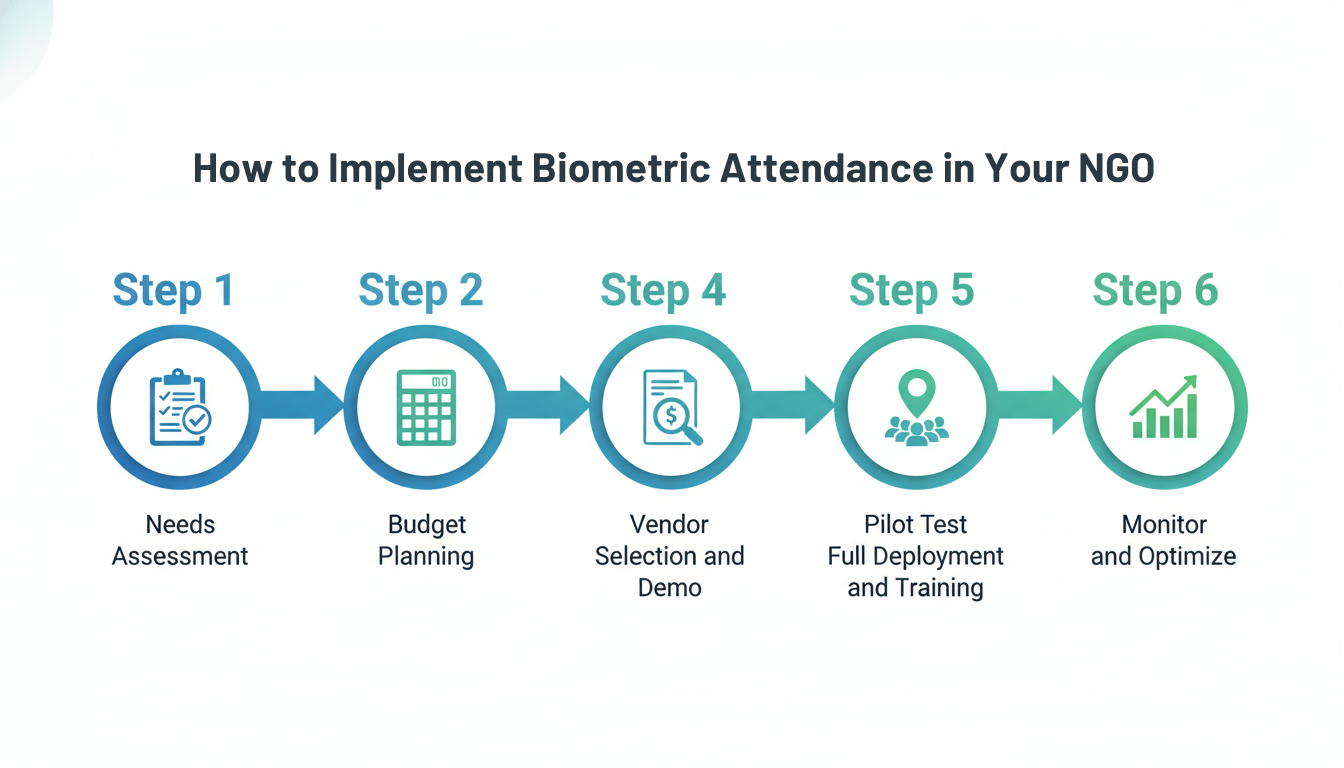
1. Needs Assessment and Requirement Analysis: List all your office and field locations. Count the number of staff at each. Identify what reports your donors need. Write down your budget range.
2. Budget Planning and Stakeholder Approval: Share the cost breakdown with your management team and board. Get approval before contacting vendors.
3. Vendor Selection and System Demo: Contact at least three vendors. Ask for a live demo. Test the mobile app and offline features. Ask specifically about NGO use cases.
4. Pilot Testing at One Location: Start with one office before rolling out everywhere. This lets you fix problems early without disrupting all your operations.
5. Full Deployment and Staff Training: Roll out to all locations after the pilot is successful. Train all staff with simple guides. Assign location champions who can help others.
6. Monitoring, Feedback, and Performance Optimization: Check reports weekly in the first month. Collect feedback from staff and HR. Ask your vendor to fix any issues quickly.
Future Trends in Biometric Attendance Systems
AI-Powered Face Recognition
Newer systems use artificial intelligence to recognize faces even in different lighting or with face masks. This makes attendance marking faster and more accurate. AI also helps detect unusual patterns, like someone always checking in late.
Cloud-First and Mobile-First Solutions
More vendors are moving to fully cloud-based systems with strong mobile apps. This means NGOs do not need expensive on-site servers. Everything runs on the internet and can be accessed from anywhere.
Integration with IoT and Smart Devices
Biometric devices are starting to connect with other smart devices like access control systems, CCTV cameras, and environmental sensors. This creates a more complete picture of activity at each location.
Blockchain for Attendance Records
Some newer platforms are exploring blockchain to make attendance records completely tamper-proof. Once a record is added to the blockchain, it cannot be changed. This could be very useful for donor audits and legal compliance.
What Bangladesh NGOs Should Prepare For
Connectivity in rural areas is improving. 4G coverage is expanding. As mobile internet becomes more reliable, cloud-based attendance systems will work better in more locations. Now is a good time to build your system on a cloud-first platform.
Frequently Asked Questions
What is the best biometric attendance system for NGOs in Bangladesh?
The best system depends on your size and needs. For local NGOs that want good support and donor reporting features, Tipsoi is a strong option. For hardware-focused setups, ZKTeco devices are widely used and reliable. Always test before you buy.
Is biometric attendance legally allowed in Bangladesh?
Yes, biometric attendance is legal in Bangladesh. However, you must follow the rules in the Digital Security Act 2018 and the Labour Act 2006. Always get written consent from employees before collecting their biometric data.
Can biometric attendance systems work without the internet?
Yes. Many good systems have an offline mode. The device stores data locally when there is no internet and automatically syncs it to the cloud when the connection returns. This is essential for NGOs working in rural areas.
How much does a biometric attendance system cost in Bangladesh?
For a small NGO with one or two locations, the total cost can be around BDT 25,000 to 50,000 for hardware, software, and setup. Medium-sized NGOs may spend BDT 80,000 to 2,10,000 or more, depending on the number of locations and features.
How do biometric systems handle field workers in remote areas?
Most modern systems offer a mobile app where field workers can check in using their smartphones. GPS coordinates are recorded at the time of check-in. This works even in remote areas as long as the worker has a mobile data connection.
What happens to employee data if we change our system?
Ask your vendor about data export options before you sign up. A good vendor will let you download your data in a standard format like CSV or Excel. This makes it easier to move to a new system if needed.
Conclusion
Biometric attendance for NGOs in Bangladesh is no longer a luxury. It is a practical tool that helps organizations work better, earn donor trust, and stay compliant with local laws.
The right system will save your HR team hours every week, stop attendance fraud, and give you clean data for donor reports. Whether you manage a small community organization or a large multi-district development project, there is a solution that fits your needs and budget.
Start with a clear needs assessment, test at least three vendors, and run a pilot at one location before full deployment. Take the time to train your staff well. The results are worth the effort.
If you are ready to explore your options, you can check out a trusted biometric attendance system in Bangladesh that is built for local organizations like yours.