
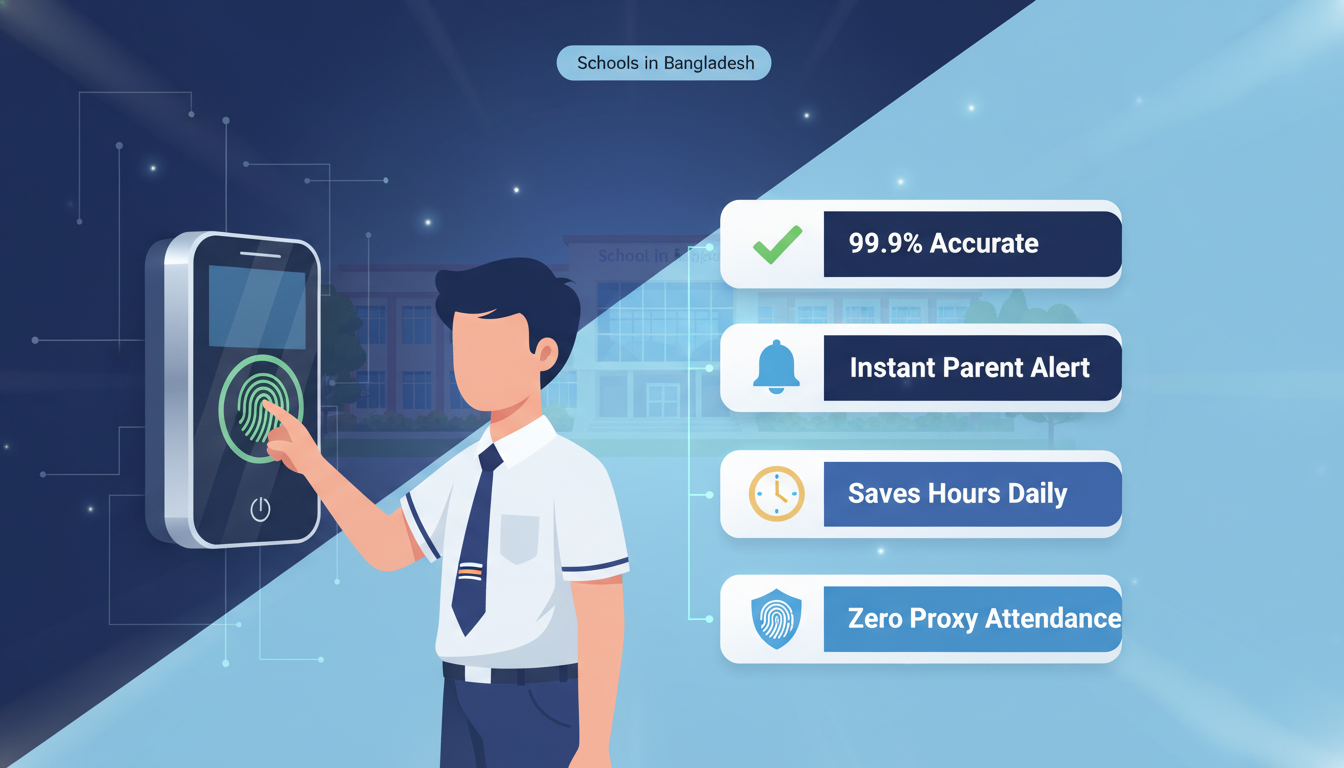
Keeping track of who comes to school every day is very important. But doing it by hand takes a lot of time and can have many mistakes. That is why so many schools in Bangladesh are now using a biometric attendance system for schools. It makes the whole process fast, easy, and very accurate. In this guide, we will explain everything you need to know about these systems, from what they are to how much they cost and how to choose the best one for your school.
What Is a Biometric Attendance System?
A biometric attendance system is a machine that records who is present by reading something unique about a person. This could be a fingerprint, a face, or even the iris of an eye. Because every person has different fingerprints and facial features, this system cannot be fooled. Nobody can mark attendance for someone else.
These systems are now widely used in schools, colleges, offices, and factories all over Bangladesh. They save time, reduce errors, and give school management real and accurate data every single day.
Why Schools in Bangladesh Are Adopting Biometric Systems
Schools in Bangladesh face many problems with old attendance methods. Teachers spend too much time calling names. Students sometimes mark absent friends as present. Parents do not know if their child actually went to school. All these problems go away when a school uses a biometric attendance system.
The government of Bangladesh is also encouraging schools to use modern technology. Many private and public schools have already switched to digital systems. If you want to see the best options available today, you can visit the biometric attendance system in Bangladesh for more details.
Overview of Biometric Attendance Systems in Bangladesh
Market Availability and Providers
The market for biometric attendance in Bangladesh has grown a lot in recent years. You can find systems from local companies as well as international brands. Cities like Dhaka, Chittagong, Sylhet, and Rajshahi all have vendors who sell and install these systems. Many vendors also offer online support and remote setup.
Typical Price Range and Cost Factors
The price of a biometric system depends on the brand, the features, and the number of users it can handle. Basic fingerprint devices start from around BDT 3,000. High-end face recognition systems can cost BDT 80,000 or more. We will give a full pricing guide later in this article.
Core Technologies Used
Most biometric attendance systems in Bangladesh use one or more of these technologies:
• Fingerprint scanning: The most common and affordable method
• Face recognition: Fast and works without touching the device
• Iris scanning: Very accurate but more expensive
• RFID cards combined with biometrics: Used for extra security
• Palm vein recognition: A newer and very hygienic option
Available Options and Brands
Local Solutions
Several Bangladeshi companies offer biometric systems made for local schools. One well-known example is Tipsoi, which provides complete attendance solutions including hardware, software, and after-sales support. Local solutions are often more affordable and come with Bangla language software support.
International Brands
Popular international brands available in Bangladesh include ZKTeco time attendance solutions, Hikvision, Suprema, and Anviz. These brands are known for high build quality and advanced features. However, they may cost more and sometimes need imported spare parts.
Types of Devices Offered
You will find many types of devices in the Bangladeshi market:
• Standalone fingerprint terminals
• Face and fingerprint combination devices
• Mobile biometric units for field use
• Cloud-connected smart terminals
• Turnstile gates with built-in biometric readers
Key Features of Biometric Attendance Systems for Schools
Verification Methods
The best biometric attendance system for schools should support more than one way to verify identity. Most modern devices support fingerprint, face, PIN, and card together. This is helpful when a student has a finger injury or when very young children have soft fingerprints that are hard to read.
Connectivity Options
Devices can connect to a school server or the cloud in different ways. Common options include Wi-Fi, Ethernet cable, and 4G mobile data. Some devices also store data offline and sync when the internet is available. This is important for schools in areas where the internet is not always stable.
Management Software Capabilities
Good software is just as important as good hardware. The best systems come with software that can:
• Generate daily, weekly, and monthly attendance reports
• Send automatic SMS or app notifications to parents
• Show real-time attendance on a dashboard
• Export data to Excel or PDF format
• Manage both student and staff attendance in one place
Automation and Notifications
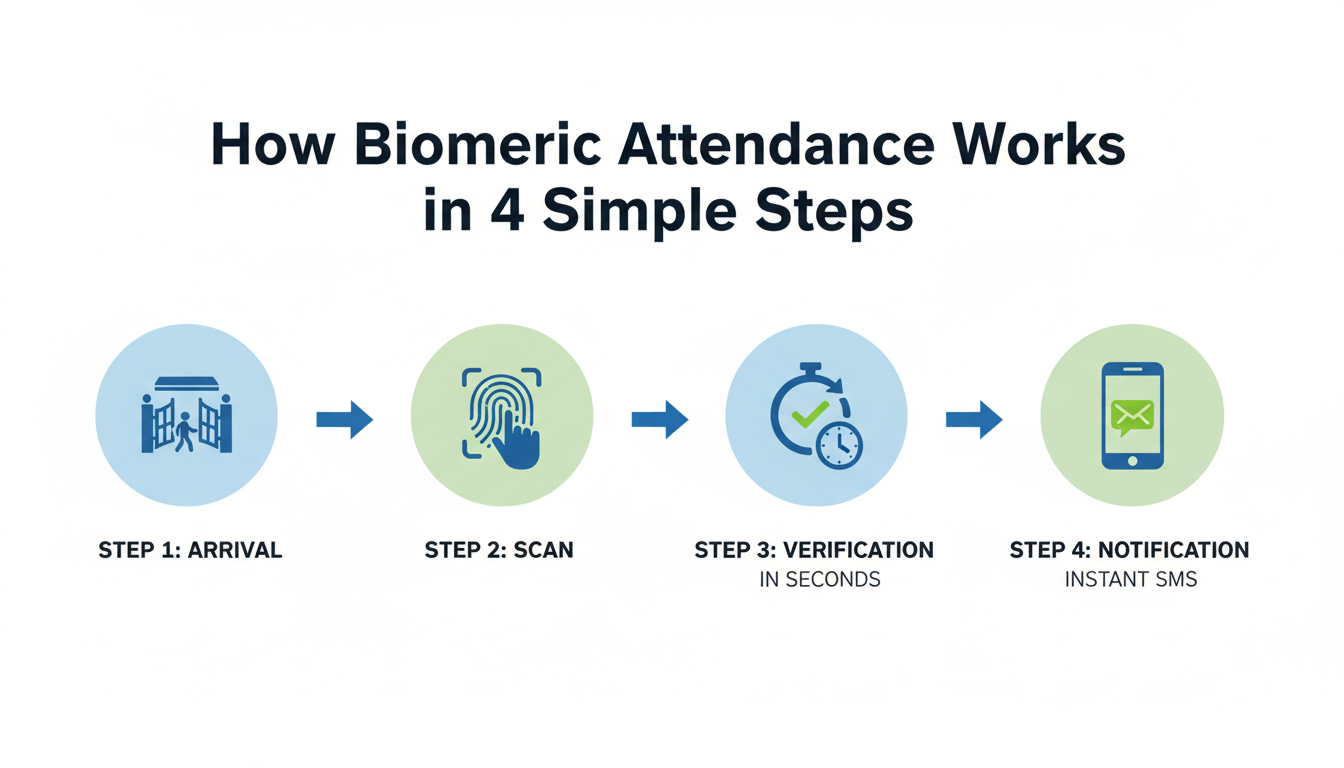
One of the biggest advantages of a biometric attendance system for schools is automation. When a student arrives or leaves, the system sends a message to parents automatically. No teacher needs to do anything manually. This saves hours of work every week and keeps parents informed in real time.
Use Cases in Bangladeshi Schools
Student Attendance Tracking
This is the most common use. Every morning, students place their finger or face in front of the device. The system records the time and sends a notification to parents. If a student is absent or arrives late, parents know immediately. This helps reduce absenteeism in schools across Bangladesh.
Teacher and Staff Management
The same device can track teacher and staff attendance too. School management can see who arrived on time, who came late, and who was absent. This data is useful for payroll calculation and performance reviews.
Integration with School ERP Systems
Many schools use an ERP system to manage fees, exams, and results. A good biometric attendance system for schools can connect with the school ERP. This means attendance data flows automatically into the school management system without anyone entering it by hand.
Benefits of Biometric Attendance Systems in Schools
Accuracy and Fraud Prevention
With a biometric system, proxy attendance is completely impossible. A student cannot ask a friend to mark them present. The system only records attendance when the real person is physically there. This makes the data 100% reliable.
Time-Saving for Administrative Staff
Teachers used to spend 10 to 15 minutes every class taking attendance manually. With a biometric system, this happens in seconds. Staff no longer need to compile attendance sheets by hand. Reports are generated automatically.
Improved Student Safety and Monitoring
Schools can track exactly when each student enters and exits the building. If a student leaves early without permission, the system can alert management right away. This greatly improves student safety, especially for younger children.
Leading manufacturers are now building biometric security solutions for educational institutions that include visitor management, lockdown features, and touchless access all in one system.
Transparency for Parents and Management
Parents can trust the data because it comes from a machine, not from manual records. School management can see full attendance history for every student and every teacher. This level of transparency builds trust between schools and families.
Estimated Pricing Guide in Bangladesh
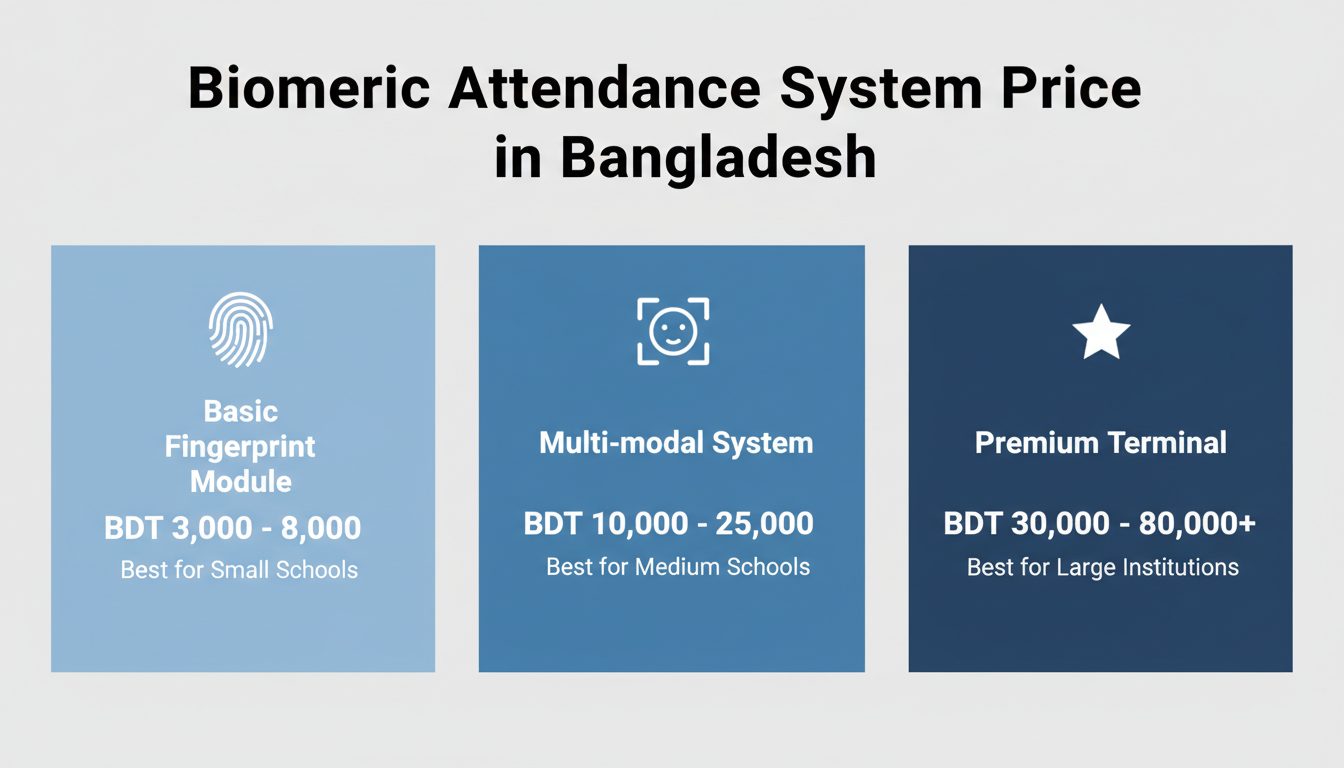
Here is a simple pricing table to help you plan your budget:
| Device Type | Price Range (BDT) | Best For |
| Basic Fingerprint Module | BDT 3,000 – 8,000 | Small schools |
| Mid-range Multi-modal | BDT 10,000 – 25,000 | Medium schools |
| Premium Terminal | BDT 30,000 – 80,000+ | Large institutions |
Basic Fingerprint Modules
These are simple devices that only read fingerprints. They are good for small schools with fewer than 200 students. They are affordable and easy to install. Price range: BDT 3,000 to BDT 8,000.
Mid-range Multi-modal Systems
These devices support fingerprint, face, and card. They are suitable for medium-sized schools. They come with better software and more storage. Price range: BDT 10,000 to BDT 25,000.
Premium and High-Security Terminals
These are high-end devices with advanced face recognition, cloud connectivity, and enterprise-level software. They are best for large schools or school chains. For the latest options in this category, check out the biometric attendance system in Bangladesh. Price range: BDT 30,000 to BDT 80,000 and above.
Factors That Influence Pricing
• Number of users the device can store
• Type of biometric method used (fingerprint vs face vs iris)
• Cloud features and subscription fees
• Brand reputation and after-sales support
• Number of devices needed and installation cost
How to Choose the Right Biometric Attendance System
School Size and Scalability Considerations
A small school with 100 students does not need the same system as a large school with 2,000 students. Think about how many students and staff will use the device daily. Also think about future growth. Choose a system that can scale as your school grows.
Budget Planning and Cost Efficiency
Set a clear budget before you start looking. Remember to include the cost of software, installation, training, and yearly maintenance. Sometimes, a slightly more expensive system saves more money in the long run because it has lower maintenance costs.
Must-Have Features vs Optional Features
Must-have features include accurate biometric reading, offline data storage, parent notification, and easy reporting. Optional features include iris scanning, turnstile integration, and advanced analytics. Do not pay for features your school will not use.
Evaluating Vendor Reputation and Support
Always choose a vendor who has experience working with schools in Bangladesh. Check if they offer local after-sales support. Ask for references from other schools. A good vendor will give you training and help you if something goes wrong.
Installation and Setup Process
Hardware Installation Requirements
Installing a biometric device is not complicated. You need a stable power supply and a wall mount near the school entrance. Most devices plug into a normal power socket. For network connection, you need either a LAN cable port or a Wi-Fi access point nearby.
Software Configuration and Integration
After hardware setup, a technician will configure the software. This includes adding all students and staff to the system, setting up the school timetable, and linking parent phone numbers for notifications. This usually takes one to two days for a medium-sized school.
Staff Training and Onboarding
Most vendors provide training as part of the installation package. Teachers and admin staff need to learn how to view reports and handle exceptions like missed scans. Training is usually simple and takes only a few hours. The software is designed to be user-friendly even for people who are not tech-savvy.
Comparison of Attendance Systems
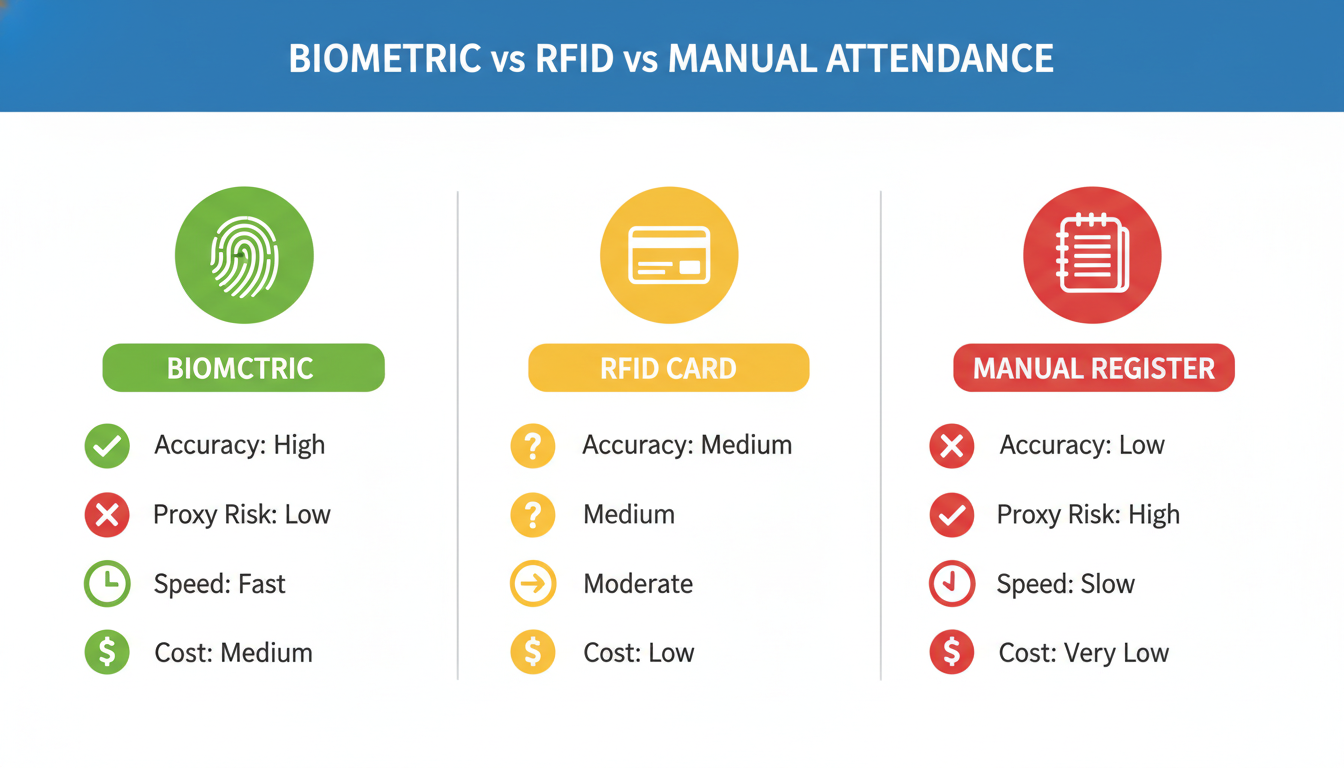
Here is a comparison to help you understand how biometric systems compare to other methods:
| Feature | Biometric | RFID Card | Manual Register |
| Accuracy | Very High | Medium | Low |
| Proxy Possible | No | Yes | Yes |
| Speed | Fast | Fast | Slow |
| Cost | Medium-High | Low-Medium | Very Low |
| Maintenance | Low | Medium | None |
Biometric vs Manual Attendance Systems
Manual attendance depends on humans. Humans can make mistakes or be dishonest. Biometric systems depend on technology. They are faster, more accurate, and completely transparent. The upfront cost is higher, but the long-term savings in time and errors are worth it.
RFID vs Biometric Systems
RFID card systems are cheaper but have a big problem. A student can give their card to a friend and still get attendance marked. Biometric systems cannot be fooled this way. For schools where honesty in attendance is important, biometrics is always the better choice.
Cost vs Efficiency Comparison
Manual systems cost almost nothing to start, but waste hundreds of hours per year. RFID systems have a moderate cost and moderate efficiency. Biometric systems have the highest upfront cost but the best efficiency and accuracy in the long run.
Challenges and Limitations
Initial Setup and Maintenance Costs
The biggest challenge for many schools is the upfront investment. Buying devices, installing them, and training staff all cost money. However, government-aided schools and NGOs in Bangladesh sometimes get subsidies or grants for this. Also, costs have come down significantly in recent years.
Power and Internet Dependency
Most biometric devices need electricity to work. Power cuts are common in rural Bangladesh. Look for devices with a built-in UPS or battery backup. For internet dependency, choose systems that store data locally and sync when the connection is restored.
User Adoption and Technical Issues
Some teachers and parents may be resistant to new technology. Clear communication about the benefits helps a lot. Technical issues, like a student having a cut on their finger, can sometimes cause problems. This is why a multi-modal device that also accepts a PIN or card as a backup is a good idea.
Data Privacy and Security Considerations
Storage and Protection of Biometric Data
Biometric data is very sensitive. It must be stored securely. Good systems encrypt the data and do not share it with third parties. Ask your vendor how the data is stored and who has access to it. On-device storage is generally safer than cloud storage for sensitive biometric templates.
Consent from Parents and Guardians
Before enrolling students in a biometric system, schools should get written consent from parents or guardians. This is not just good practice. It also builds trust with families and makes the adoption process smoother.
Compliance with Local Regulations
Bangladesh has the Digital Security Act and other regulations that touch on data privacy. Schools should make sure their vendor complies with local rules. Always keep records of data usage policies and inform parents about how their children’s biometric data is used and stored.
Cloud-Based vs Local Attendance Systems
Advantages of Cloud-Based Systems
• Access attendance data from anywhere using a phone or laptop
• Automatic software updates from the vendor
• No need to buy or manage a local server
• Easy to scale when the school adds more students
Advantages of Local Systems
• Works even when the internet is down
• Data stays inside the school building
• No monthly subscription fee after the initial purchase
• Faster data access because there is no internet latency
Which Option Is Best for Schools
For most schools in Bangladesh, a hybrid system works best. This means data is stored locally on the device, but also synced to the cloud when the internet is available. This gives you the benefits of both options. Talk to your vendor about hybrid options before making a decision.
Future Trends in Biometric Attendance Systems
AI-Powered Facial Recognition
New AI systems can recognize faces in less than one second, even if the student is wearing a mask or a cap. This technology is becoming more affordable and will soon be common in Bangladesh schools. It is faster, more hygienic, and more convenient than fingerprint scanning.
Mobile App Integration
Future systems will be fully controlled from a mobile app. Teachers, parents, and school administrators will see live attendance on their phones. Notifications will become even more detailed, showing entry and exit times with location data.
Cloud and IoT Innovations
The Internet of Things (IoT) is connecting devices in new ways. Future biometric attendance system for schools will work together with smart cameras, access control gates, and school bus tracking in one unified platform. Bangladesh is already seeing early versions of these integrated systems.
Frequently Asked Questions (FAQ)
What is the best biometric attendance system for schools in Bangladesh?
The best system depends on your school size and budget. For small schools, a basic fingerprint device is enough. For large schools, a multi-modal system with cloud features is better. Tipsoi is one of the most trusted local providers in Bangladesh, offering solutions for all school sizes.
How much does a biometric attendance system cost in Bangladesh?
Prices start from around BDT 3,000 for a basic fingerprint module. Mid-range systems cost BDT 10,000 to BDT 25,000. Premium face recognition terminals can cost BDT 30,000 to BDT 80,000 or more. The total cost also includes installation, software, and training.
Is biometric attendance safe for students?
Yes, it is very safe. Modern biometric systems do not store actual photos of fingerprints. They store a mathematical code that cannot be reversed into a real fingerprint. The devices are also hygienic, especially face recognition systems that do not require touching.
Can biometric systems work without the internet?
Yes. Most devices store data locally in their memory. They can record hundreds of thousands of attendance events without any internet connection. The data syncs to the cloud or server when the internet is available.
Which biometric method is most reliable for schools?
Face recognition is the most convenient because students do not need to touch anything. But fingerprint scanning is more accurate and less expensive. For schools with young children, a multi-modal device that supports both is usually the best choice.
Conclusion
A biometric attendance system for schools is no longer a luxury. It is becoming a basic need for modern schools in Bangladesh. It saves time, removes human error, protects students, and keeps parents informed. Whether you run a small rural school or a large urban institution, there is a biometric system that fits your needs and budget.
Start by understanding your school size, budget, and must-have features. Then choose a reliable vendor who offers good support. If you need help finding the right system, explore our biometric attendance solutions for schools in Bangladesh to find the perfect fit for your school.