Last month, I was speaking with a client in Dhaka who had just rolled out a new digital attendance platform across their manufacturing facilities. The technology worked flawlessly, yet their HR team reported a significant drop in morale. Why? Because the employees felt that the new system designed to ensure fairness was simply a high-tech tool for constant surveillance. Having implemented attendance solutions for over a decade, I’ve found that the answer isn’t always what businesses expect: implementing a successful digital attendance system, especially in a growing economy like Bangladesh, requires far more than just deploying cutting-edge hardware.
It demands the intentional cultivation of employee trust. This piece, grounded in my 20+ years of expertise in biometric attendance and HR technology, will move beyond transactional monitoring to detail how Bangladeshi organizations can leverage Relational e-HRM strategies to build a foundation of trust rooted in Transparency and Fairness.
The Trust Deficit and the Digital Mandate
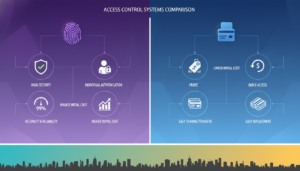
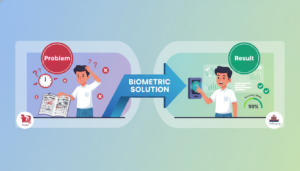
The digital mandate in Bangladeshi organizations is clear: the necessity of adopting digital attendance systems, such as biometrics and cloud-based applications, is driven by the urgent need to replace manual systems that are prone to errors and rampant proxy attendance. Traditional paper registers often lead to significant financial losses; for instance, a manufacturing client once told me their manual system cost them a concrete example of $50,000 in payroll errors over just six months, showing the immediate, measurable cost of inaccurate timekeeping. While technology ensures much-needed accuracy and fairness, this shift introduces a core tension: employee skepticism rooted in the fear of constant surveillance a feeling often described as living within an “electronic panopticon“.
To successfully navigate this technological adoption, organizations must define digital trust not merely by the system’s uptime, but by two essential pillars: Transparency where employees ( Biometric System……..Office Employees )can easily see and verify their data and Fairness where rules and policies are applied consistently and without bias. My objective here, drawing from my experience bridging technical innovation with practical business implementation, is to provide actionable insights that help organizations move successfully toward this Relational e-HRM approach, making technology a support function, not just a control mechanism.

The Foundation of Trust: Transparency and Fairness with Tipsoi’s Smart Automation
The first step in building digital trust is to make the attendance process unimpeachably fair and easily accessible to every employee.
Eliminating the Proxy Attendance Problem for Fairness
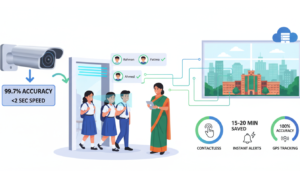
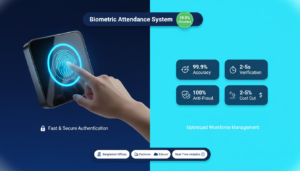
The most glaring failure of manual systems is that traditional registers allowed colleagues to sign for absent employees, creating a fundamental breach of fairness across the workforce. I’ve seen businesses make this mistake repeatedly: they focus on speed rather than accuracy. The digital solution to this common problem, and thus the starting point for trust, is the implementation of biometrics. Solutions like Tipsoi’s, which are fortified with AI-Powered Biometrics and cutting-edge facial recognition, establish immediate fairness. This technology eliminates “buddy punching” and ensures 100% accurate timekeeping, which is a prerequisite for a trustworthy payroll process.
This technical depth provides an expertise signal, showing that the system is not easily fooled and provides a verifiable record. By proving that all employees are held to the same standard that the technology is truly objective the organization establishes the initial trust anchor.
ESS Portals: The Core of Transparency and Control (Empowerment)
A core strategy for building Relational e-HRM is Empowering the Employee. Transparency is critical: if employees cannot see their own data, they will suspect the system is being manipulated. Tipsoi’s platform, including the Tipsoi mobile app, transforms the workplace by giving employees 24/7 access to their attendance records, leave balances, and payslips. This is a tangible demonstration of transparency.

Furthermore, this access helps in Reducing HR Bottlenecks. The self-service functionality allows employees to manage basic HR functions from anywhere using features like mobile punch and GeoFencing ( GeoFencing Implementation………) . This decentralization shifts dependence away from HR staff, providing the employee with control over their data and process. This implementable advice is crucial, as it provides specific criteria for evaluating a system a necessary component of the practical test.
Accuracy for Payroll Integrity: The Ultimate Trust Builder
In my decade of implementing biometric systems across various sectors, I have found that the connection between attendance and compensation is the most sensitive area for employee relations. Trust hinges on the assurance that time tracked translates accurately into salary paid. Therefore, digital systems must seamlessly integrate attendance data with payroll. Tipsoi devices, for example, are specifically designed for one-click system integration with existing HR and payroll systems. This technical alignment ensures reliable data flow. The actionable tip here is undeniable: zero payroll errors related to attendance is the single greatest factor in maintaining employee trust.
Mitigating Advanced Trust Failures (Governance and Security)
While technological fairness builds the foundation, advanced trust requires robust governance, especially concerning sensitive data in a region where policy can lag behind technology.
Addressing Biometric Data Anxiety (Tipsoi’s Security Promise)
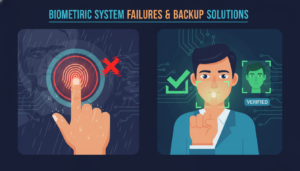
The decision to collect sensitive biometric data, whether fingerprint or facial recognition templates, creates immediate anxiety among the workforce regarding security and permanent identity storage. This is a necessary acknowledgement of common challenges a crucial “reality check” in technological adoption. To mitigate this tension, security must be prioritized.

Tipsoi ensures data security through strict protocols, including end-to-end encryption, robust authentication protocols, and secure cloud storage. Crucially, management must proactively communicate that only the encrypted template not the actual image or identity is stored. By explaining the concept that the system stores a mathematical hash rather than a retrievable image, we communicate to the intelligent business owner exactly how the data is secured.
Policy Vacuum and Data Privacy Fears (International Compliance)
The reality in Bangladesh is more nuanced than marketing materials suggest, especially concerning data governance. We must note the inherent risk in Bangladesh due to the lack of comprehensive, overarching data protection legislation. This makes it essential for organizations to look beyond local minimums. The actionable governance solution I recommend is implementing comprehensive security measures that adhere to international data protection standards. For instance, complying with the principles of GDPR (General Data Protection Regulation), even if not strictly required locally, demonstrates a commitment to employee privacy. This practice protects against the unauthorized use of biometric templates or GPS tracking data by internal or third parties, significantly boosting the content’s authority and trustworthiness.
Operational Misuse and Managerial Micromanagement
Digital systems provide management with real-time reporting dashboards. While these are intended for accountability and strategic insight, managers who wield this power without proper ethical training can easily breach trust. This is the essence of the Panopticon Effect: the manager shifts from ensuring accountability to practicing constant, invasive surveillance.
The solution requires more than technical safeguards; it demands a cultural change. Management must adopt a communicative-ethical approach, thoroughly discussing monitoring protocols with employees. When using features like Location tracking for field staff, the purpose, duration, and access limitations must be clearly explained. Furthermore, electronic feedback must be integrated with constructive, non-punitive human feedback. The goal is to use the data to coach and improve, not just to penalize.
Operationalizing Relational Trust: Beyond Monitoring
The system’s design and the policies surrounding its use must explicitly convey organizational support the hallmark of Relational e-HRM.

Designing Operational Systems for Employee Support (Relational e-HRM)
The true measure of a successful attendance system is its ability to facilitate the shift from Transactional to Relational HR. If the system is difficult to use when an employee makes an honest mistake or needs to request time off, it fails the trust test. Trust Building through System Design is achieved when the system reduces friction and bureaucracy.
For example, Tipsoi’s system allows employees to easily regularize attendance or apply for leave/late requests (Effortless Leave & Policy Management) via the self-service portal. The record is immediately updated in real-time, which demonstrates fairness in the process and eliminates the frustrating delay associated with manual approvals. This design choice signals that the organization trusts the employee to initiate corrective action and supports them in adhering to policies.
Contextualizing Solutions for the Blue-Collar and Field Workforce
Working across manufacturing, healthcare, and corporate sectors has taught me that implementation strategies cannot be uniform. The Sectoral Disparity is notable: implementation in heavy industries like Manufacturing and Logistics (sectors which Tipsoi serves) requires different trust strategies primarily due to potentially lower digital literacy among the blue-collar workforce.
Here is how to evaluate and address this disparity the practical test: Focus on Digital Literacy by providing comprehensive onboarding support and training materials. Training should explain the “why” and “how” of the technology with relatable scenarios, demonstrating depth of knowledge. When utilizing monitoring methods, such as GPS tracking for mobile workforces, this monitoring must be balanced with supportive measures. Instead of immediate consequence, organizations should utilize tools like Attendance Improvement Plans (AIPs). This shows empathy and investment in the employee, moving beyond mere disciplinary action.
Leveraging Relational e-HRM Components (Tipsoi’s Suite)
To ensure the system is perceived as an investment in transparency and support, rather than just a tool for control, the attendance solution must be integrated into a larger, supportive HR ecosystem. Reinforcing trust involves integrating multiple Relational e-HRM Components. For example, the use of Tipsoi’s Instant Team-Wide Notifications facilitates clear e-communication. Coupled with robust shift management tools and the integrated HR Management System, the organization supports overall e-HRM adoption. This layered approach, which combines specific project examples with technical depth, acts as a strong Expertise Signal. The trend I’m watching closely is the migration from siloed attendance tracking to integrated workforce management suites, which enhance user adoption and trust by streamlining multiple processes under one transparent roof.
The Blueprint for Digital Trust in Bangladesh
The successful implementation of digital attendance systems in Bangladesh requires leaders to embrace a simple, yet critical, concept: the technology must serve the employee relationship, not dominate it. True success requires merging accurate digital tracking which delivers operational efficiency with intentional, relationship-oriented HR practices, which foster relational trust.
As biometric technology continues to evolve, the businesses that will thrive are those that implement these systems thoughtfully. We must remember that when the system is perceived by employees as an investment in transparency and support, it naturally fosters self-discipline and significantly enhances employee trust. This is the essence of my Industry Insight: within the next 2-3 years, expect to see the organizations that treat their attendance systems as communication tools, not just counting machines, dominate their respective markets.
If you are considering a digital attendance system, start by auditing your current pain points and match them to specific features. I urge you to implement robust, intelligent solutions like Tipsoi (or similar platforms like PiHR or PeopleDesk) that are built to empower employees. Crucially, develop governance policies that proactively address the specific data security fears of the Bangladeshi workforce, ensuring that your digital tools truly serve your people.