

If you run a business in Bangladesh, you already know how important it is to follow the rules. One big rule is keeping proper attendance records for your workers. Many businesses still do this by hand. That leads to mistakes, disputes, and legal trouble.
Biometric attendance systems can fix all of that. They track when workers arrive and leave, record hours worked, and store all the data safely. This makes Bangladesh Labour Act compliance much easier.
In this guide, you will learn everything about Bangladesh Labour Act compliance using biometric attendance. We will cover the law, how the systems work, what features to look for, and how to set one up.
Overview of Biometric Attendance Systems in Bangladesh
What Is a Biometric Attendance System?
A biometric attendance system is a device that uses a person’s body features to record attendance. It can read fingerprints, faces, or even the pattern of veins in your palm. When a worker arrives, they scan their finger or face. The system records the exact time.
No one can fake this. You cannot punch in for a friend. The machine only accepts the real person.
These systems are now widely used in Bangladesh. Factories, offices, schools, and hospitals use them every day.
Why Labour Law Compliance Matters in Bangladesh
Bangladesh has strict rules for employers. The Bangladesh Labour Act 2006 says employers must keep accurate records of working hours, overtime, and leave. If you do not follow these rules, the government can fine you or shut down your business.
Many businesses lose money because of poor attendance records. Workers claim overtime that was never worked. Employers underpay because the records are wrong. Biometric systems solve this problem.
The Role of Digital Attendance in Workforce Management
Digital attendance systems do more than just record time. They help managers see who is working, who is absent, and how many hours each person has worked. The data connects directly to your payroll system. This saves hours of manual work every week.
In Bangladesh, where many factories employ thousands of workers, digital attendance is no longer a luxury. It is a necessity.
Bangladesh Labour Act 2006: Key Compliance Requirements
What the Law Says About Attendance
The Bangladesh Labour Act 2006 is the main law that protects workers. It covers wages, working hours, leave, and safety. For attendance, the law has clear rules that every employer must follow.
Employers must keep a register of attendance for every worker. This register must be available for inspection at any time. If an inspector visits your factory or office and you cannot show proper records, you can face penalties.
Daily and Weekly Working Hour Limits
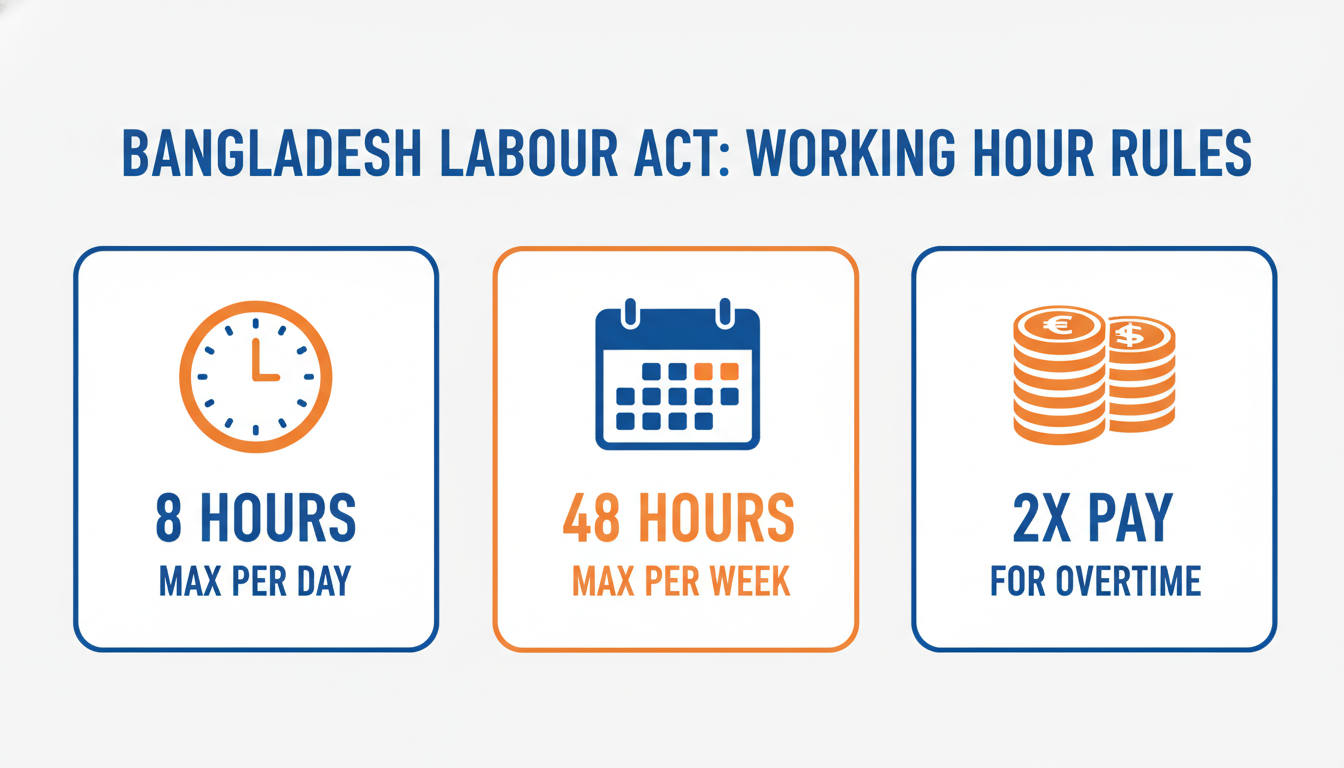
The law sets clear limits on how long workers can work. A worker cannot work more than 8 hours per day. The weekly limit is 48 hours. These limits exist to protect workers from being overworked.
If a worker works more than these hours, the extra time is counted as overtime. The employer must pay for overtime at a higher rate.
Break Time and Rest Period Rules
Workers must get proper breaks during the day. If a worker works for more than 6 hours, they must get a break of at least one hour. If they work between 5 and 6 hours, the break must be at least half an hour.
Workers also have the right to one day off per week. This is their weekly rest. Employers cannot ask workers to work all 7 days without paying extra.
Legal Overtime Limits and Wage Rules
Overtime is allowed, but it has limits. A worker cannot work more than 2 hours of overtime per day. The total overtime in a week cannot exceed 12 hours.
When a worker works overtime, the employer must pay them twice the normal rate. So if a worker earns 100 taka per hour normally, they must get 200 taka per hour for overtime.
This is one area where many employers make mistakes. Biometric systems help by tracking exact hours and calculating overtime pay automatically.
Mandatory Record-Keeping Requirements
Employers must keep attendance records for at least 3 years. The records must show the name of the worker, the date, arrival time, departure time, total hours worked, and any overtime.
These records must be available to labour inspectors at any time. If you use a biometric system, the digital records are usually accepted as valid proof.
How Biometric Systems Ensure Labour Law Compliance
Connecting Attendance Data to Labour Law
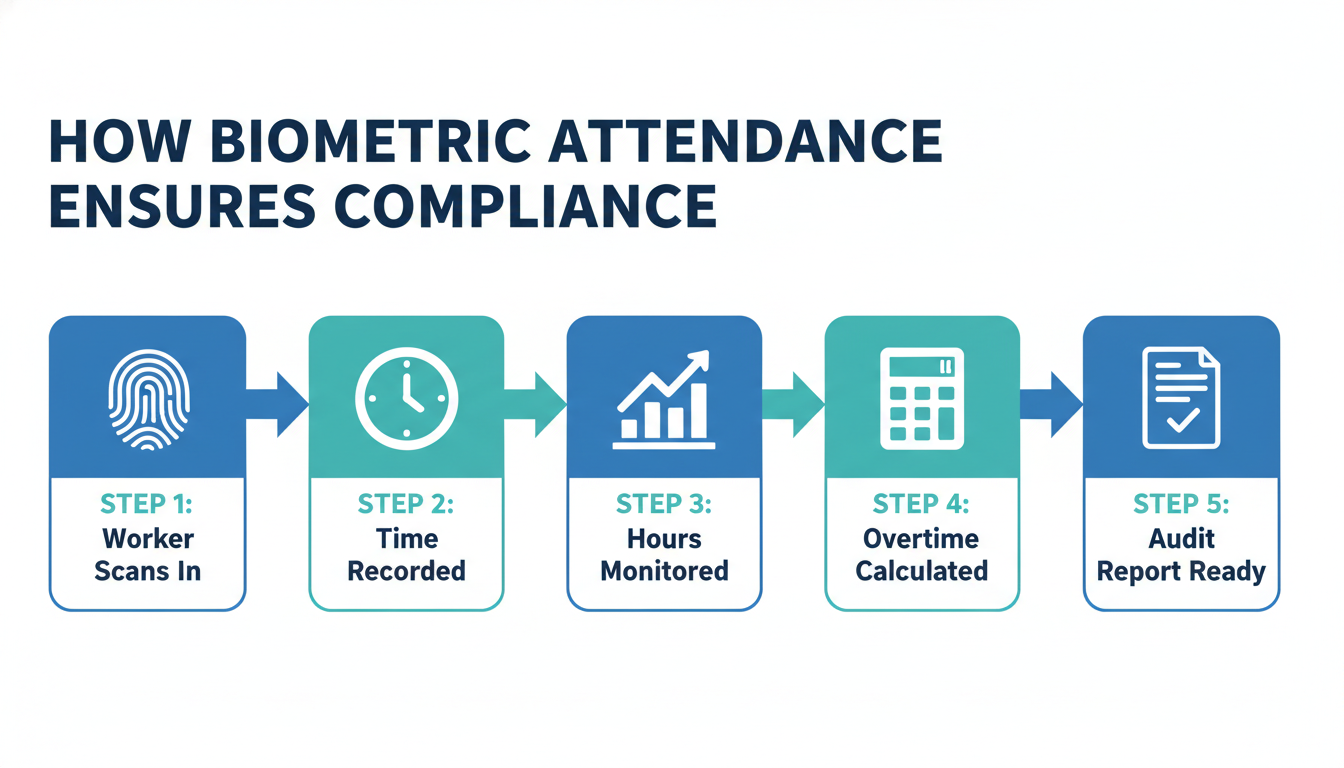
The best biometric systems are built to follow the Bangladesh Labour Act compliance rules. They know the daily hour limit is 8 hours. They know overtime starts after that. When you set up the system, you enter your work rules, and the system tracks everything automatically.
This means you do not have to calculate hours by hand. The system does it for you and flags any issues.
Real-Time Monitoring of Working Hours
With a biometric system, you can see live data. You can check right now how many hours each worker has been in the building. If someone is about to go over the daily limit, you get an alert.
This helps managers make quick decisions. They can send a worker home before overtime starts, or approve overtime if it is needed.
Automated Overtime Tracking
Overtime tracking used to be a nightmare. Now it is simple. The system calculates overtime automatically. It records when overtime was approved, how many hours were worked, and how much must be paid.
At the end of the month, the system gives you a full overtime report. This is exactly what labour inspectors want to see.
Stopping Proxy Attendance and Time Fraud
Proxy attendance is when one worker scans in for another. This is very common with manual registers or even card-based systems. Biometric systems make this impossible.
You cannot fake a fingerprint or a face scan. Every record is guaranteed to be genuine. This protects both the employer and the honest workers.
Legal Acceptance of Digital Records in Disputes
If a worker takes you to court over unpaid wages or overtime, you need proof. Biometric records are strong evidence. They show the exact time a worker arrived and left, every single day.
These digital logs are time-stamped and tamper-proof. Bangladesh courts increasingly accept digital records as valid evidence in labour disputes.
Audit-Ready Reports at Any Time
When a government inspector visits, you need to show records fast. Good biometric systems let you generate a full compliance report in minutes. You can print or export records for any date range, any worker, or any department.
This saves time and shows the inspector that you are serious about compliance.
Data Protection and Privacy Compliance
Digital Security Act 2018
When you collect biometric data from workers, you are responsible for keeping it safe. The Digital Security Act 2018 in Bangladesh makes it a crime to misuse or leak personal data. Biometric data is very personal. It is unique to each person and cannot be changed if it is stolen.
Your biometric system must store data in an encrypted format. Only authorised people should be able to access it.
Bangladesh Data Protection Act: What Is Coming
Bangladesh is working on a dedicated Data Protection Act. While it is not fully in force yet, businesses should prepare now. The upcoming law is expected to require clear rules on data collection, storage, and deletion.
If you set up your biometric system properly today, following strong data protection rules, you will be ready when the law comes into effect. This protects your business from future legal risk.
Secure Storage and Encryption of Biometric Data
Good biometric systems encrypt all data. This means even if someone gets into your system, they cannot read the data without the encryption key. The fingerprint or face data is stored as a mathematical code, not as an actual image.
Make sure your vendor offers AES-256 encryption or a similarly strong standard. Ask about this before you buy.
Employee Consent and Legal Obligations
Before you collect biometric data from any worker, you must get their consent. This means explaining to them what data you are collecting, why you are collecting it, and how it will be stored and used.
You should have workers sign a consent form. Keep these forms on file. If a worker refuses to give consent, you need to have a policy for how to handle that situation.
Data Access and Retention Policies
Not everyone in your company should have access to biometric data. Only HR managers and authorised IT staff should be able to see it. The system should keep a log of who accessed the data and when.
For retention, keep biometric attendance records for at least 3 years as required by the Labour Act. After that, delete the data securely. Do not keep data longer than you need to.
Essential Features of a Compliance-Focused Biometric System
Tamper-Proof and Accurate Time Tracking
The most important feature is accuracy. The system must record the exact time of entry and exit. It must not allow anyone to change these records manually after the fact.
Look for systems that use encrypted logs that cannot be edited. Every change should be tracked with a reason and the name of the person who made it.
Real-Time Sync with HR Software
Your biometric system should connect with your HR software. When a worker punches in, the data should appear in your HR dashboard immediately. This removes the need to export and import files manually.
Real-time sync also means your payroll calculations are always up to date. No end-of-month data entry marathons.
Automated Reports and Record Maintenance
A good system will automatically generate daily, weekly, and monthly reports. These reports should cover attendance summaries, late arrivals, absences, overtime hours, and compliance status.
The system should also archive all records automatically, so you always have the history you need.
Secure Cloud and On-Premise Storage
You have two options for where to store your data. Cloud storage means data is kept on secure servers managed by the vendor. On-premise storage means data is kept on your own server at your office.
Cloud storage is easier to manage and usually has stronger security. On-premise gives you more direct control. Choose based on your company’s needs and IT capacity.
Multi-Location Tracking
If you have offices or factories in more than one place, you need a system that can track attendance across all locations. A good biometric system lets you see all your locations from one dashboard.
This is very useful for HR managers at the head office who need to oversee attendance across the whole company.
Integration with Payroll and HR Systems
Automated Salary Calculation
One of the biggest benefits of biometric attendance is automatic salary calculation. The system knows how many regular hours and overtime hours each worker has completed. It feeds this data directly into the payroll system.
The payroll system calculates the correct wage, including overtime pay at the legal rate. This happens automatically, saving your HR team many hours of work.
Fewer Payroll Errors and Disputes
Manual payroll systems lead to errors. A mistyped number can underpay or overpay a worker. When workers notice errors, they complain or file disputes. This wastes time and damages trust.
Biometric integration removes human error from the process. Workers get the right pay every time. Disputes drop significantly.
Seamless HR and Attendance Sync
Beyond payroll, biometric data integrates with leave management, shift scheduling, and performance tracking. When a worker takes a day off, the attendance system records it. The leave balance updates automatically. The manager gets a notification.
This connected approach gives you a complete picture of your workforce at all times.
Industry Use Cases in Bangladesh
Garment and RMG Sector: BGMEA and BKMEA Compliance
Bangladesh’s garment industry is one of the largest in the world. Factories must follow strict rules from the Bangladesh Labour Act, as well as buyer compliance standards from global brands. BGMEA and BKMEA member factories are regularly audited for attendance and wage records.
Biometric attendance systems make these audits simple. All records are digital, accurate, and easy to export. Many international buyers now expect factories to use digital attendance as part of their compliance requirements.
Manufacturing and Industrial Sector
In large manufacturing plants, workers often work in shifts around the clock. Managing attendance manually across multiple shifts is very difficult. Biometric systems handle this with ease. Each shift is tracked separately, and overtime across shifts is calculated correctly.
Shift supervisors can see attendance data in real time from their own devices.
Corporate Offices and Service-Based Businesses
Office-based businesses in Dhaka and other cities use biometric attendance to track punctuality and remote work policies. The systems help HR teams manage flexible work arrangements while still staying compliant with labour law.
SMEs and Multi-Branch Organizations
Small and medium businesses often think biometric systems are only for big companies. That is not true. There are affordable systems that work perfectly for a 20-person office or a shop with three branches.
For multi-branch businesses, a cloud-based biometric system lets the owner track attendance at all locations from one phone or computer.
Step-by-Step Implementation Process
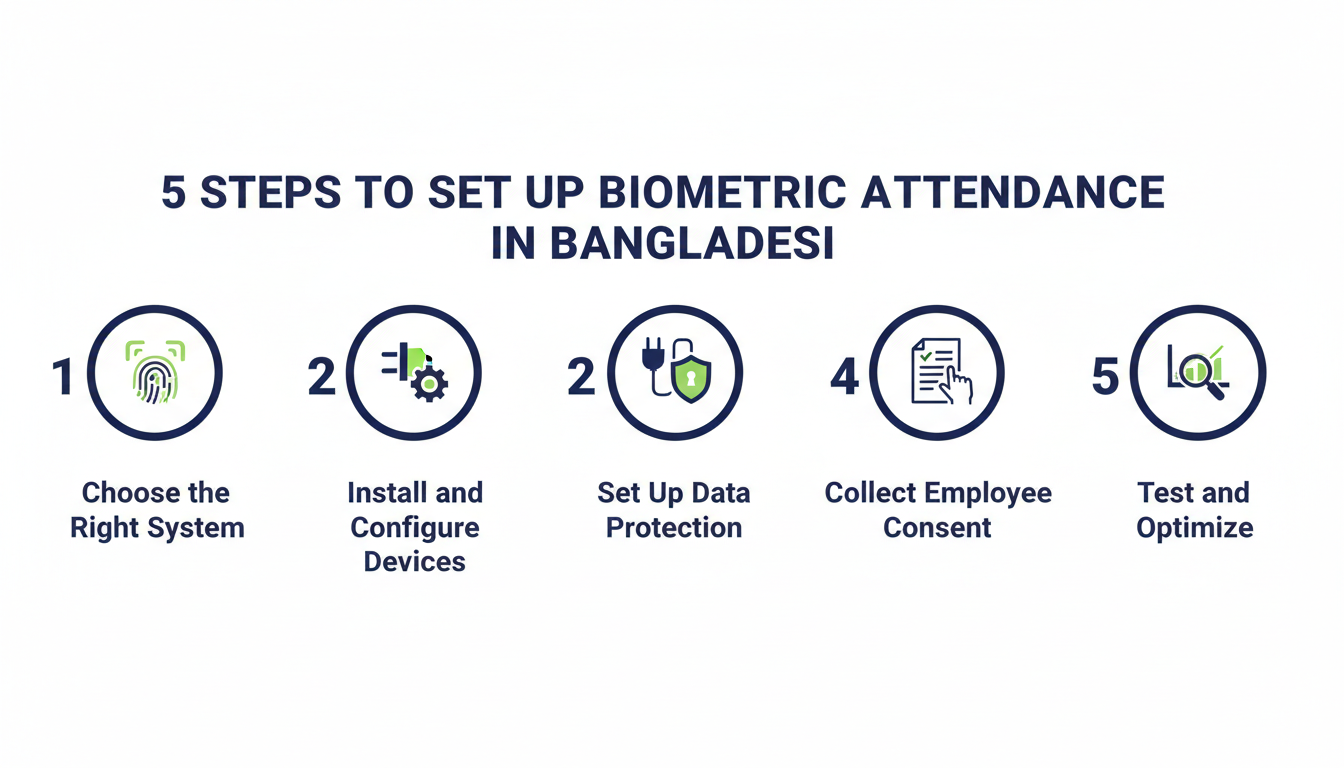
Step 1: Choose the Right System
Before buying, list your requirements. How many workers do you have? Do you have multiple locations? Do you need cloud or on-premise storage? What HR software do you use?
Then compare vendors. Look at their compliance features, security certifications, customer support, and pricing. Tipsoi is Bangladesh’s leading provider of biometric attendance systems built specifically for local compliance needs. Their systems are designed to meet Bangladesh Labour Act requirements right out of the box.
Step 2: Install and Configure Devices
Place devices at the entry and exit points of your workplace. For factories, this might mean several devices across different gates. For offices, one or two devices are usually enough.
Work with your vendor to configure the system with your work schedule, shift timings, overtime rules, and department structure.
Step 3: Set Up Data Protection Protocols
Before enrolling any worker, set up your data security. Configure encryption, set up user access levels, and test backup and recovery processes. Make sure only authorised people can access the admin panel.
Step 4: Collect Employee Consent
Hold a meeting with your workers. Explain what the biometric system is, why you are installing it, and how its data will be protected. Answer any questions they have.
Give every worker a consent form to sign. Keep these forms filed safely.
Step 5: Test and Optimise
Run the system for two to four weeks before going fully live. Check that the data is accurate, the payroll integration is working, and the reports look correct. Fix any issues before the official launch.
After going live, review the system monthly to make sure everything is running smoothly.
Government Inspections and Audit Readiness
What Labour Inspectors Check
When a government labour inspector visits, they look for specific things. They want to see attendance registers for the past three years. They check that working hours are within legal limits. They look at overtime records and compare them with wage payments.
They also check that workers are getting their weekly rest days and that break times are being followed.
How Biometric Systems Help During Inspections
With a biometric system, you can pull up any record in seconds. If an inspector asks for the attendance records of 50 workers over the past six months, you can generate that report in minutes.
The reports are clean, clearly formatted, and complete. There are no missing entries or messy handwriting. Inspectors generally complete their visit faster and find fewer issues when businesses use digital attendance systems.
Keeping Digital Logs as Legal Evidence
Biometric systems create time-stamped logs that are very hard to dispute. Each entry shows the worker’s name, their biometric ID, the exact time, and the location. If a dispute ever goes to court, these logs are strong evidence.
Make sure your system backs up data automatically. Test the backup regularly. A backup that does not work is no backup at all.
Common Compliance Risks and Mistakes to Avoid
Sticking with Manual Attendance Systems
Manual registers are easy to fake and difficult to audit. Workers can sign in for absent colleagues. Managers can alter records. When an inspector arrives, it is hard to prove the records are genuine.
Manual systems also lead to payroll errors that cost businesses money and damage employee trust.
Ignoring Employee Consent
Some businesses install biometric systems without properly informing workers. This can lead to legal challenges. Always get written consent before collecting any biometric data.
Using Non-Compliant or Insecure Devices
Not all biometric devices are built the same. Cheap devices may not encrypt data properly. They may not have audit trails. They may not integrate with HR software.
Always buy from a reputable vendor that can show you its security certifications. Tipsoi offers enterprise-grade devices with full compliance features, used by hundreds of businesses across Bangladesh.
Poor Data Management Practices
Storing data without backups, sharing access passwords, or keeping data longer than needed are all risky practices. Have a clear data management policy and stick to it.
Mismanaging Overtime Records
Overtime must be tracked carefully. If overtime records are wrong, you either overpay or underpay workers. Both cause problems. Use a system that tracks overtime automatically and flags it for manager approval.
Cost and ROI of Biometric Attendance Systems
What Does It Cost to Set Up?
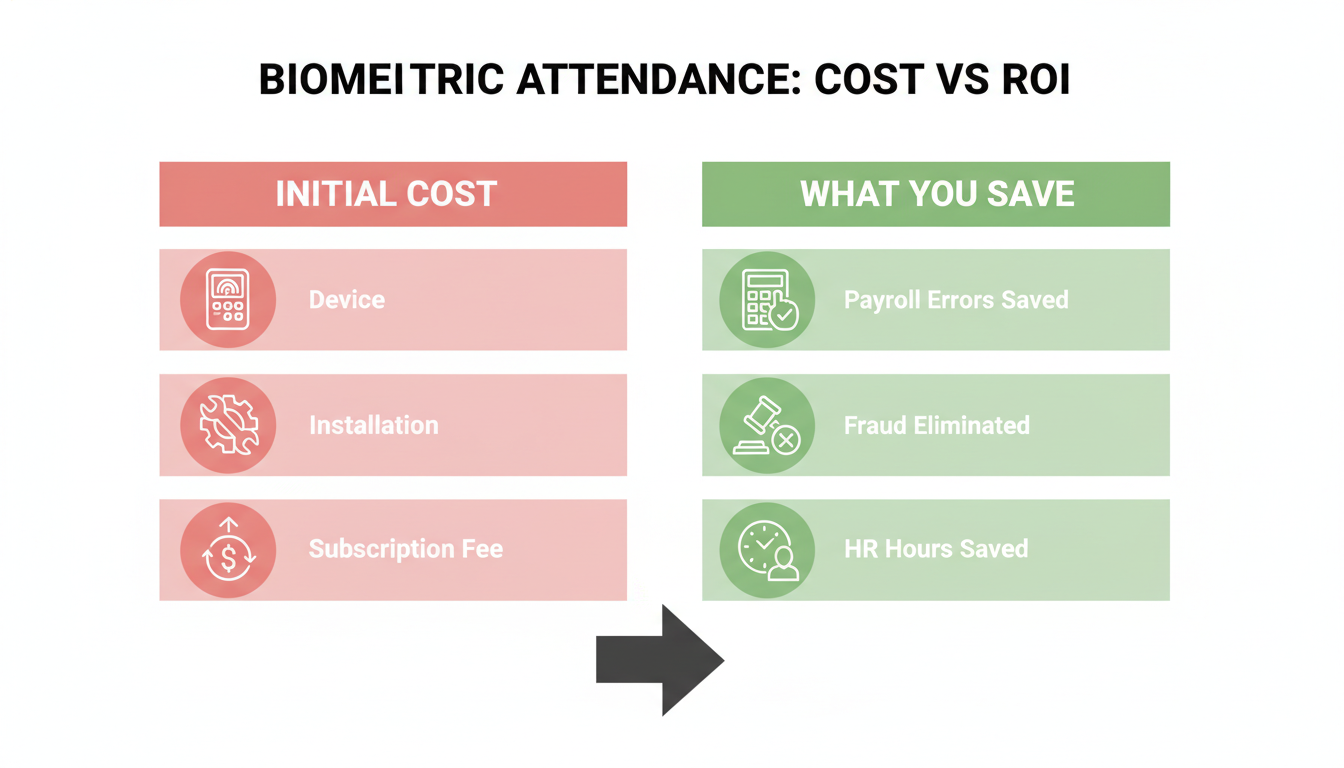
The cost of a biometric attendance system in Bangladesh depends on the number of devices, the number of workers, and whether you choose cloud or on-premise storage.
For a small office with one device and up to 50 workers, you can expect to pay anywhere from 15,000 to 40,000 taka for a basic setup. For a factory with multiple devices and hundreds of workers, the cost will be higher. Cloud subscriptions typically cost a monthly fee per location.
Long-Term Savings
The upfront cost is just one part of the picture. Think about what you save over time. You save hours of HR work every week. You eliminate payroll errors. You avoid fines from non-compliance. You reduce disputes with workers over wages.
For most businesses, a biometric system pays for itself within six to twelve months.
ROI from Reduced Fraud and Efficiency Gains
Proxy attendance is a real problem in Bangladesh. When workers sign in for absent colleagues, the business pays wages for work that was never done. Biometric systems eliminate this completely.
Better workforce visibility also helps managers make smarter decisions about staffing, overtime approval, and shift scheduling. These efficiency gains add up quickly.
Choosing the Right Biometric System in Bangladesh
Key Features to Look For
When comparing systems, prioritise these features. Look for Bangladesh Labour Act compliance built into the system settings. Check for strong data encryption and audit trails. Make sure it integrates with popular HR and payroll software. Verify that the vendor offers local support in Bangladesh.
Also, check that the system can generate the specific reports that labour inspectors ask for.
Local Vendors vs International Brands
International biometric brands are well-known and reliable. But they may not understand the specific requirements of the Bangladesh Labour Act compliance. Local vendors know the law and can configure systems to match local rules.
Tipsoi is Bangladesh’s most trusted local biometric attendance provider. They understand the Bangladesh Labour Act inside and out. Their team offers setup, training, and ongoing support in Bengali and English. They have helped hundreds of garment factories, offices, and SMEs achieve full compliance.
Cloud-Based vs On-Premise Systems
Cloud systems are easier to manage and usually cheaper upfront. The vendor handles maintenance, updates, and backups. You access your data through a web browser or app from anywhere.
On-premise systems store data at your location. You control everything, but you also need your own IT staff to manage it.
For most small and medium businesses in Bangladesh, cloud-based systems from providers like Tipsoi are the better choice. They are simpler, more affordable, and just as secure.
Business Benefits of Labour Law Compliance
Avoiding Fines and Legal Penalties
The penalties for breaking the Bangladesh Labour Act can be serious. Fines, back pay orders, and even criminal charges are possible for repeat violations. Proper attendance records protect you from these risks.
With a biometric system, you have proof that you followed the law.
Building Worker Trust and Transparency
When workers know their hours are being tracked accurately and their pay is calculated correctly, they trust their employer more. This leads to better morale, lower turnover, and higher productivity.
Transparency in attendance and wages is a sign of a good employer. Workers notice this.
Improving Efficiency Across the Business
Digital attendance data helps you spot patterns. You can see which departments have the most absenteeism. You can identify workers who consistently arrive late. You can track the true cost of overtime across the business.
This data helps you make better decisions and run a more efficient operation.
FAQs on Bangladesh Labour Act Compliance Using Biometric Attendance
Is Biometric Attendance Mandatory in Bangladesh?
Biometric attendance is not yet legally mandatory for all businesses in Bangladesh. However, the Bangladesh Labour Act 2006 requires employers to keep accurate attendance records. Biometric systems are the most reliable way to do this. Many sectors, especially garments and large manufacturing, are moving toward biometric systems as an industry standard.
Can Workers Refuse Biometric Data Collection?
Workers have the right to know what data is being collected and why. If a worker refuses to give consent, you cannot force them to enrol in the biometric system. However, you can have a policy that requires digital attendance as a condition of employment, as long as this is clearly stated in the employment contract and workers are informed before they join.
If consent issues arise, speak with a labour law expert for guidance specific to your situation.
How Long Should Attendance Records Be Stored?
The Bangladesh Labour Act requires attendance records to be kept for at least 3 years. After that period, you may delete them. However, if there is an ongoing dispute, keep the records until it is resolved.
Are Biometric Records Legally Accepted in Disputes?
Yes. Biometric attendance records are increasingly accepted as valid evidence in labour disputes in Bangladesh. They are time-stamped, tamper-proof, and tied to a specific individual. This makes them much stronger evidence than handwritten registers. Always make sure your system keeps proper audit logs to support any legal claims.
Conclusion: Ensuring Full Compliance with Biometric Attendance Systems
Bangladesh Labour Act compliance using biometric attendance is no longer just about avoiding fines. It is about building a trustworthy, efficient, and legally sound workplace.
Biometric systems give you accurate records, automated payroll integration, protection against fraud, and audit-ready reports at any time. They protect both the employer and the worker.
Long-Term Advantages of Going Digital
Businesses that invest in biometric attendance today will benefit for years to come. They spend less time on paperwork. They have fewer disputes. They are always ready for inspections. And they can focus on growing their business instead of managing compliance risks.
As Bangladesh’s workforce grows and labour law enforcement gets stronger, digital attendance will become the standard for every serious business.
The Future of Workforce Compliance Technology
Technology is moving fast. AI-powered attendance systems, mobile check-in apps, and integrated HR platforms are already changing how businesses manage their workforce. Bangladesh businesses that adopt these tools early will have a competitive advantage.
Tipsoi is at the front of this change. As Bangladesh’s leading biometric attendance provider, Tipsoi offers modern, compliant, and affordable solutions built for businesses of all sizes. Whether you run a garment factory in Gazipur or a corporate office in Dhaka, Tipsoi has a system that fits your needs.
Ready to make compliance simple? Visit Tipsoi’s biometric attendance solutions and take the first step today.