

TL;DR: A real-time attendance system, in one line: if you cannot see who is in, late, or absent right now, swap paper and Excel for software that logs every check-in instantly. Biometric or app check-ins feed one live dashboard, so you catch buddy punching, fix payroll errors, and stay compliant with the Bangladesh Labour Act.
Cannot see who is actually at work right now? Here is the fix: a real-time attendance system. A real-time attendance system records every check-in the moment it happens and shows it on one live dashboard. It replaces paper registers and Excel sheets with instant visibility, so you know who is in, who is late, and who never showed up, without walking the floor or phoning supervisors.
You cannot manage a workforce you cannot see. In my experience with Bangladeshi HR teams, the gap between “clocked in” and “actually here” is where money leaks. Below is how real-time visibility closes that gap, with verified numbers and a Bangladesh-specific view.
Why you have no real-time view of who is at work
Most attendance blind spots start with the tools. Paper registers, punch cards, and spreadsheets only update when a person types them in. Your data is already old by the time you read it.
Manual timekeeping also invites error. The American Payroll Association estimates manual systems produce payroll errors worth 1% to 8% of total payroll (industry time and attendance data). On a large factory floor, that gap is real money every month.
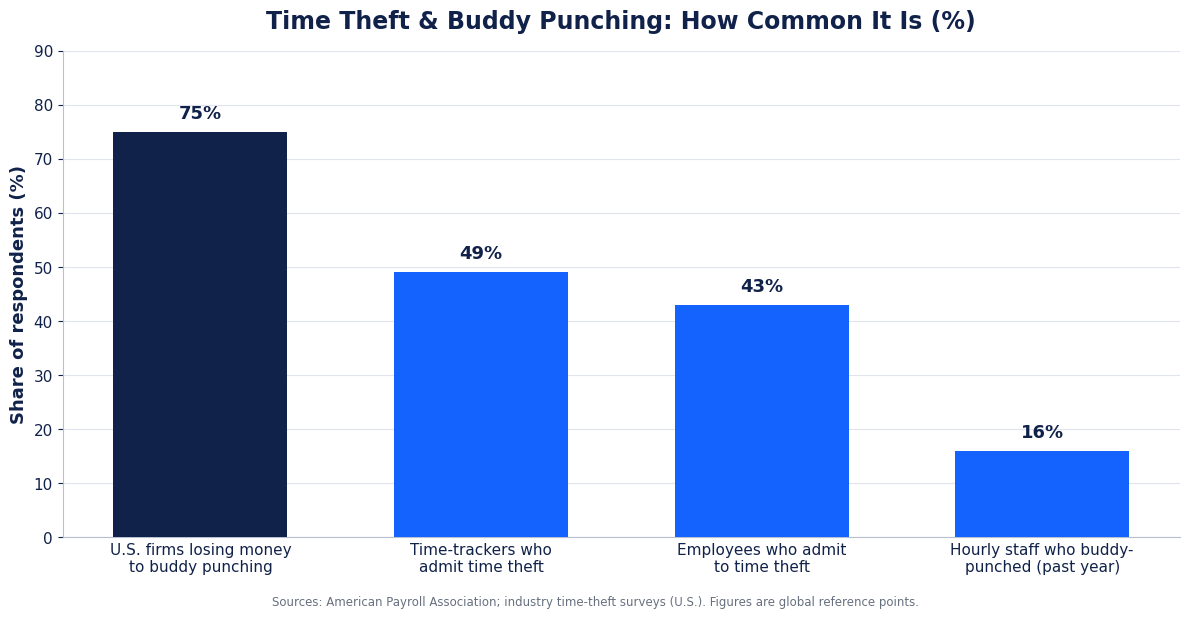
Then there is fraud. Buddy punching, where one worker clocks in for an absent colleague, is common. Around 16% of hourly employees admit doing it in the past year. Manual systems make it almost impossible to catch. Moving these records onto a system that removes repetitive HR admin is the first step out of the blind spot.
The hidden cost of flying blind on attendance
Time theft is not a rounding error. Across the U.S. economy it costs employers an estimated USD 450 to 550 billion a year, according to the American Payroll Association. Buddy punching alone accounts for roughly USD 373 million annually.
A real-time attendance system removes most of that leakage. The behaviour is widespread, not rare. Surveys put the share of employees who admit to some time theft between 43% and 49%. The chart below shows how common the problem is.
Better management visibility is linked to higher productivity in the research too. Bloom and Van Reenen found structured people-management practices, including monitoring, raise firm productivity [3]. Visibility is not busywork. It is a performance lever.
How a real-time attendance system solves it in three steps
Real-time attendance is simpler than it sounds. It runs on three moving parts: capture, dashboard, and payroll. Here is each one.
1. Capture every check-in automatically
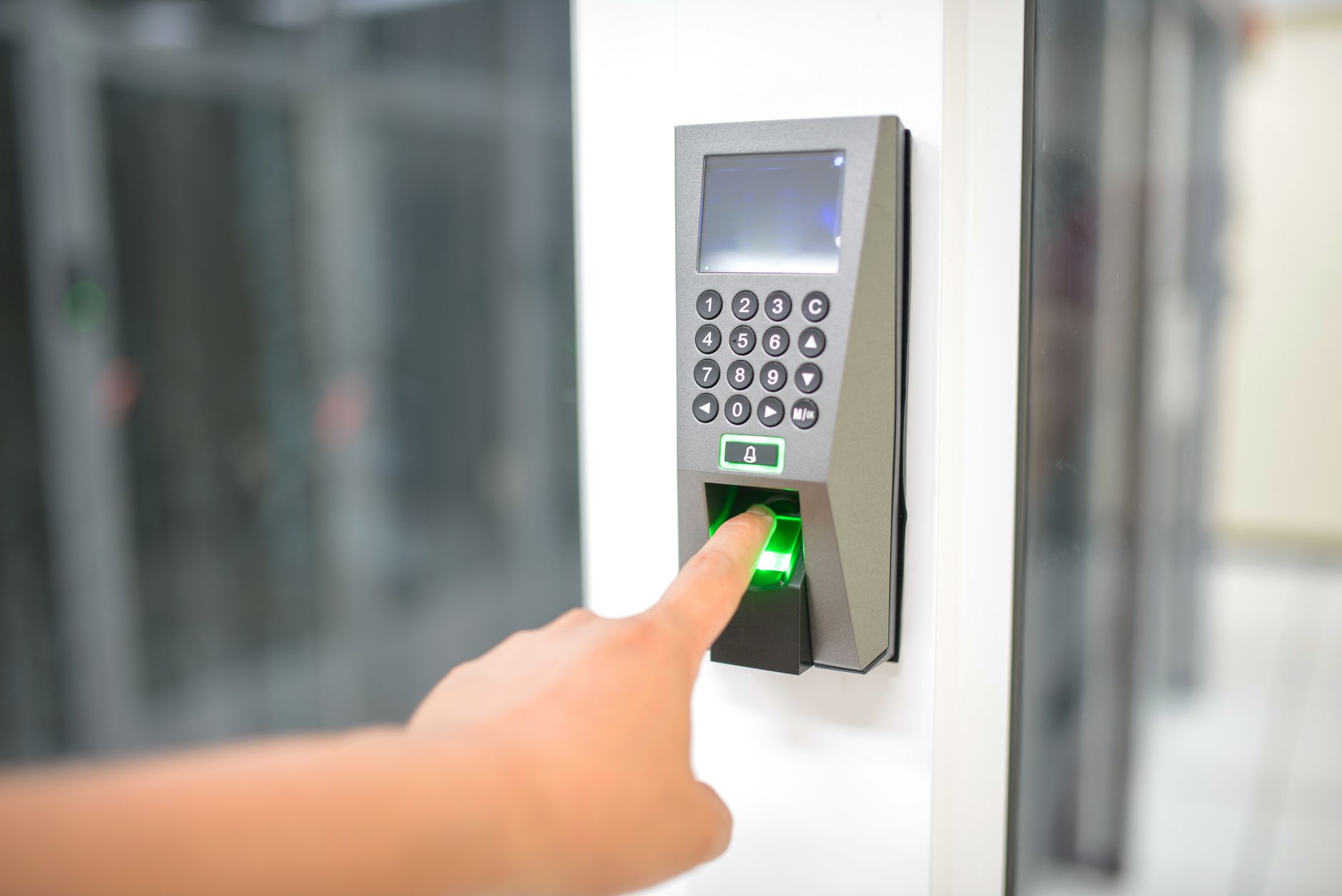
Workers mark attendance with a fingerprint, a face scan, or a mobile app with GPS. Biometric capture ties the record to a real person, so no one can punch in for a friend. Academic prototypes and deployed systems both confirm fingerprint and face methods make attendance far harder to fake [1][2].
2. Stream everything to a live dashboard
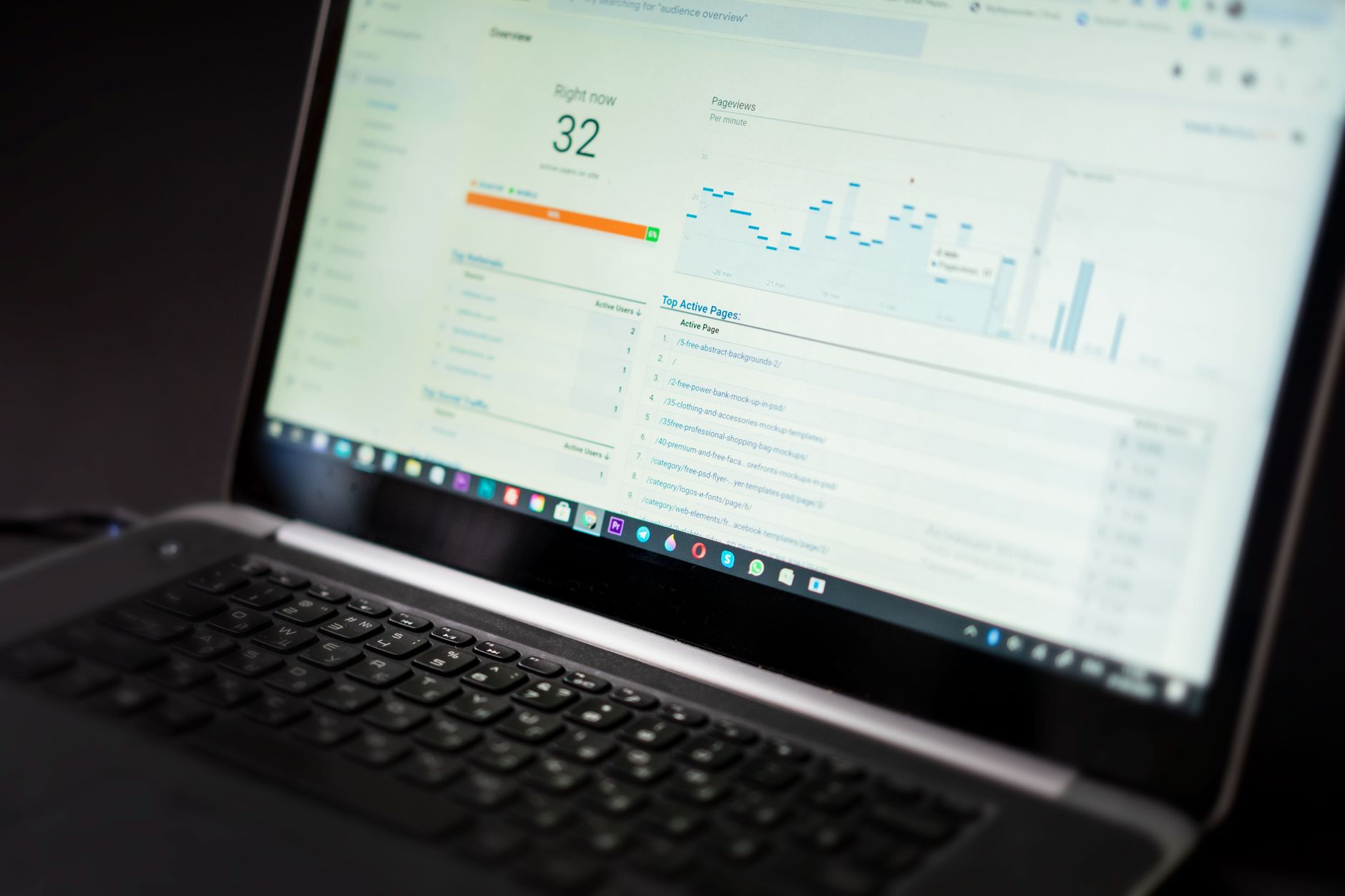
Each check-in appears on one screen within seconds. You see a live count of who is present, who is late, and who is absent. A field manager can open a real-time biometric attendance view on a phone and act before a shift falls short.
3. Turn attendance into payroll and alerts
Hours flow straight into payroll, so no one retypes them. Overtime is calculated against the legal rate automatically. Late or no-show alerts reach the right supervisor the moment a threshold is crossed.
What real-time attendance looks like in Bangladesh
Local rules make visibility more than a convenience. The Bangladesh Labour Act 2006 caps standard work at 8 hours a day and 48 hours a week, with overtime paid at twice the ordinary wage rate (Bangladesh Labour Act, 2006). Manual sheets make that hard to prove during an audit.
A time-stamped digital trail proves compliance in seconds. It also protects workers. When overtime is counted correctly, staff get the 2x pay the law promises.
Here is a contrarian point worth saying plainly. More monitoring is not about distrust. Accurate real-time records usually pay workers more, not less, because unrecorded overtime finally shows up. Factories with multiple shifts, remote sites, and patchy internet need systems that also cache offline and sync later.
Manual vs real-time attendance: side by side
| Factor | Manual register / Excel | Real-time attendance software |
|---|---|---|
| Who is in right now | Unknown until sheets are collected | Live on one dashboard |
| Buddy punching | Easy, hard to catch | Blocked by fingerprint or face check |
| Payroll accuracy | 1% to 8% error risk | Hours flow straight to payroll |
| Overtime tracking | Manual and error-prone | Auto-calculated at the legal 2x rate |
| Late and absent alerts | None | Instant notifications |
| Labour Act compliance | Hard to prove | Time-stamped audit trail |
| Effort per pay cycle | Hours of data entry | Near zero |
What to look for before you buy
Not every attendance tool delivers real visibility. Before you choose one, check it against a short list. These five points separate a live system from a digital version of the old register.
- Genuine real-time sync: check-ins should appear in seconds, not after a nightly upload.
- Biometric plus app options: fingerprint or face for fixed sites, GPS app check-in for field staff.
- Offline caching: the device must keep recording when the internet drops, then sync cleanly.
- Payroll and Labour Act mapping: hours and overtime should export in a form your payroll already reads.
- Local support in Bangla: setup, training, and help should be available in your team’s language.
Run any shortlist against those five. In my experience, the tool that wins on offline behaviour and payroll mapping is the one staff actually keep using after month one.
How Tipsoi solves the no-real-time-view problem
Tipsoi is a real-time attendance system built for this exact gap in Bangladeshi workplaces. It is worth being clear about why it fits, without overselling.
- Live visibility: one dashboard shows who is in, late, or absent across every branch.
- Fraud-proof capture: fingerprint and face options stop buddy punching at the door.
- Offline-ready: devices cache check-ins and sync when the connection returns.
- Compliant payroll: overtime and hours map to the Labour Act, ready for audit.
- Right-sized cost: you can check pricing for your company size before you commit.
For the wider picture, our complete HR software guide for Bangladesh shows how attendance connects to payroll, leave, and reporting. I have seen teams cut payroll-day stress from a full afternoon to a few clicks once these pieces join up.
Key Takeaways
- No real time view work solved starts with automatic check-in capture, not more spreadsheets.
- Manual systems risk 1% to 8% payroll error and hide buddy punching.
- A live dashboard shows presence, lateness, and absence in seconds.
- Real-time records prove Bangladesh Labour Act compliance and pay correct overtime.
- The switch usually pays workers fairly and saves managers hours each cycle.
Frequently Asked Questions
What does “no real time view of work, solved” actually mean?
It means replacing manual attendance with software that records each check-in instantly. Managers see who is present, late, or absent on a live dashboard, instead of waiting for end-of-day sheets.
How does real-time attendance stop buddy punching?
Biometric capture ties each check-in to a fingerprint or face. A coworker cannot clock in for an absent colleague, which removes the most common form of time theft.
Does real-time attendance work for factories with no internet?
Yes. Good systems store check-ins on the device when offline and sync automatically once a connection returns. No records are lost during outages.
Is real-time employee monitoring legal in Bangladesh?
Attendance tracking for payroll and compliance is standard practice. It also supports the Bangladesh Labour Act by documenting working hours and overtime accurately for audits.
How much payroll do you lose without automated attendance?
The American Payroll Association estimates manual timekeeping causes payroll errors of 1% to 8% of total payroll. Without automation, 2% to 8% of gross payroll can leak to time theft.
Can real-time attendance handle multiple shifts and sites?
Yes. Modern systems track rosters, night shifts, and several locations at once, and roll everything into one dashboard and one payroll export.
How fast can a Bangladeshi company go live?
Most small and mid-size teams can enrol staff and start capturing attendance within days, especially when the hardware is pre-configured for local use.
References
- Olagunju, M., et al. “Staff Attendance Monitoring System using Fingerprint Biometrics.” International Journal of Computer Applications, 2018. https://doi.org/10.5120/ijca2018916370
- Sunaryono, D., Siswantoro, J., and Anggoro, R. “An Android based course attendance system using face recognition.” Journal of King Saud University – Computer and Information Sciences, 2019. https://doi.org/10.1016/j.jksuci.2019.01.006
- Bloom, N., and Van Reenen, J. “Human Resource Management and Productivity.” National Bureau of Economic Research, 2010. https://doi.org/10.3386/w16019
- Chowdhury, S., Dey, P. K., Joel-Edgar, S., and Bhattacharya, S. “Unlocking the value of artificial intelligence in human resource management through AI capability framework.” Human Resource Management Review, 2022. https://doi.org/10.1016/j.hrmr.2022.100899