

Challenges of HR automation are real. They’re messy. And they catch businesses off guard every single day.
You’re ready to go digital with your HR. The ads promise speed, accuracy, and freedom from paperwork. But what they don’t show you? The bumps along the way.
Automation isn’t a magic button. It’s a shift. A big one. And if you’re not ready, it can cost you time, money, and even your team’s trust.
This guide walks you through the real challenges of HR automation. We’ll talk about what goes wrong, why it happens, and how to stay ahead. Whether you’re in Dhaka or Chittagong, these lessons apply to you.
Let’s dive in.
8 Challenges of HR Automation in Bangladesh
Bangladesh is moving fast toward digital HR. More companies are adopting cloud systems, payroll software, and attendance trackers. But with that growth comes growing pains.
HR automation challenges in Bangladesh are unique. Limited tech literacy, budget constraints, and legacy systems make the shift harder. Add in cultural resistance, and you’ve got a tough road ahead.
But here’s the good news. Once you know the challenges, you can prepare. And preparation is half the battle.
Let’s break down the eight biggest hurdles you’ll face.
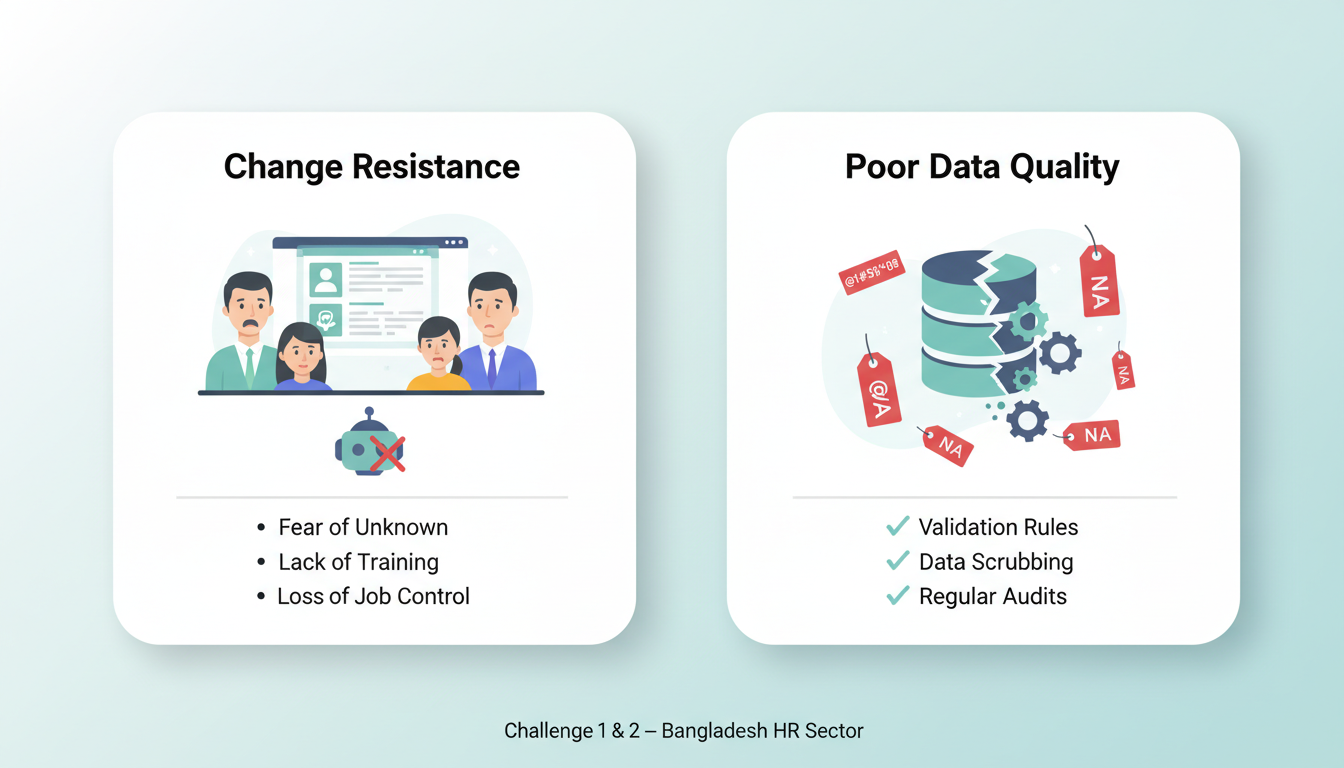
1. Change Resistance & Fear of Displacement
People fear what they don’t understand. Employee resistance to HR automation is one of the most common roadblocks.
Your team sees automation as a threat. They think robots are taking their jobs. They worry they won’t be able to learn the new system. And that fear turns into resistance.
Here’s what that looks like in real life:
- HR staff refuse to use the new software and stick to Excel sheets
- Managers delay training sessions because they’re “too busy”
- Employees spread rumors that automation means layoffs
Managing HR transformation starts with empathy. Talk to your team early. Explain what’s changing and why. Show them how automation makes their jobs easier, not obsolete.
Change management in HR isn’t optional. It’s the foundation of success. According to research , 70% of change programs fail to achieve their goals, largely due to employee resistance and lack of management support. Without it, even the best software will fail.
2. Inconsistent or Incomplete Data
Your HR system is only as good as the data you feed it. And if that data is messy, you’re in trouble.
Poor HR data quality is a silent killer. Wrong employee IDs, missing salary details, outdated contact info—it all adds up. When you migrate to a new system, those errors multiply.
The impact? Payroll mistakes. Compliance issues. Angry employees. Your automation project stalls before it even starts.
The fix is simple but tedious. Data cleansing before automation is non-negotiable. Go through your records. Fix what’s broken. Standardize formats. Yes, it takes time. But it’s worth it.
HR database standardization means everyone enters data the same way. No more “Dhaka” vs “Dkha” vs “Dkh”. Clean data equals smooth automation.
3. Integration Difficulties
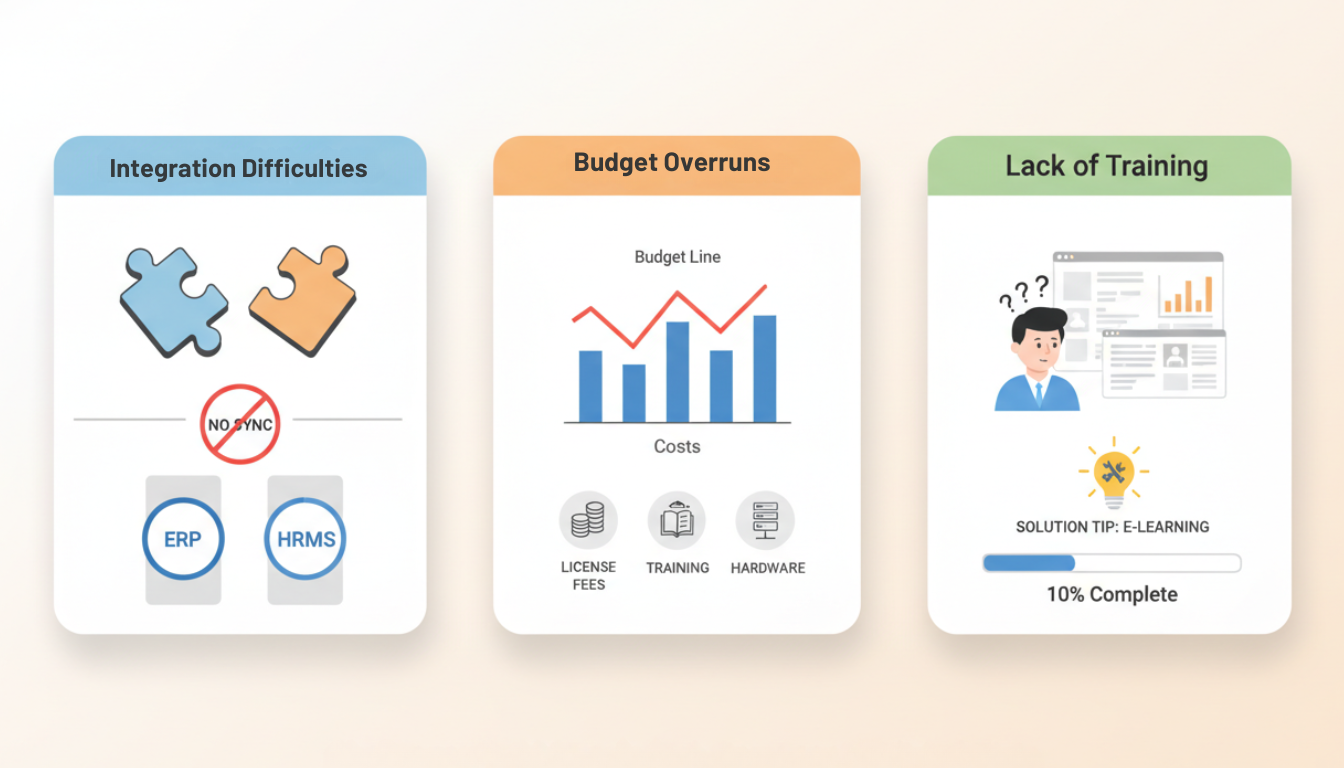
You’ve got payroll software. You’ve got attendance tracking. You’ve got a recruitment tool. But they don’t talk to each other.
HR software integration problems are a nightmare. Your old ERP system doesn’t play nice with the new cloud HRMS. Your payroll tool can’t sync with your attendance tracker. Data lives in silos.
The result? Duplicate work. Manual exports and imports. Human error creeping back in. You’re supposed to save time, but instead you’re drowning in spreadsheets again.
ERP and HRMS integration requires careful planning. Check if your new software has open APIs. Talk to your vendors about compatibility. Sometimes you need middleware to connect systems.
Here’s a real example. A Dhaka-based company used a local payroll tool and a global HRMS. The two didn’t sync. Every month, HR spent three days manually transferring data. They fixed it by switching to an all-in-one platform.
Third-party HR tool integration can work. But only if you test it first.
4. Budget and Resource Overruns
The sales pitch says $50 per month. You sign up. Then the bills start rolling in.
HR automation cost in Bangladesh goes way beyond the sticker price. You need training. You need IT support. You need data migration. You need customization.
Suddenly, your $50-per-month plan costs $5,000 in the first year. And your CFO is not happy.
Here’s where the money actually goes:
- Software license fees – monthly or annual subscriptions
- Implementation costs – setup, configuration, data migration
- Training expenses – for HR staff and employees
- Ongoing support – helpdesk, updates, troubleshooting
- Hardware upgrades – if your old computers can’t run the software
Hidden costs of HR software sneak up on you. Always ask for a total cost of ownership estimate. Factor in the first-year setup. Budget for unexpected expenses.
The ROI of HR automation is real. But only if you plan properly. Rushing in without a budget leads to abandoned projects and wasted money.
5. Lack of Training or Readiness
You bought the software. You installed it. Now what?
Your HR team stares at the dashboard like it’s written in alien code. Nobody knows how to generate a report. Nobody knows how to approve leave. The system sits unused.
Digital skills gap in HR is a major problem in Bangladesh. Many HR professionals grew up on paper files and Excel. Advanced software feels intimidating.
Without proper HR software training programs, your investment goes to waste. Your team falls back on old methods. The new system collects digital dust.
Here’s how to fix it:
- Start training before launch, not after
- Use hands-on sessions, not just PowerPoint slides
- Create simple user guides in Bangla if needed
- Assign a tech-savvy champion to support others
HR team readiness assessment should happen early. Survey your team. Find out their comfort level with technology. Tailor your training to their needs.
Employee onboarding for HR systems takes time. But it’s the only way to ensure adoption. Be patient. Be supportive. Celebrate small wins.
6. Data Security and Compliance Risks
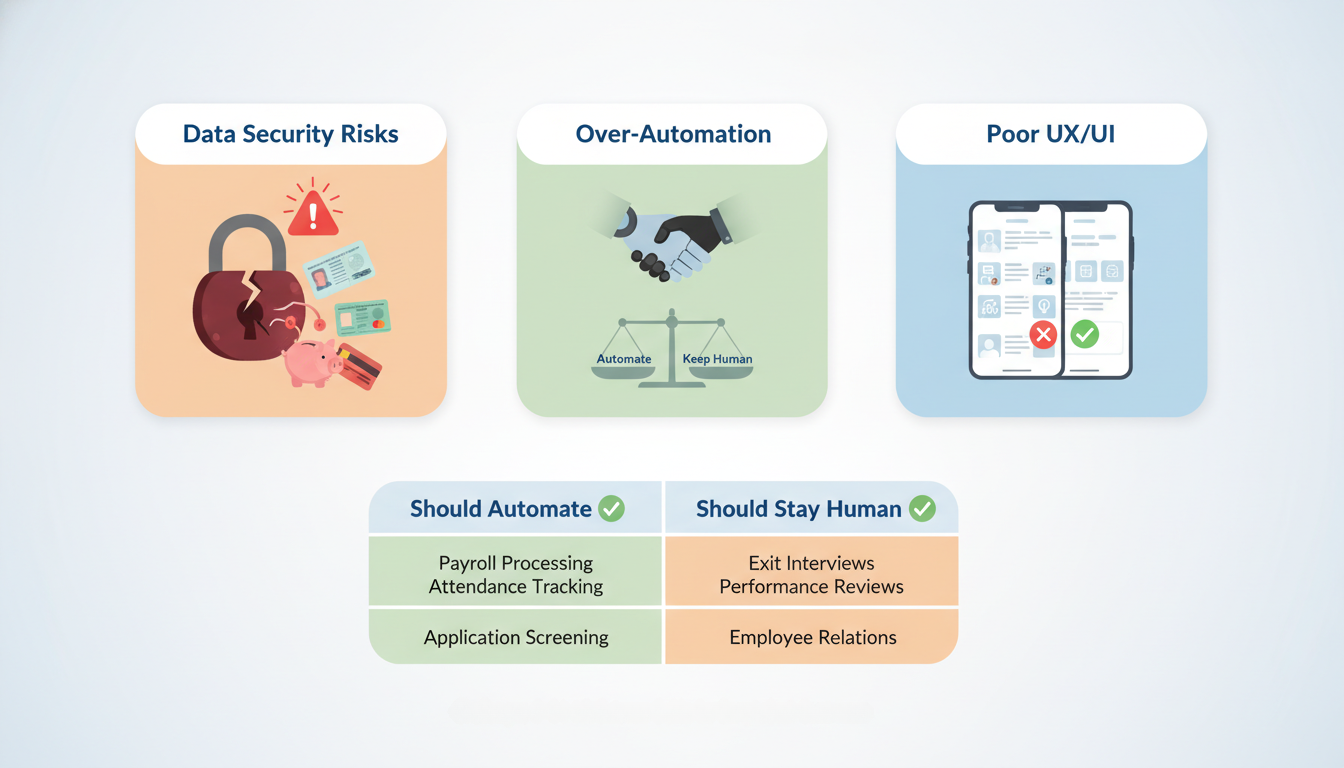
Your HR system holds sensitive information. Salaries. Bank accounts. Personal IDs. Health records. One breach and you’re in serious trouble.
HR data security risks are real and growing. Hackers target HR systems because they’re gold mines of personal data. Weak passwords, unencrypted files, and outdated software make you vulnerable.
In Bangladesh, employee data protection laws are evolving. Companies must comply with local regulations. Failure to do so means fines, lawsuits, and damaged reputation.
Here’s how to protect yourself:
- Choose software with end-to-end encryption
- Enable multi-factor authentication for all users
- Limit access based on roles—not everyone needs to see everything
- Regularly backup data to secure locations
- Stay updated on HR compliance requirements in Bangladesh
Cloud HR security concerns are common. People worry about storing data on external servers. But reputable vendors often have better security than your local server. The Society for Human Resource Management (SHRM) emphasizes that HR professionals must prioritize data security and stay informed about emerging threats. Just do your homework.
Secure HR management systems are worth the extra cost. Cheap software with weak security is a disaster waiting to happen.
7. Over-Automation (Losing the Human Touch)
Automation is powerful. But it’s not always the answer.
Over-automation risks happen when companies automate everything without thinking. Birthday wishes become robotic. Performance reviews feel cold. Employees start feeling like numbers.
HR is a people function. Employee engagement and automation must coexist, not compete. Yes, automate payroll. Yes, automate attendance. But don’t automate empathy.
Here’s a quick comparison:
| Task | Should Be Automated | Should Stay Human |
| Payroll calculation | ✅ Yes | ❌ No |
| Leave approval | ✅ Yes | ❌ No |
| Exit interviews | ❌ No | ✅ Yes |
| Conflict resolution | ❌ No | ✅ Yes |
| Birthday greetings | ⚠️ Use with care | ✅ Personalize it |
Human vs automated HR processes should balance efficiency with connection. Automate the repetitive stuff. Keep the meaningful interactions human.
Automation impact on workplace culture is real. Over-automate and your team feels disconnected. Find the right balance.
8. Poor User Experience (UI/UX)
Your software works perfectly. The features are amazing. But nobody uses it because the interface is awful.
HR software user experience matters more than you think. Clunky navigation, confusing menus, and tiny fonts drive people away. If it’s hard to use, people won’t use it.
Poor HR system interface leads to low adoption. Your team avoids the software. They make mistakes because they can’t find the right buttons. Frustration builds.
Check for these red flags:
- Complex login process – multiple steps, frequent password resets
- Unclear navigation – can’t find basic functions like leave requests
- Mobile unfriendly – doesn’t work well on phones
- Slow loading times – pages take forever to load
- Poor design – cluttered, outdated, hard to read
Employee self-service usability is critical. If employees can’t easily check their payslips or apply for leave, they’ll bug HR instead. That defeats the purpose.
HR mobile app usability is especially important in Bangladesh. Many employees access systems on their phones. Make sure your software works smoothly on mobile.
Test before you buy. Get a demo. Have your team try it. If they struggle, move on.
Why HR Automation Is Rising in Bangladesh ?
HR automation growth in Bangladesh is exploding. And it’s not slowing down.
The pandemic changed everything. Remote work forced companies to go digital. Paper-based HR suddenly became impossible. Cloud systems became essential.
But it’s not just about COVID. Bangladesh’s economy is growing. More startups are launching. More SMEs are expanding. And they all need better HR systems.
Here’s what’s driving the shift:
- Post-pandemic digitization – remote work demands digital systems
- Growing tech literacy – younger workforce comfortable with apps and software
- Cost pressure – manual HR is expensive and error-prone
- Compliance needs – government regulations require better record-keeping
- Competitive advantage – modern HR attracts better talent
Digital transformation in Bangladeshi companies is no longer optional. It’s survival. Companies that resist are falling behind.
SME HR software adoption is especially strong. Small businesses can now access affordable cloud tools. They don’t need huge IT teams. They just need internet and a laptop.
Cloud HR systems Bangladesh offer flexibility. Pay as you grow. No massive upfront costs. No servers to maintain.
The trend is clear. Automation in Bangladesh workforce is here to stay. The question isn’t whether to automate. It’s how to do it right.
How to Choose the Right HR Software Vendor in Bangladesh ?
Choosing best HR software in Bangladesh feels overwhelming. Dozens of options. Big promises. Confusing pricing.
Here’s your checklist to cut through the noise:
Must-Have Features:
- Payroll and attendance integration
- Mobile accessibility for employees
- Bangla language support (if needed)
- Cloud-based for remote access
- Compliance with local labor laws
Vendor Evaluation:
- Check customer reviews and case studies
- Ask for a free trial or demo
- Test customer support responsiveness
- Verify data security certifications
- Compare pricing monthly vs annual plans
Red Flags to Avoid:
- No local support team in Bangladesh
- Hidden fees and unclear pricing
- Poor mobile experience
- No data migration assistance
- Vendor won’t share client references
HRMS providers in Bangladesh vary widely. Some are global giants with local offices. Others are homegrown startups that understand local needs better.
Affordable HR solutions for SMEs exist. You don’t need enterprise software if you’re a 50-person company. Start small. Scale as you grow.
Here’s a simple comparison framework:
| Criteria | Global Vendor | Local Vendor |
| Features | ⭐⭐⭐⭐⭐ | ⭐⭐⭐ |
| Local Support | ⭐⭐⭐ | ⭐⭐⭐⭐⭐ |
| Pricing | Higher | Lower |
| Customization | Limited | Flexible |
| Bangla Support | Rare | Common |
Buy HR software Bangladesh isn’t just about features. It’s about fit. Does the vendor understand your business? Do they respond quickly? Can they grow with you?
HR software pricing Bangladesh ranges from $5 per employee per month to $50 or more. Budget matters. But don’t sacrifice quality for a few dollars.
Local HR technology companies often provide better support and faster customization. But global vendors offer more features and stability.
Choose based on your needs, not just price.
Future of HR Automation in Bangladesh
Future of HR technology Bangladesh is bright and fast-moving.
Artificial intelligence is arriving. Workforce analytics are becoming standard. Remote tools are evolving. The HR department of 2030 will look nothing like today.
HR innovation trends point toward smarter, faster, and more personalized systems. Automation will handle more tasks. Humans will focus on strategy and connection.
Next-generation HR systems will predict turnover before it happens. They’ll recommend training based on skill gaps. They’ll match candidates to roles using AI.
Bangladesh is positioned to leap forward. Skip the old tech. Jump straight to the new.
Let’s explore what’s coming.
1. AI in HR
AI recruitment tools are already here. They scan resumes in seconds. They rank candidates by fit. They even conduct first-round interviews.
AI-powered HR software goes beyond hiring. Chatbots answer employee questions 24/7. No more waiting for HR to reply. No more digging through policy manuals.
Automated candidate screening saves massive time. Instead of reviewing 500 resumes, HR reviews the top 50. AI handles the initial filter.
Examples in action:
- Chatbots handle common questions like leave balances and policy details
- AI suggests personalized training based on performance gaps
- Predictive models identify employees at risk of quitting
Generative AI in HR Bangladesh is still emerging. But early adopters are seeing results. Faster hiring. Better decisions. Happier employees.
Predictive hiring analytics help companies forecast workforce needs. Planning expansion? AI tells you how many people to hire and when.
The future is intelligent. And it’s closer than you think.
2. Workforce Analytics
HR workforce analytics turn data into decisions.
How many sick days does your team take? Which departments have the highest turnover? Who are your top performers? Analytics answer these questions instantly.
Employee performance analytics help managers support their teams better. See patterns. Spot problems early. Celebrate wins.
HR data-driven decision making replaces gut feelings with facts. Should you offer more training? The data will tell you. Should you adjust compensation? The data will tell you.
Benefits you’ll see:
- Identify turnover patterns before people quit
- Optimize hiring budgets based on real needs
- Track training ROI with performance metrics
- Improve workforce planning with predictive models
HR reporting dashboards make complex data simple. Visual charts. Easy filters. One-click insights.
People analytics tools are becoming essential. They’re not just for big companies anymore. Even small businesses can benefit.
Data doesn’t lie. Use it wisely and watch your HR function transform.
3. Remote Workforce Tools
Remote work isn’t going away. Remote HR management tools are now essential.
Attendance tracking software Bangladesh has evolved. No more punch cards. Employees check in from their phones. Managers see who’s working, where, and when.
Cloud payroll systems mean HR can process salaries from anywhere. No office needed. Just internet and security.
Tools changing the game:
- Mobile attendance apps with GPS verification
- Video onboarding platforms for new hires
- Time tracking tools for remote teams
- Digital document signing for contracts
- Virtual HR portals for employee self-service
Hybrid workforce management is the new normal. Some employees in office. Some at home. Tools that manage both are critical.
Remote employee monitoring tools must balance productivity with trust. Track work, not every mouse click. Respect privacy while ensuring accountability.
Virtual onboarding systems help new hires feel connected from day one. Video welcome messages. Digital handbooks. Online training modules.
The future of work is flexible. Your HR tools must be too.
Conclusion
Challenges of HR automation are real. But they’re not roadblocks. They’re speed bumps.
Change resistance, data issues, integration headaches, budget overruns, training gaps, security risks, over-automation, and poor UX—these are all manageable. You just need to plan ahead.
Bangladesh is charging toward digital HR. The companies that prepare will thrive. The ones that rush will struggle.
Start small. Test carefully. Train thoroughly. And always, always keep the human in human resources.
Your team deserves better than paperwork. Your business deserves better than manual errors. Automation is the path forward.
Just make sure you’re ready for the journey.
FAQs
1. What are the main challenges of HR automation in Bangladesh?
The biggest challenges of HR automation include employee resistance to change, poor data quality, integration issues with existing systems, budget overruns, lack of training, data security risks, over-automation, and poor user experience. These HR automation challenges in Bangladesh are amplified by limited tech literacy and legacy systems still in use.
2. How much does HR automation cost in Bangladesh?
HR automation cost in Bangladesh varies widely. Basic cloud systems start at $5 per employee per month, while enterprise solutions can reach $50 or more. However, hidden costs of HR software include implementation fees, training expenses, data migration, and ongoing support. First-year costs often exceed initial estimates by 3-5 times.
3. How can I reduce employee resistance to HR automation?
Managing HR transformation starts with clear communication. Explain why automation helps, not replaces, employees. Provide comprehensive HR software training programs before launch. Address fear of job loss due to automation directly. Assign tech champions to support others. Start with small wins to build confidence and trust.
4. What security risks come with HR automation?
HR data security risks include data breaches, unauthorized access, and compliance violations. Employee data protection Bangladesh laws require encryption, access controls, and regular backups. Choose secure HR management systems with multi-factor authentication and role-based permissions to protect sensitive payroll and personal information.
5. How do I choose the best HR software for my company?
Look for best HR software in Bangladesh with mobile accessibility, local compliance features, and Bangla support. Compare HRMS providers in Bangladesh based on pricing, customer support, and integration capabilities. Request demos and free trials. Check reviews and ask for client references before committing.