

You’ve used RFID today- even if you didn’t know it. That tap-to-pay at the store, the card you swipe to enter your office, or the library book you borrowed? All RFID. Here’s everything you need to know about how it works, what it costs, and why it’s slowly replacing barcodes everywhere.
What is RFID? Full Form and Simple Meaning
RFID full form is Radio Frequency Identification. It is a wireless technology that uses radio waves to automatically identify and track objects without any physical contact or line of sight. It works through three simple components: a tag (a tiny chip with an antenna), a reader (the scanner), and a backend software system that stores the data.
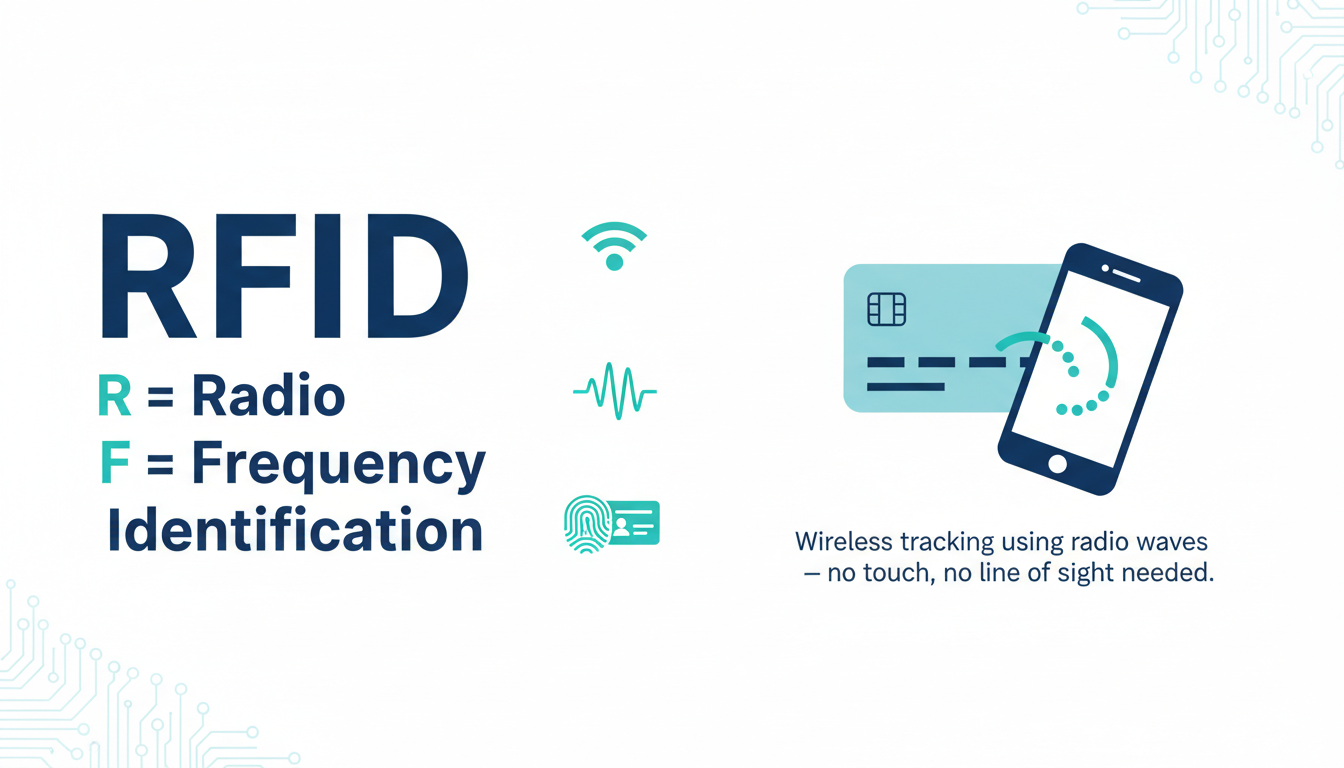
Think of it like a digital name tag. Instead of someone reading your name on paper, the tag sends your information through invisible radio waves the moment a reader comes nearby.
Many people ask: What is the full form of an RFID card? An RFID card is just a card that carries one of these radio frequency tags inside it. The full form stays the same: Radio Frequency Identification. These cards are widely used for office entry, school attendance, and contactless payments.
According to a peer-reviewed study published in MDPI Applied Sciences, global RFID tag usage surpassed 44.8 billion in 2023, making it one of the most widely deployed tracking technologies in the IoT era.
How Does RFID Work? (Step-by-Step)
RFID sounds technical, but the process is surprisingly simple. Here is how it works from start to finish:
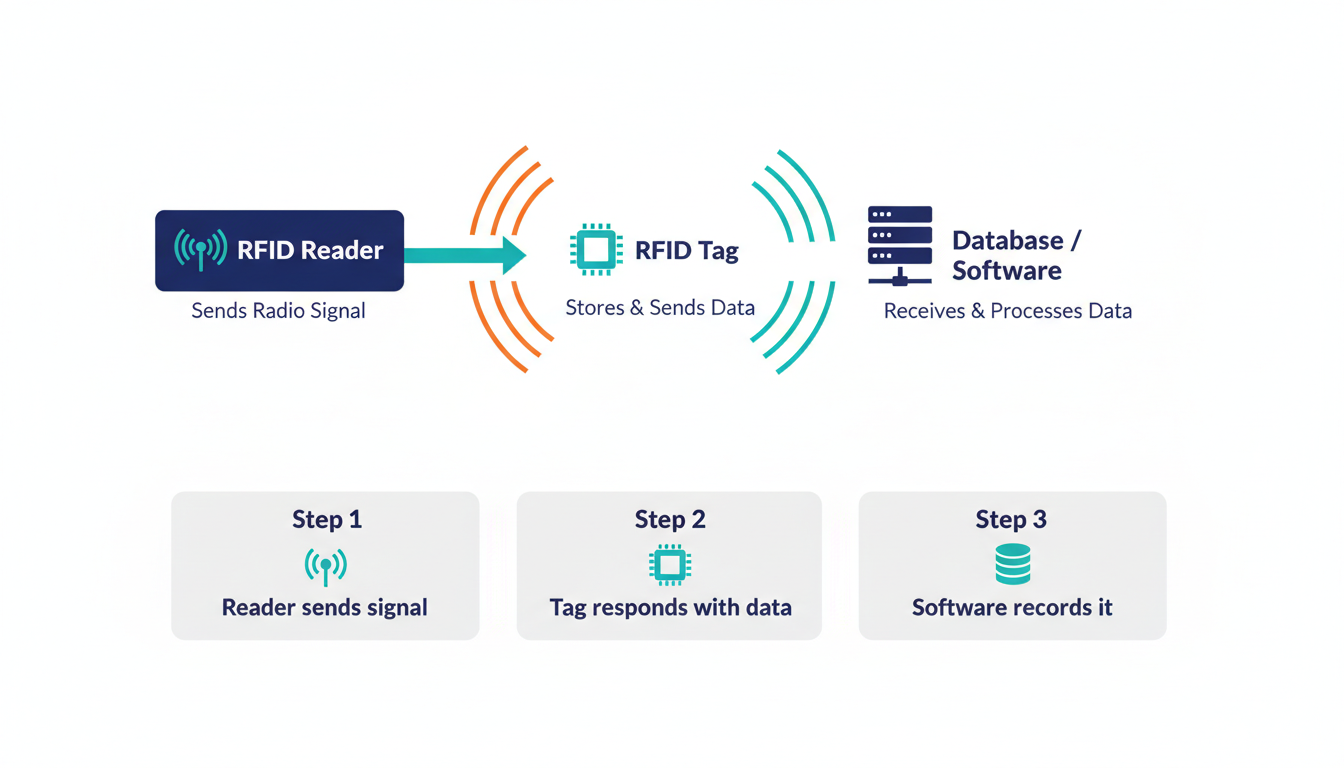
Step 1 — Reader Sends a Signal The RFID reader sends out a radio frequency signal through its antenna. It’s constantly broadcasting, looking for any tag within its range.
Step 2 — Tag Antenna Picks It Up The tag’s antenna catches those radio waves, the same way your phone catches a Wi-Fi signal. It absorbs that energy.
Step 3 — Tag Powers Up If it’s a passive tag (no battery), it uses the energy from the reader’s signal to power up its microchip. If it’s an active tag, it already has its own battery, so it’s always ready.
Step 4 — Tag Sends Back Its Data Once powered, the tag’s microchip instantly sends back its stored information, usually a unique ID number or product code, via radio waves.
Step 5 — Reader Sends Data to Software The reader receives this response, converts it into a digital signal, and sends it to a connected computer or software system for processing. This entire process happens in milliseconds.
Does RFID Need Line of Sight?
No- and this is one of the biggest advantages of RFID over barcodes. An RFID tag can be read through cardboard boxes, plastic packaging, or even a wallet. You don’t need to point a scanner at it directly. The reader just needs to be within range.
3 Types of RFID Tags (By Power Source)
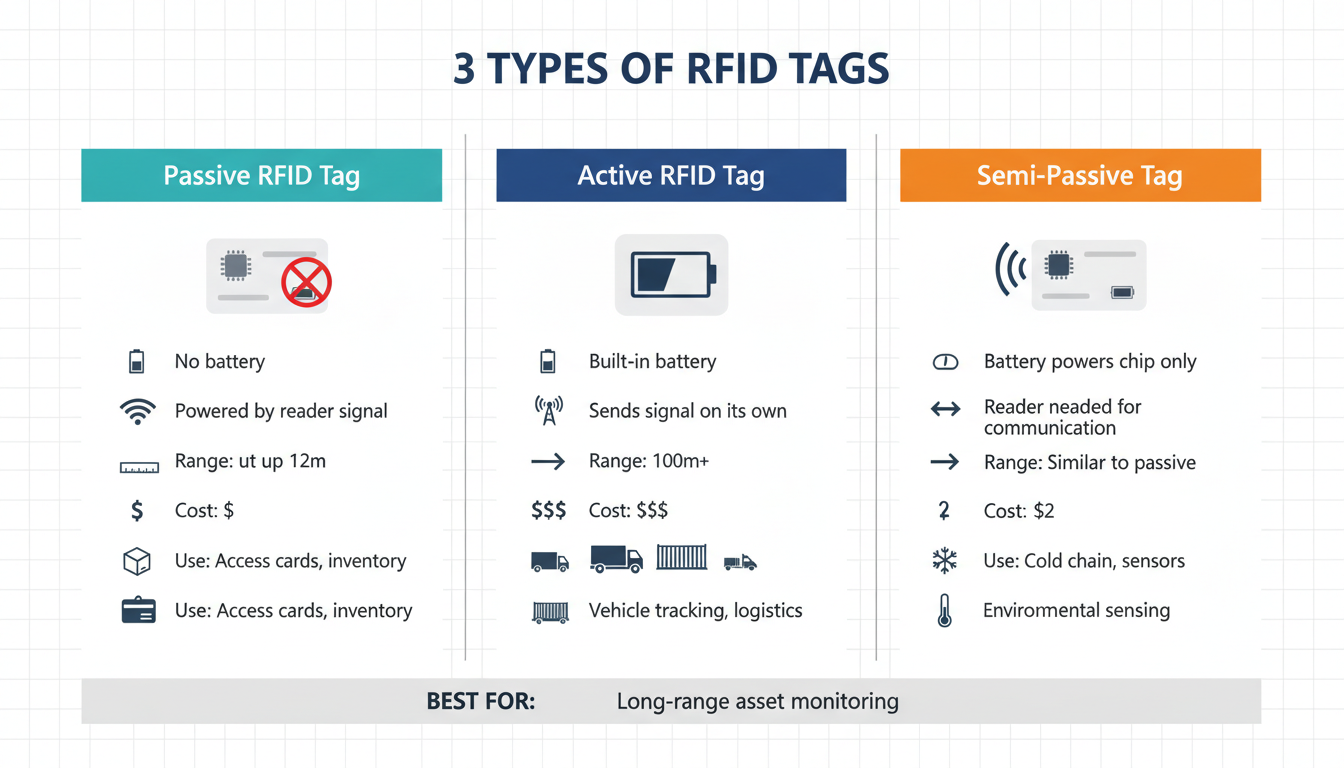
RFID tags are mainly classified into three types based on how they get their power.
1. Passive RFID Tags
Passive tags have no battery at all. They get their power entirely from the radio signal sent by the reader. When the reader’s signal hits the tag, it “wakes up” and sends back its data.
Because they rely on the reader’s energy, their range is limited- a few centimeters for low-frequency tags, up to 12 meters for UHF tags under ideal conditions.
Why are passive tags so popular? Simple- they are the cheapest option, often costing as little as $0.10 each. They are small enough to be printed as stickers or embedded in cards. They have no battery to die, so they can last for years without any maintenance.
Best for: Office and school attendance cards, library books, retail inventory labels, race timing chips.
In Bangladesh: Most RFID attendance systems in offices and schools use passive HF tags because they are affordable and reliable for short-range scanning.
2. Active RFID Tags
Active tags have a built-in battery that powers both the chip and the signal transmission. This means they don’t need to wait for the reader to power them up- they can broadcast signals on their own, continuously or at set intervals.
Because of this, active tags have an impressive read range- often over 100 meters. They can also include extra sensors that monitor temperature, vibration, or motion in real time.
The downside is cost. Active tags are significantly more expensive than passive ones and need battery replacement every few years.
Best for: Vehicle toll systems (like FASTag), shipping container tracking, mining equipment, and large-scale asset management.
Industry Impact: DHL reported a 95% reduction in time spent searching for misplaced shipments after deploying active RFID tags across its logistics network.
3. Semi-Passive (Semi-Active) RFID Tags
Semi-passive tags are a hybrid. They have a battery, but it only powers the chip and any onboard sensors- not the signal transmission. For communication, they still rely on the reader’s signal, just like a passive tag.
The battery keeps the chip “awake,” so it responds faster and more reliably, especially in environments where radio signals can get blocked or reflected.
Best for: Cold chain monitoring (temperature tracking for food and medicine during transport), environmental condition tracking, and industrial sensor applications.
Quick Comparison: RFID Tag Types
| Tag Type | Power Source | Read Range | Cost | Best For |
| Passive | No battery (reader-powered) | LF: cm / HF: 1m / UHF: 12m | Cheapest (~$0.10) | Access cards, inventory |
| Active | Built-in battery | Up to 100m+ | Most expensive | Vehicle tracking, logistics |
| Semi-Passive | Battery for the chip only | Similar to passive, more reliable | Mid-range | Cold chain, sensor tracking |
RFID Frequency Types: LF, HF, and UHF Explained
Beyond power source, RFID systems are also categorized by the radio frequency they use. Different frequencies have different ranges, speeds, and levels of interference resistance.
| Type | Frequency Range | Read Range | Pros | Cons | Common Uses |
| LF (Low Frequency) | 125–134 kHz | Up to 10 cm | Works near metal and liquids; low interference | Short range, slow data transfer | Animal ID tagging, industrial access control |
| HF (High Frequency) | 13.56 MHz | Up to 1 meter | Faster than LF, supports encryption, NFC-enabled | Sensitive to metal interference | Contactless payments, library systems, ticketing |
| UHF (Ultra High Frequency) | 860–960 MHz | 1–12m (passive), up to 100m (active) | Long range, fast, can read hundreds of tags at once | More affected by liquids and metals | Supply chain, toll collection, warehouse tracking |
Note for Bangladesh: UHF RFID is what most factories, garment industries, and warehouses in Bangladesh use for inventory and supply chain management because of its long read range and high-speed scanning capability.
RFID vs Barcode: Which One is Actually Better?
This is one of the most common questions people ask after learning the RFID meaning. Both technologies do the same basic job- identify an object. But they do it very differently.
| Feature | RFID | Barcode |
| Scanning Method | Radio waves (no contact needed) | Laser or camera (line of sight required) |
| Scan Distance | Up to 12m (UHF passive) | A few cm to ~1 meter |
| Speed | Hundreds of tags scanned at once | One at a time |
| Data Storage | Up to 8KB per tag | Limited (numbers and text only) |
| Cost per Tag | $0.10–$50+ depending on type | ~$0.001 (just printing cost) |
| Reusable? | Yes- data can be updated | No- printed, one-time use |
| Works through packaging? | ✅ Yes | ❌ No |
| Needs clear visibility? | ❌ No | ✅ Yes |
| Best For | Large-scale or automated tracking | Simple, low-cost labeling |
Verdict: RFID is not always the better choice. For a small shop with limited stock and a tight budget, barcodes still make perfect sense. But if you’re managing thousands of items, running an automated warehouse, or tracking assets in real time, RFID pays for itself quickly.
RFID vs NFC: What’s the Difference?
A lot of people confuse RFID and NFC. Here is a simple way to understand the relationship: NFC is actually a type of RFID. Specifically, it’s a short-range version of High Frequency (HF) RFID.
| Feature | RFID | NFC |
| Range | Up to 100m+ (active tags) | 4–10 cm only |
| Communication | Mostly one-way (tag to reader) | Two-way (device to device) |
| Common Use | Inventory, attendance, and access control | Mobile payments, Bluetooth pairing |
| Standard | Multiple (LF, HF, UHF) | ISO 14443 (HF subset of RFID) |
| Device Type | Dedicated readers and tags | Smartphones, smartwatches, cards |
The key difference: When you use Google Pay or Apple Pay on your phone, that’s NFC, a form of RFID. When your office building scans your entry card from 30–50 cm away, that’s standard HF RFID. The technology is related, but the use case is different.
NFC-enabled devices are unique because they can act as both a tag and a reader at the same time, which regular RFID systems cannot do. This is why NFC is used in two-way applications like contactless payments and device pairing.
RFID Uses in Daily Life- You’ve Already Used It Today
RFID technology is not just for big factories or sci-fi movies. It is already part of your everyday life, whether you realize it or not.
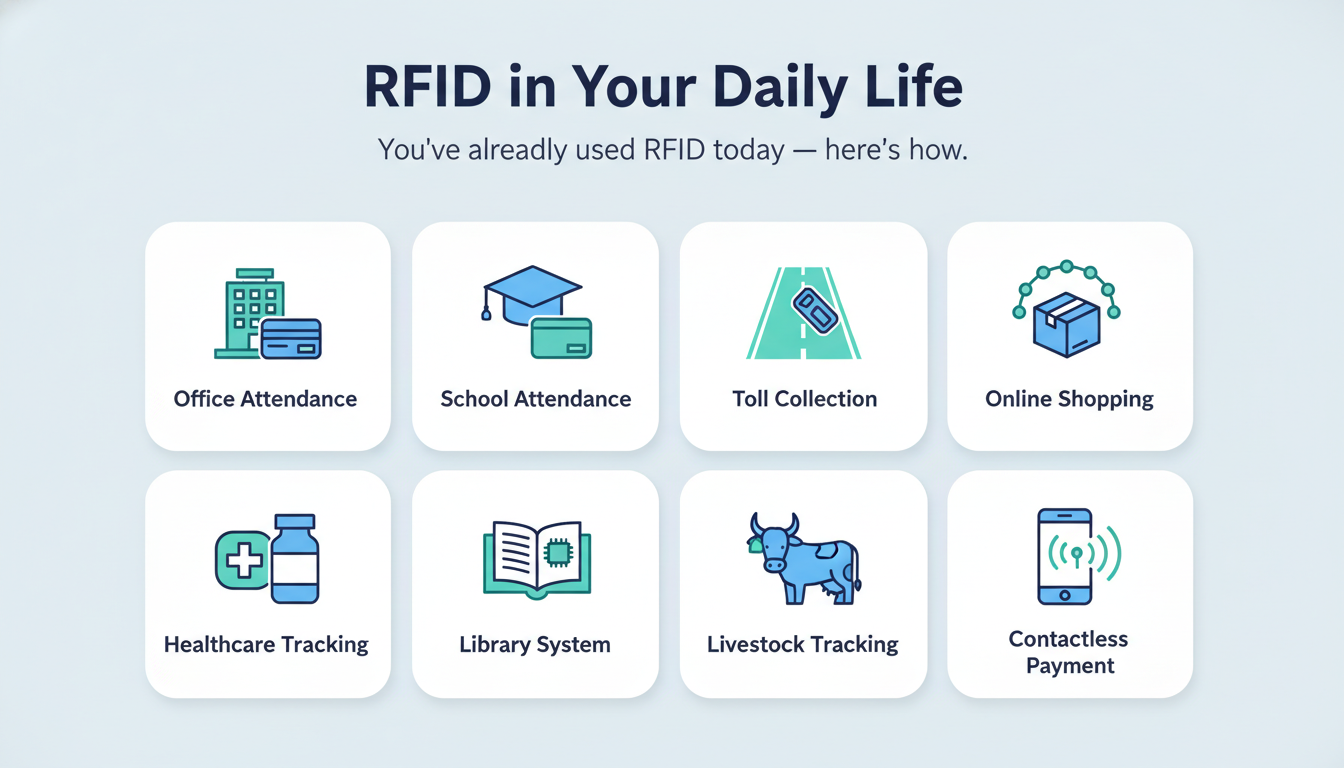
Office Attendance: The card you tap to enter your workplace? That’s an RFID card. The reader at the door scans it in milliseconds and logs your entry, no typing, no fingerprint needed.
School Attendance in Bangladesh: Many schools in Bangladesh now use RFID-based attendance systems where students tap their ID cards to mark themselves present. This reduces manual roll calls and gives parents real-time notifications.
Toll Collection: FASTag on vehicles in India, or highway pass systems in Bangladesh, which use active or passive UHF RFID tags on the windshield. The toll booth reads the tag at full driving speed without stopping.
Online Shopping Delivery: When you order something online, RFID tags on packages help warehouses sort, track, and dispatch thousands of orders every hour automatically, far faster than barcode scanning.
Hospital Equipment and Medicine Tracking: RFID is used in hospitals to track surgical equipment, monitor medicine storage, and prevent medication errors. A study in the Journal of Medical Systems found that RFID reduced medication errors by 51%.
Library Book Management: Libraries use HF RFID tags inside books, so the return and checkout process takes seconds. No barcode scanning angle required, just place the book on the counter.
Livestock Tracking in Agriculture: Farmers attach passive LF RFID tags to the ears of animals to track their health records, vaccination history, and movement. It’s widely used in dairy and poultry management.
Contactless Payment: Your debit or credit card on a payment terminal? That’s NFC-based RFID at work, short range, fast, and secure.
RFID Tag Price in Bangladesh (2026)- How Much Does It Really Cost?
This is the section most Bangladesh-based buyers and business owners need. Local pricing depends on tag type, quantity, and supplier, but here is a general overview.
Cost of RFID Tags in Bangladesh
| Tag Type | Price Per Piece (Approximate) |
| Passive HF card (office/school use) | ৳30–৳80 |
| Passive UHF sticker tag (inventory) | ৳8–৳25 |
| Semi-passive tag (sensor-based) | ৳300–৳800 |
| Active RFID tag (asset tracking) | ৳500–৳2,000+ |
Bulk orders typically bring the per-unit cost down significantly.
Cost of RFID Readers in Bangladesh
| Reader Type | Approximate Price Range |
| Handheld RFID reader | ৳4,000–৳15,000 |
| Fixed desktop reader | ৳3,500–৳10,000 |
| Fixed gate/door reader | ৳8,000–৳25,000 |
Full RFID Attendance System Setup Cost in Bangladesh
For a small office or school wanting to set up a complete RFID attendance system:
- Up to 50 employees/students: ৳15,000–৳40,000 (estimated, including reader, software, and cards)
- 50–200 employees: ৳40,000–৳90,000
- Enterprise/multi-location setup: ৳1,00,000+
The good news is that RFID attendance systems typically pay for themselves within 6–12 months when you account for time saved on manual attendance tracking, payroll errors, and HR overhead.
The global RFID technology market was valued at over $20 billion in 2024 and is projected to reach $47.63 billion by 2030, according to Grand View Research, a reflection of how fast industries worldwide are adopting this technology.
Key Features of RFID Technology
Understanding the RFID meaning is one thing, but knowing why businesses actually choose it comes down to its core features:
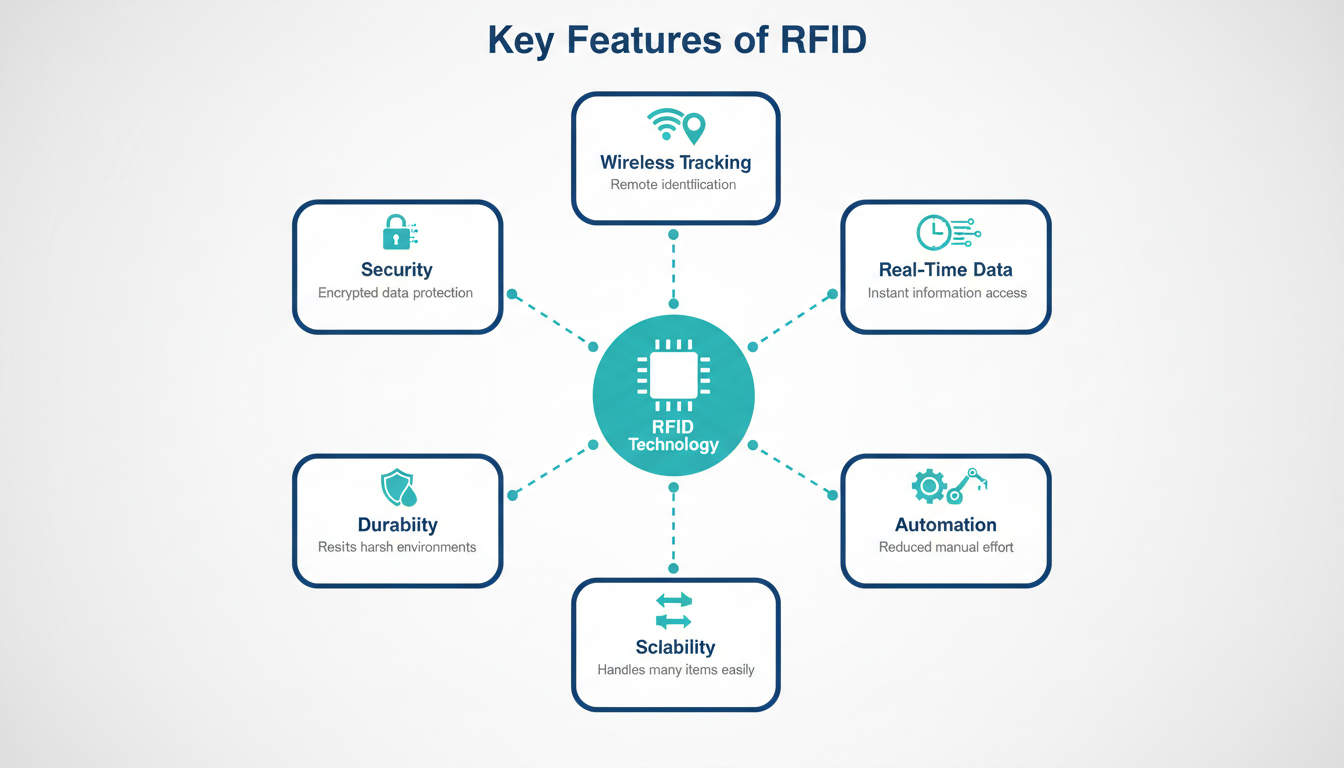
Wireless Tracking means RFID can identify objects without any physical contact and without needing a clear line of sight. Tags inside boxes, bags, or clothing can still be read accurately.
Real-Time Data gives businesses instant updates on where tagged items are, what their status is, and when they moved. A warehouse can see inventory changes the moment they happen.
Automation removes the need for manual scanning or counting. A retail store can complete a full inventory count in minutes rather than hours.
Scalability makes RFID work equally well for a 10-person office and a 10,000-item warehouse. The system grows with your business.
Durability means RFID tags are built to handle extreme temperatures, moisture, and physical wear — making them suitable for factories, farms, and outdoor applications.
Security comes from features like encryption and access control. RFID-enabled entry cards can restrict access to specific areas, and encrypted tags prevent counterfeiting.
What Are the Limitations of RFID?
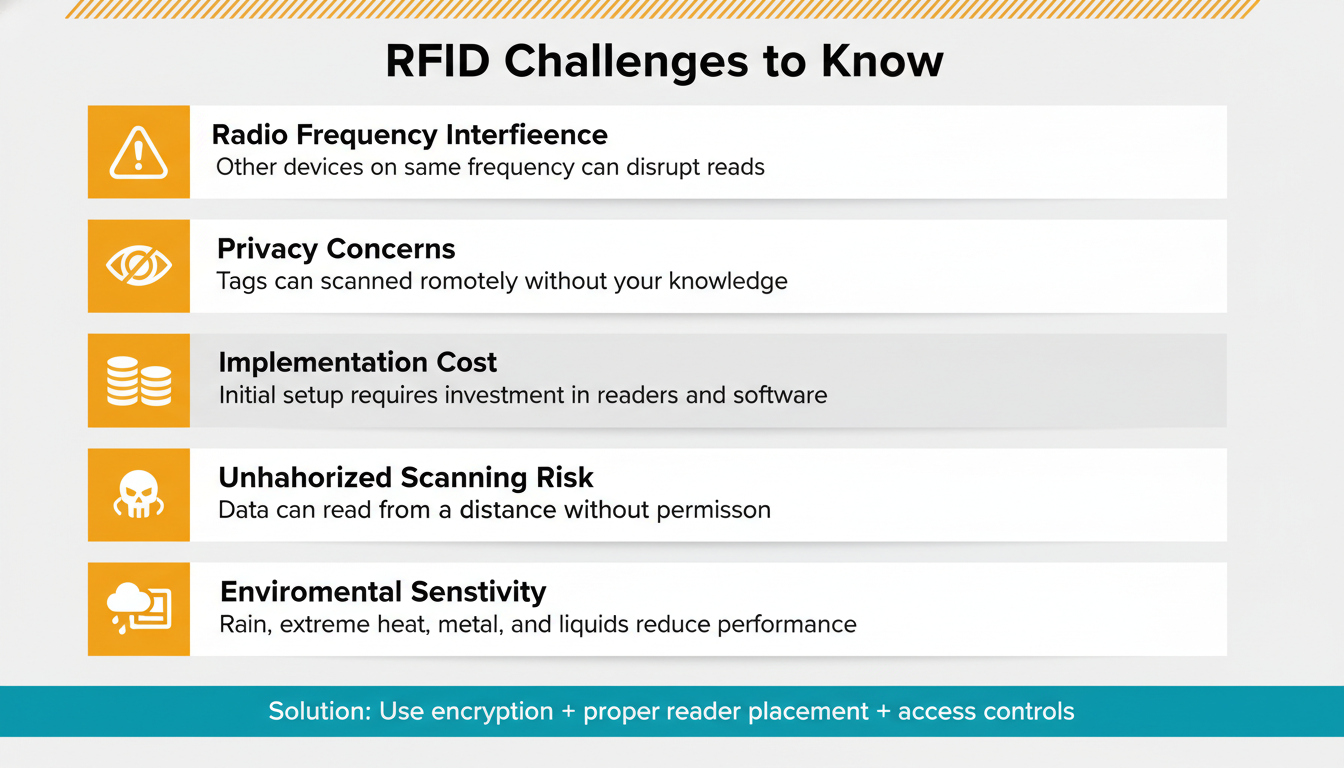
No technology is perfect, and RFID has its share of challenges. Being aware of them helps you plan better.
Radio Frequency Interference is the most common issue. Other devices operating on the same frequency can disrupt RFID reads, leading to missed scans or incorrect data, especially in environments with lots of wireless equipment.
Privacy Concerns arise because RFID tags can be read remotely without the tag holder knowing. This becomes sensitive when tags are on personal items or employee cards.
Implementation Cost can be a barrier for small businesses, especially the initial investment in readers and software. Although tag prices are falling, a complete setup still requires upfront spending.
Risk of Unauthorized Scanning is a real concern. Since RFID tags can be read from a distance, someone with a compatible reader could potentially scan your card without your knowledge. This is why many modern RFID cards include encryption.
Sensitivity to Environment means RFID performance can drop in heavy rain, extreme heat or cold, and in areas with a lot of metal or liquid nearby, since these materials absorb or reflect radio waves.
Is RFID Secure?
Yes, when properly implemented. Modern RFID systems use data encryption to protect information on the tag. Access control layers ensure only authorized readers can pull data. For high-security environments, multi-factor systems combine RFID cards with biometric verification (fingerprint or face scan) to add an extra layer of protection.
What’s Next for RFID Technology?
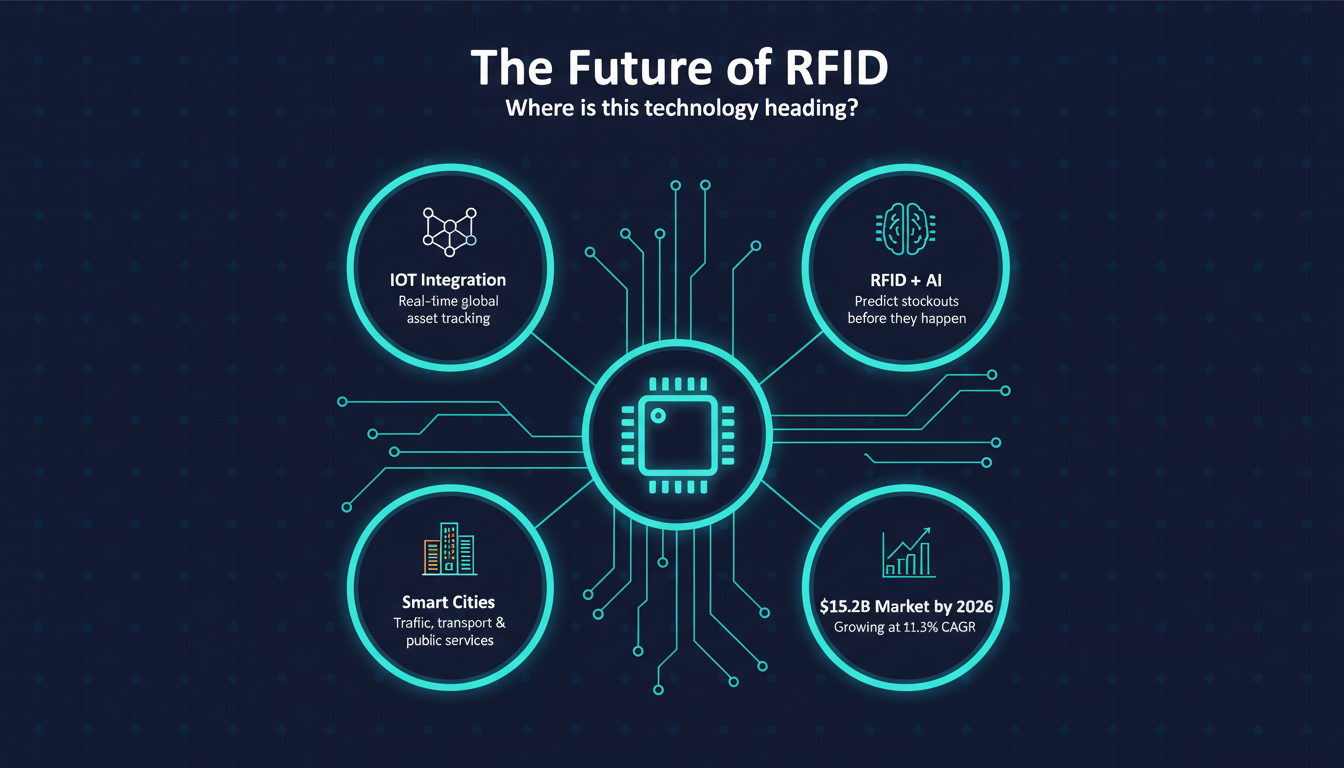
RFID is not standing still. The next generation of RFID is getting smarter, smaller, and more connected.
IoT Integration is already happening. RFID tags connected to the Internet of Things allow businesses to track assets in real time across multiple locations globally, all on a single dashboard.
RFID + AI is the next big leap. Combining real-time RFID data with artificial intelligence allows systems to predict when stock will run out, flag unusual movement patterns, or even detect equipment failure before it happens.
Smart City Applications are emerging where RFID helps manage public transport, parking systems, and municipal asset tracking with far less human intervention.
Market Growth: The global RFID market is expected to reach $15.2 billion by 2026, growing at a compound annual growth rate of 11.3%, a clear sign that this technology is becoming infrastructure, not just an option.
IDTechEx, which has been tracking the RFID industry for over two decades, forecasts the global RFID market will reach $23 billion by 2036, with around 55 billion passive tags sold in 2025 alone.
Frequently Asked Questions About RFID
What does RFID stand for?
RFID’s full form is Radio Frequency Identification. It is a technology that uses radio waves to wirelessly identify and track objects through a system of tags, readers, and software.
What is the difference between RFID and NFC?
NFC (Near Field Communication) is a short-range type of HF RFID. Regular RFID can work over long distances (up to 100m for active tags), while NFC only works within 4–10 cm. NFC also supports two-way communication, which standard RFID does not.
What is the difference between active and passive RFID?
Passive RFID tags have no battery and are powered by the reader’s signal. Active RFID tags have a built-in battery and can broadcast signals on their own over much longer distances.
How far can RFID be read?
It depends on the type. Passive LF tags: a few centimeters. Passive UHF tags: up to 12 meters. Active tags: 100 meters or more under ideal conditions.
Is RFID safe to use?
Yes. RFID radio waves are non-ionizing and operate at very low power levels — similar to Wi-Fi. They are safe for daily use and pose no known health risks.
What is RFID used for in Bangladesh?
RFID is widely used in Bangladesh for employee and student attendance systems, factory inventory management, access control in offices and apartment buildings, and garment export tracking for international supply chains.
How much does an RFID system cost in Bangladesh?
A basic RFID attendance setup for a small office starts from around ৳15,000–৳40,000. Individual RFID cards cost ৳30–৳80 each, and fixed door readers start from ৳8,000.
Can RFID work without the internet?
Yes. RFID readers can collect and store data locally without an internet connection. However, for real-time tracking and cloud-based reporting, an internet connection is needed to sync data to the software.
Is RFID technology expensive?
While initial setup costs may seem high, the long-term benefits—such as reduced labor costs, improved accuracy, and enhanced security—often outweigh the expenses.
Can RFID work in harsh environments?
Yes, RFID tags are designed to withstand extreme conditions like high temperatures, moisture, or dust. This makes them ideal for industries like manufacturing and agriculture.
How secure is RFID technology?
Modern RFID systems use encryption to protect data and prevent unauthorized access. Additionally, access control measures can be implemented to enhance security further.
Can RFID work over long distances?
Active RFID tags can transmit data over several meters, making them ideal for logistics and large-scale operations.
What industries benefit most from RFID?
Industries like retail, logistics, healthcare, manufacturing, and transportation see significant benefits from RFID technology.
Wrapping Up
RFID- Radio Frequency Identification is one of those technologies that most people use every day without ever thinking about it. From the attendance card in your pocket to the tag on a supermarket shelf, it quietly runs in the background, making things faster, more accurate, and more automated.
Whether you are a student trying to understand what RFID means, a business owner exploring attendance solutions, or a developer building a tracking system, the core concept is the same: a tiny chip, a radio signal, and a whole lot of practical applications.
If you are looking to implement an RFID-based attendance or access control system for your office, school, or factory in Bangladesh, Tipsoi offers complete, customizable solutions built for local needs.